
Moonbeam

Moonbeam

Home Forums Sailing Models Moonbeam

  • This topic is empty.
Viewing 25 posts - 276 through 300 (of 440 total)
  • Author
    Posts
  • #69107
    Bob Abell 2
    Participant
      @bobabell2

      Well done, Banjo

      The fittings are looking very nice painted white……..Especially with the brass rings embellishments

      She'll be as "Pretty as a Picture" on completion

      All the best

      Bob

      #69108
      Banjoman
      Participant
        @banjoman

        Thank you very much, Bob!

        I am actually planning to paint the entire crosstrees white, and also the base of the mast as well as the base of the bowsprit and all spar ends (top mast, boom, gaff etc.). I have yet to decide whether the brass collars will be included in the paint job, or left as they are; both would look nice, but perhaps you are right that leaving them bare brass (and of course giving them a bit of a polish and some clear varnish) would look very nice in contrast with the white paint and light brown stain.

        In any case, with some gloss varnish on top of the stained parts, I am inclined to hope that your pretty as a picture prediction will come true …

        Mattias

        #69114
        Banjoman
        Participant
          @banjoman

          With a second coat of stain applied and left to dry, it was time to mask of those parts of the spars that shall remain unpainted …

          mbbygg759.jpg

          … and get on with applying the white paint! At this stage, I realised that I'd not kept suffcient track of my stock of paint, and that I'm nearly out of both prmier and gloss white, so tomorrow shall see me making a quick visit to a not too distant hobby shop that, fortunately, carries the Vallejo RC Premium range … because if I don't go tomorrow, I'll have to wait until Tuesday, and while I'm not planning to disappear down to the workshop on Christmas Eve or Christmas Day, well, Boxing Day now, that's summat else …

          mbbygg760.jpg

          To be continued … and in the meanwhile, Merry Christmas to one and all!

          Mattias

          #69133
          Banjoman
          Participant
            @banjoman

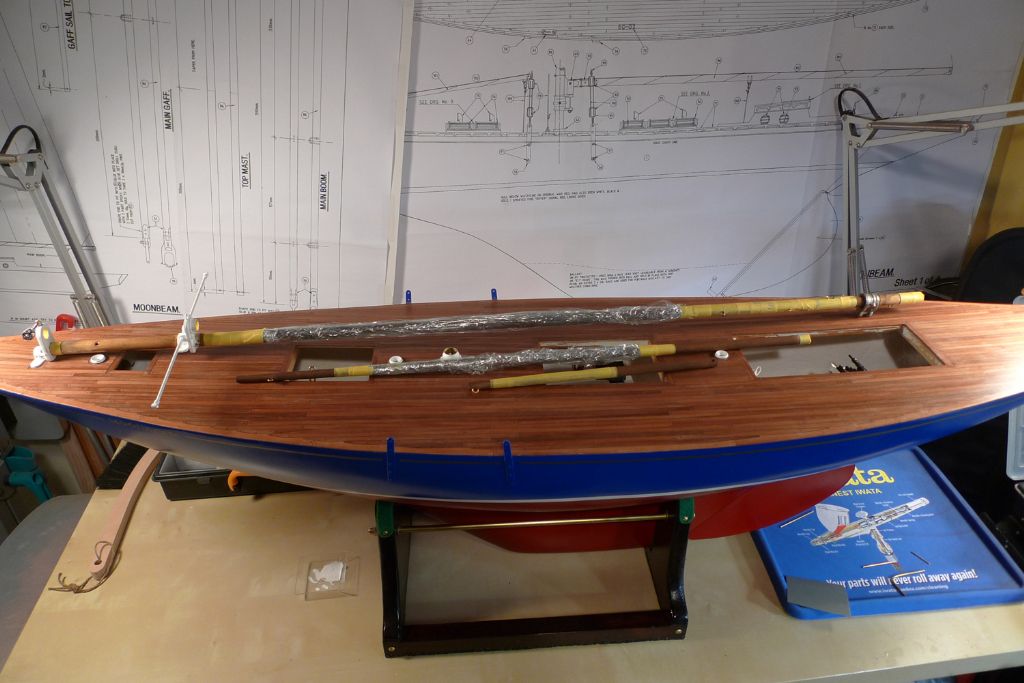
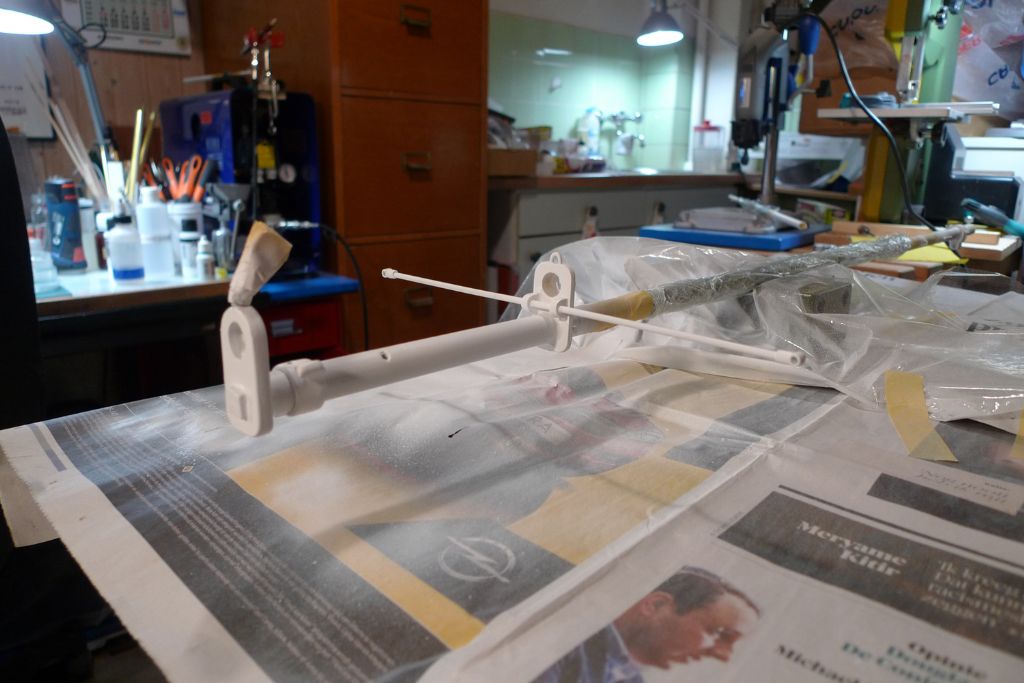
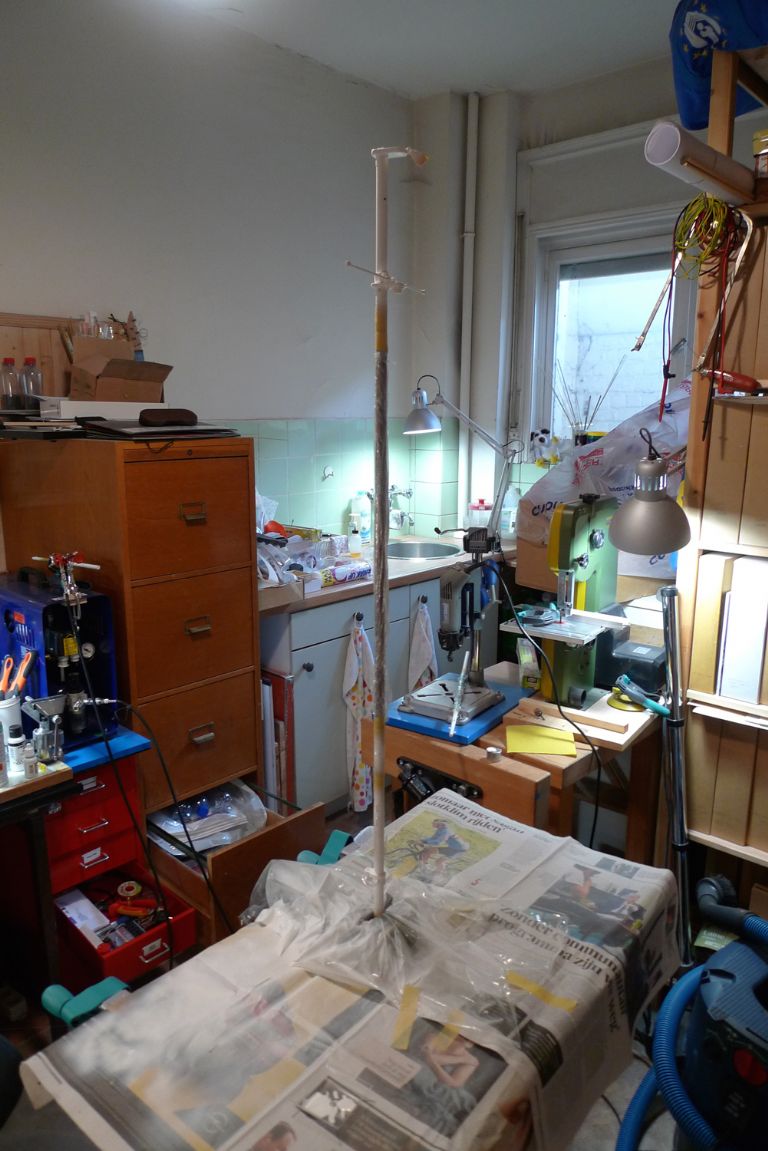
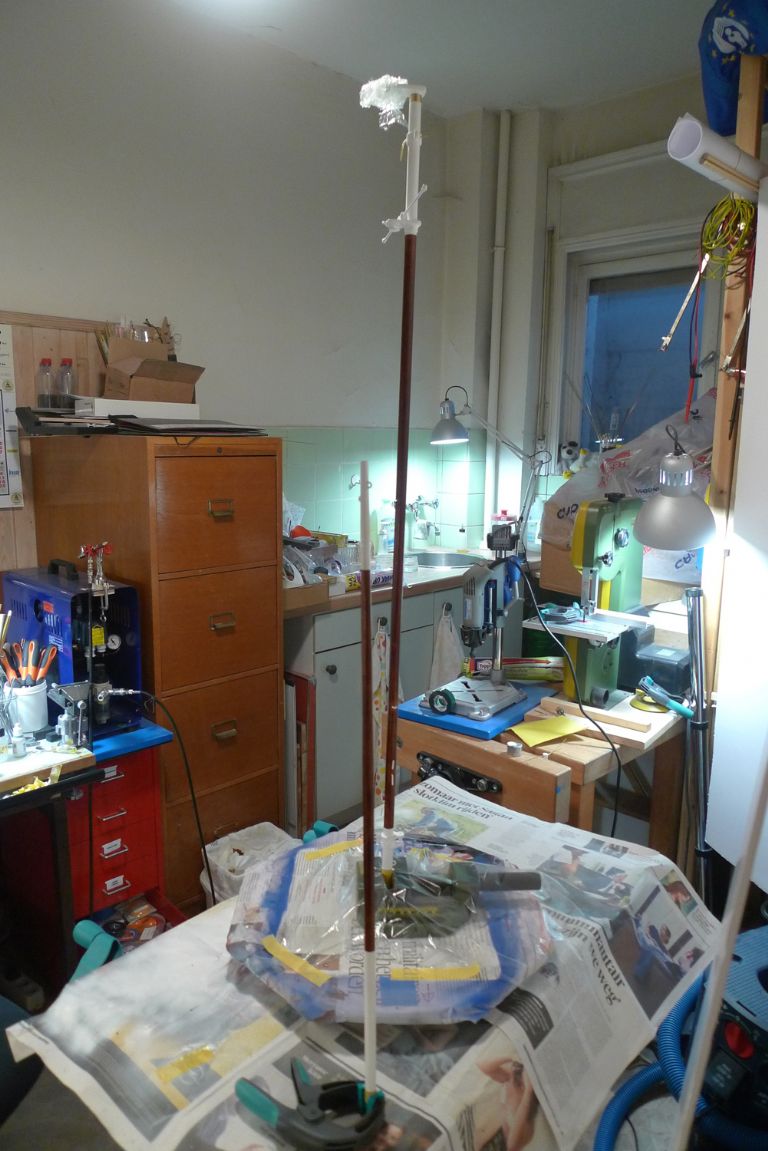
            Having replenished my stock of white paint with  a quick dash on the 24th to a shop that carries it, I came out of Christmas celebration mood this morning, and set about applying the final coat of said white paint to the mast and other spars …

            mbbygg761.jpg

            … that, once the paint was dry enough for the masking materials to come off, looked like this.

            mbbygg762.jpg

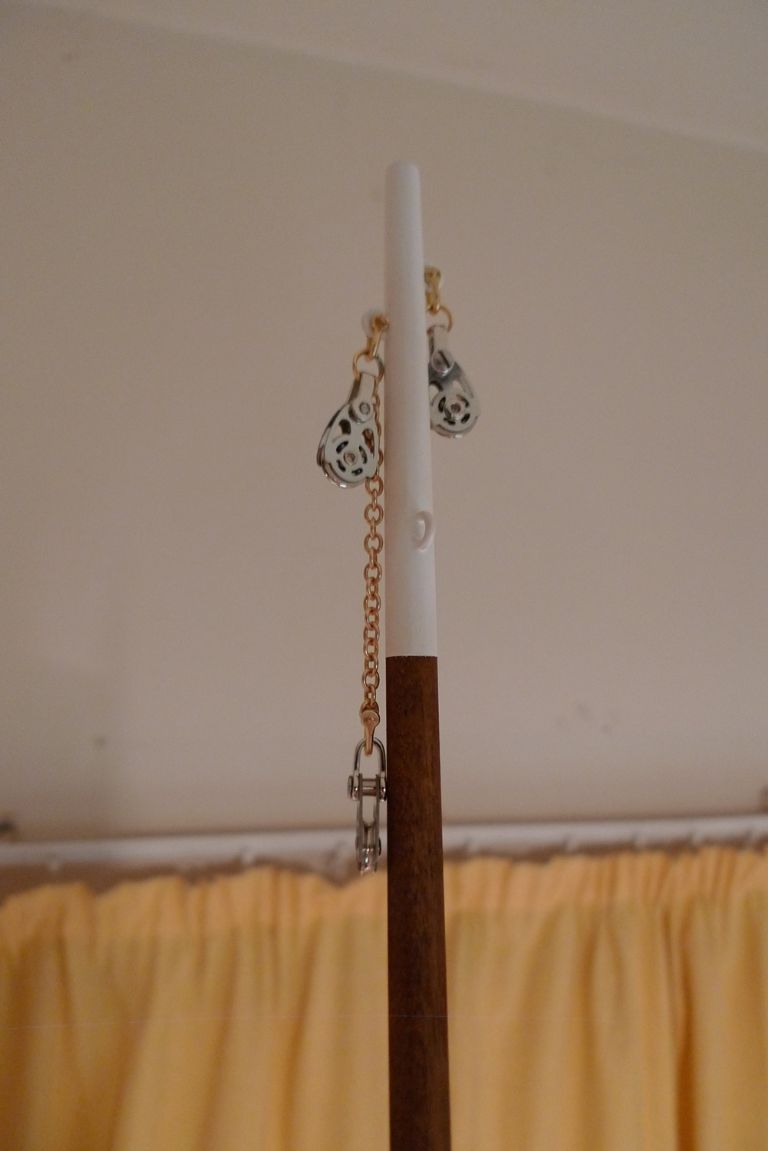
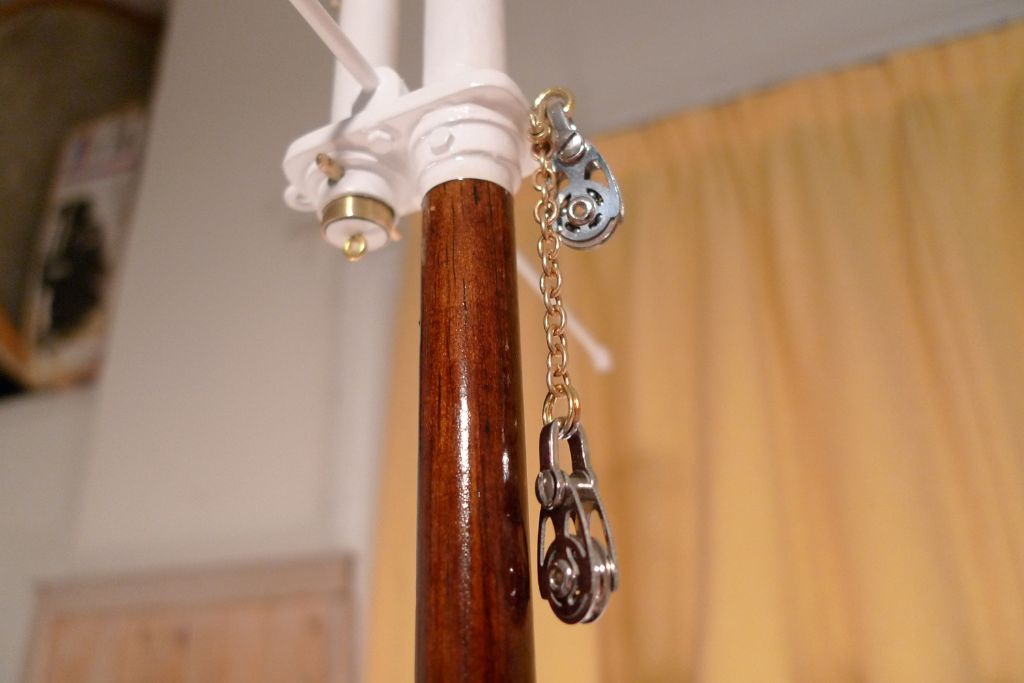
            I've also test fitted the required three rigging blocks to the top mast …

            mbbygg763.jpg

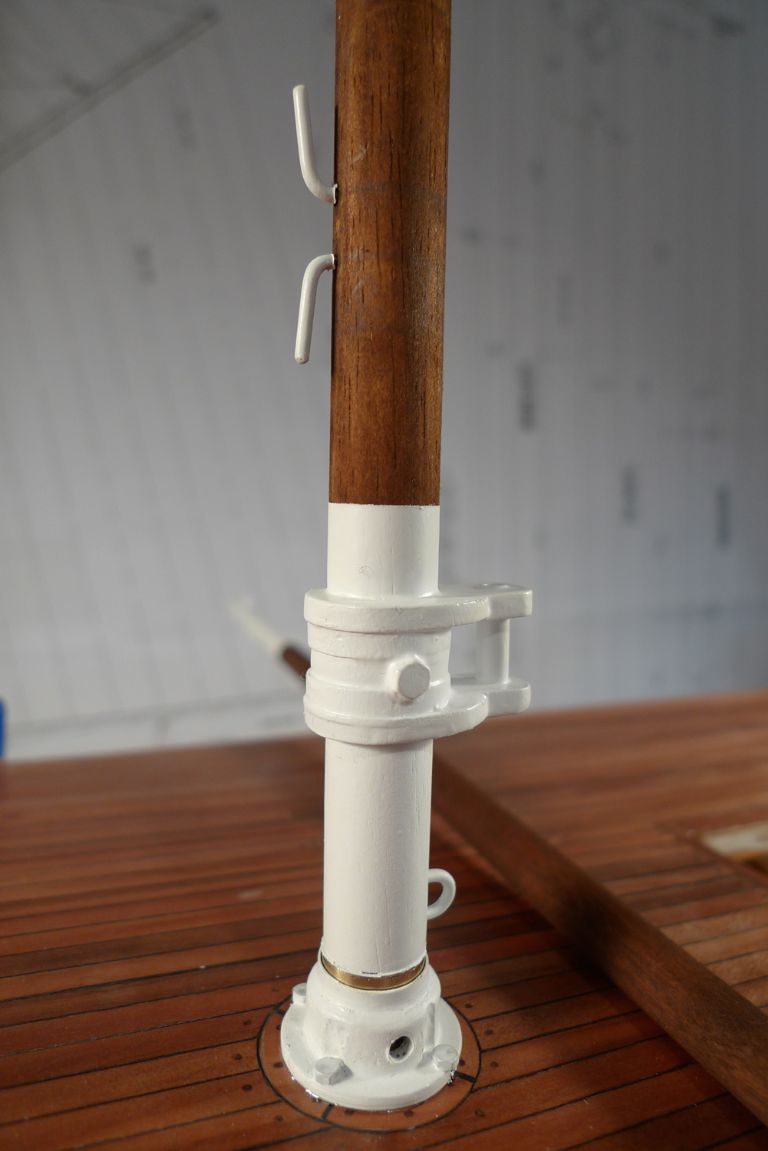
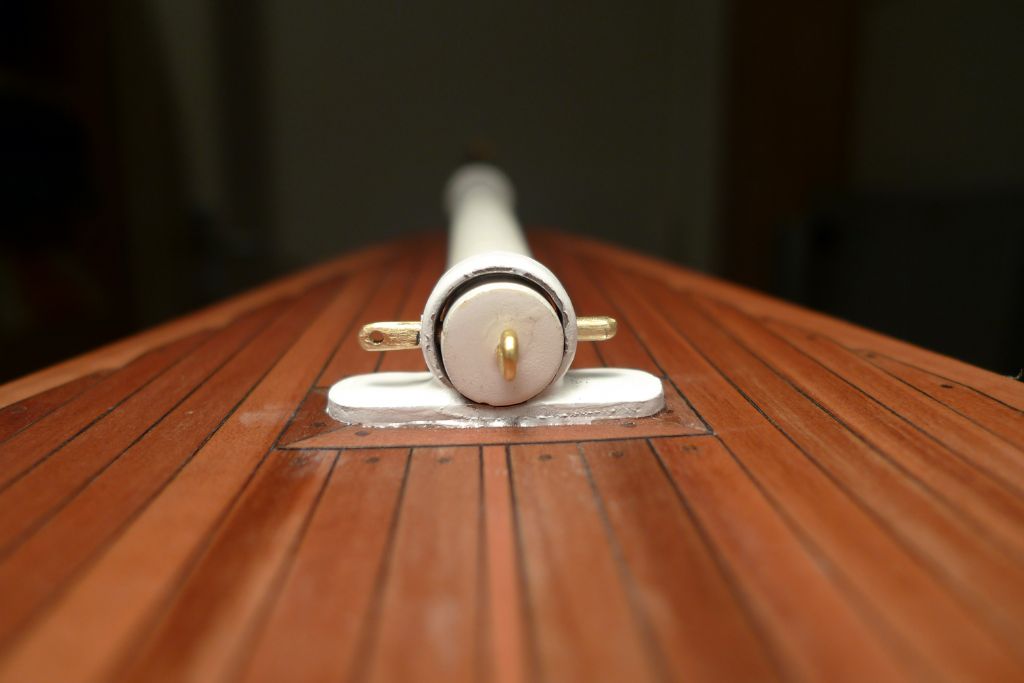
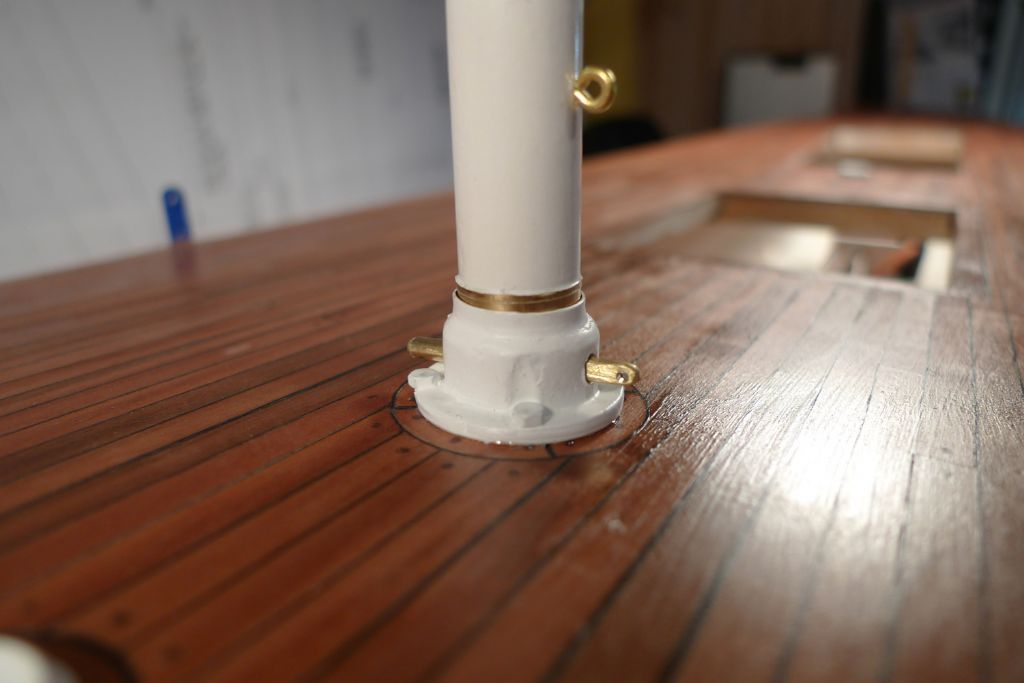
            … while the other end of the mast looks like like this …

            mbbygg764.jpg

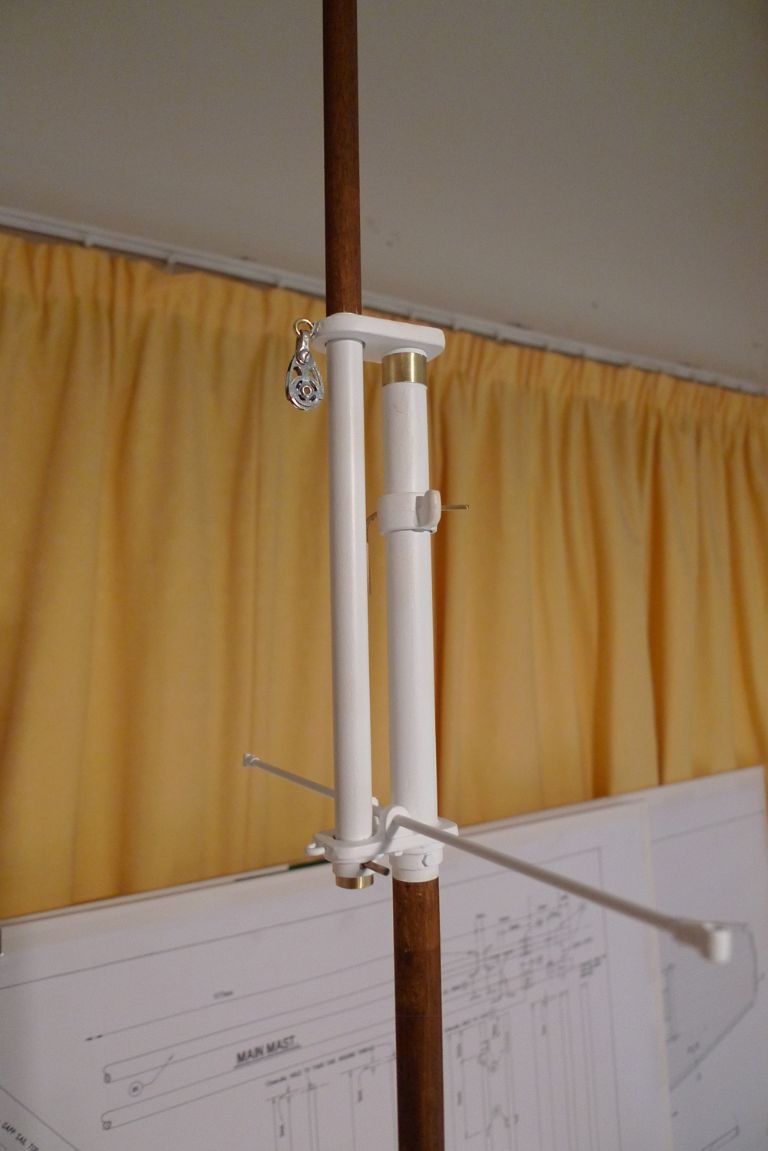
            … and the cross trees like that. Next up, the stained parts of the spars shall be given a few coats of clear gloss varnish, but that'll be for tomorrow or the day after …

            mbbygg765.jpg

            To be continued …

            Mattias

            Edited By Banjoman on 26/12/2016 18:20:09

            #69139
            Rudy Why
            Participant
              @rudywhy43146

              Hi Banjo, I've looked with no success to find the blocks you're using. Can you point me in their direction? I'll be getting my Moonbeam in January. This is a valuable build thread. Thank you for taking the time…

              #69141
              Banjoman
              Participant
                @banjoman

                Hello Rudy,

                And thank you very much for your kind words!

                I bought the blocks from Cornwall Model Boats, so they are easy enough to source, albeit not exactly handed out for free, I'm afraid. More specifically they are Race Type Ballraced blocks from the CAP Maquettes Yacht Fittings series (**LINK**), and I'm using two different types.

                For the sheet winch loop, I've used two Race Type Ballraced Vertical Turning Blocks on Deck 10 mm (CMPR146RB), while in the rigging I've gone for the Race Type Ballraced Shackle Blocks 10 mm (CMPM10RB).

                Hope this helps, and enjoy your Moonbeam build!

                Mattias

                #69145
                Banjoman
                Participant
                  @banjoman

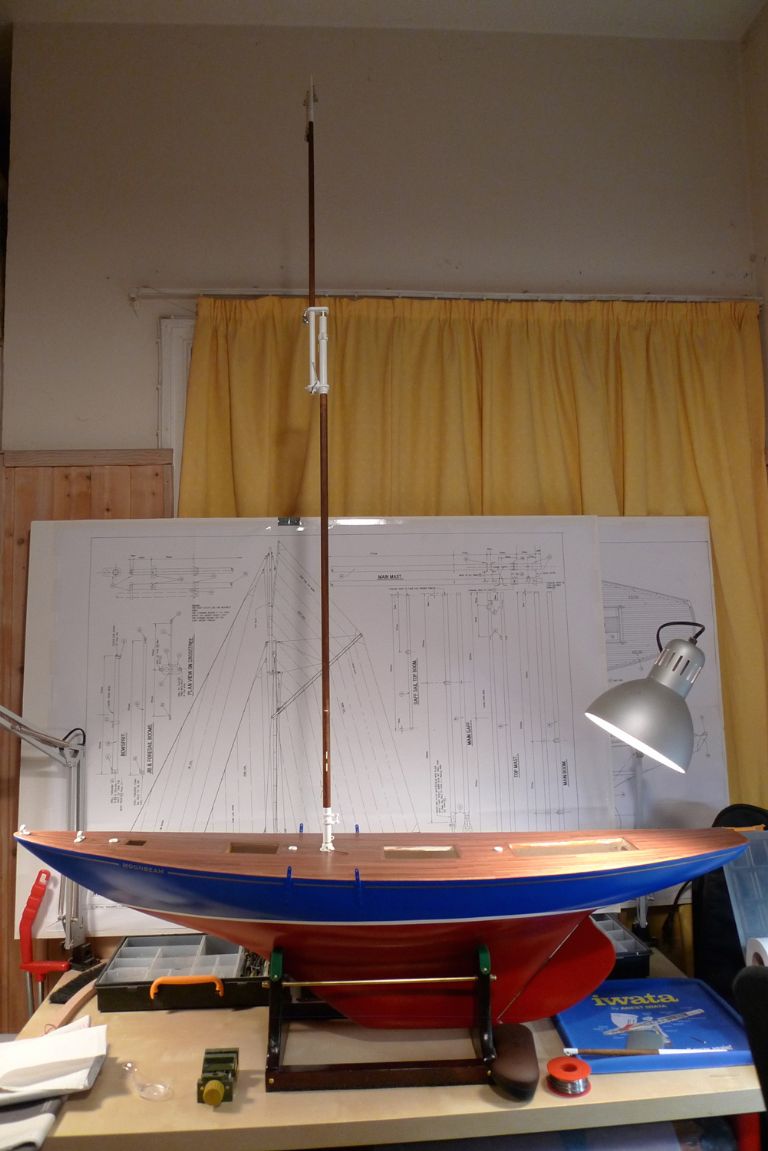
                  The three spars made up so far has now also received a total of five coats of gloss varnish …

                  mbbygg766.jpg

                  … while, inbetween spraying on varnish, I've also made a start at making up the pins for securing the moveable parts of the mast, topmast and bowsprit.

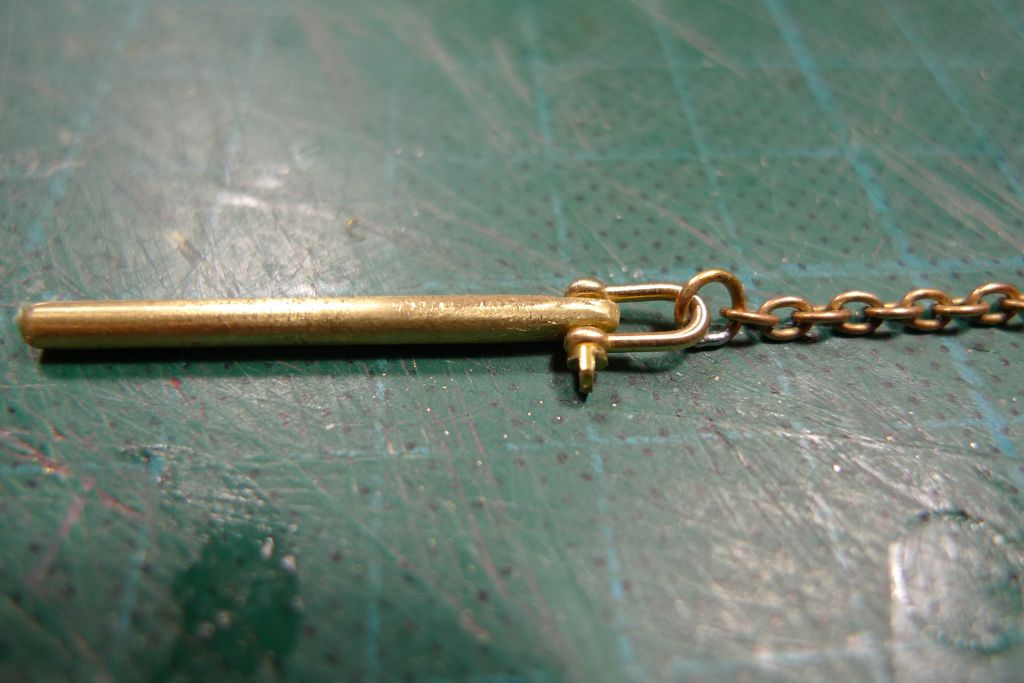
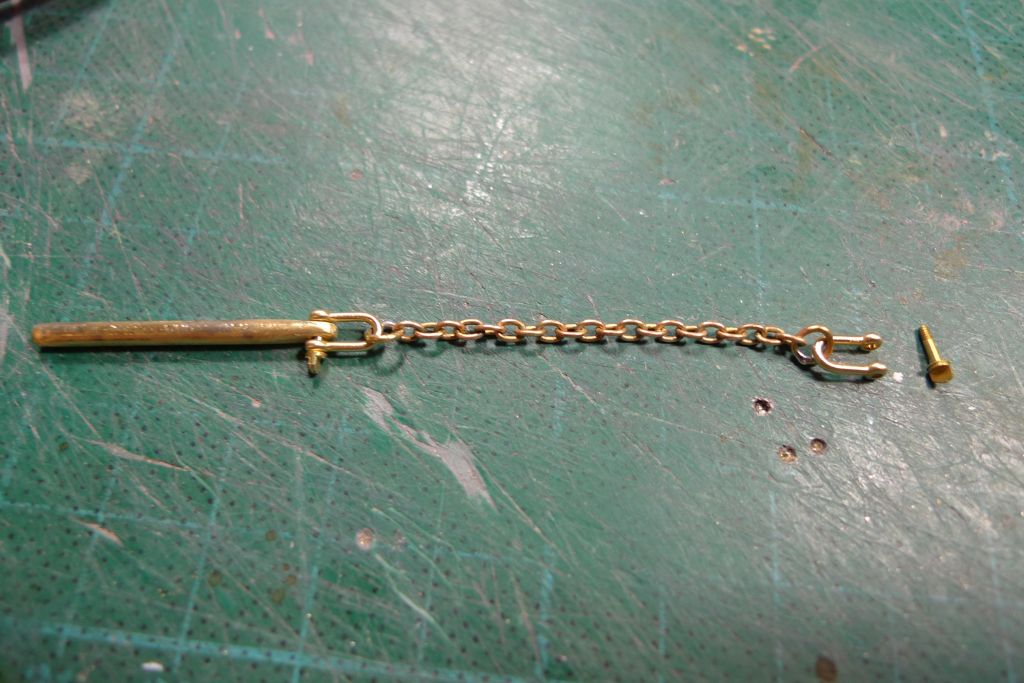
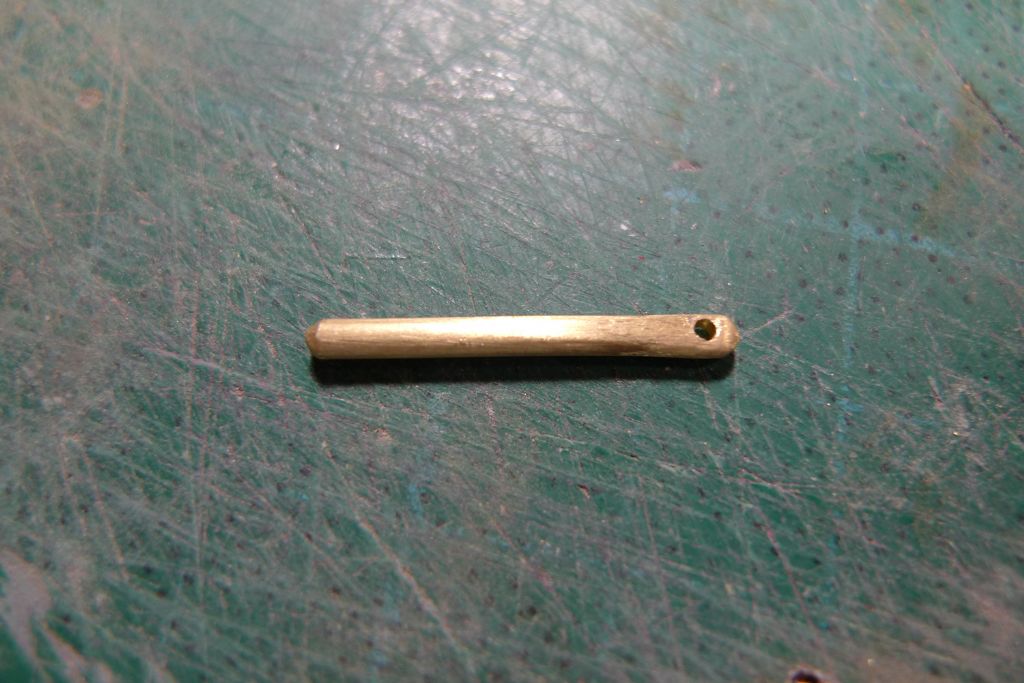
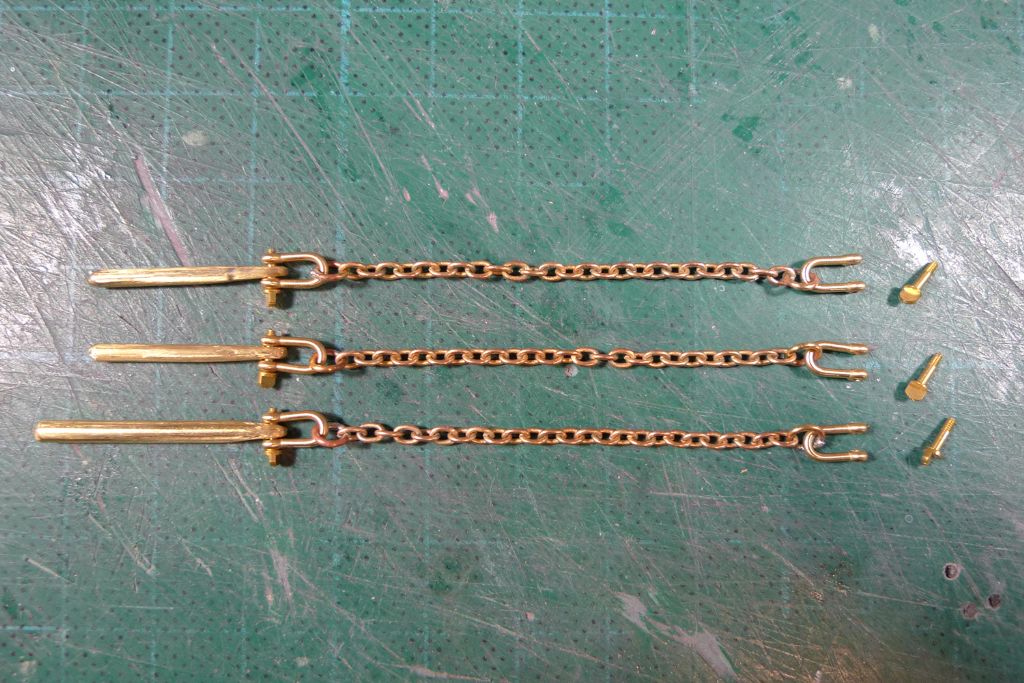
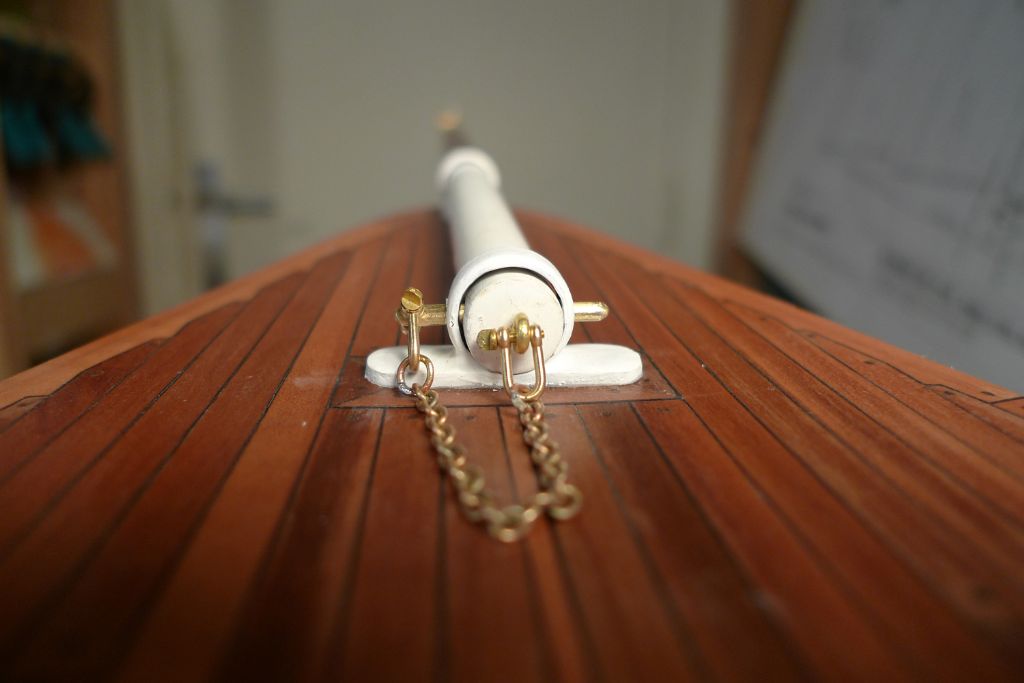
                  I started with the pin for the top slip bracket, and filed one end of some 2.5 mm brass rod, previously reduced to +/- 2.3 mm, flat on two sides, after which a 1.2 mm hole was drilled to take the pin of a small shackle. The other end of said shackle was then made fast to a short length of brass chain …

                  mbbygg767.jpg

                  … at the other end of which another shackle was added.

                  Given that these shackles, small though they be, are much too large to pass through the links of the actual chain, I also added a 4 mm brass ring, soldered close, to each end …

                  mbbygg768.jpg

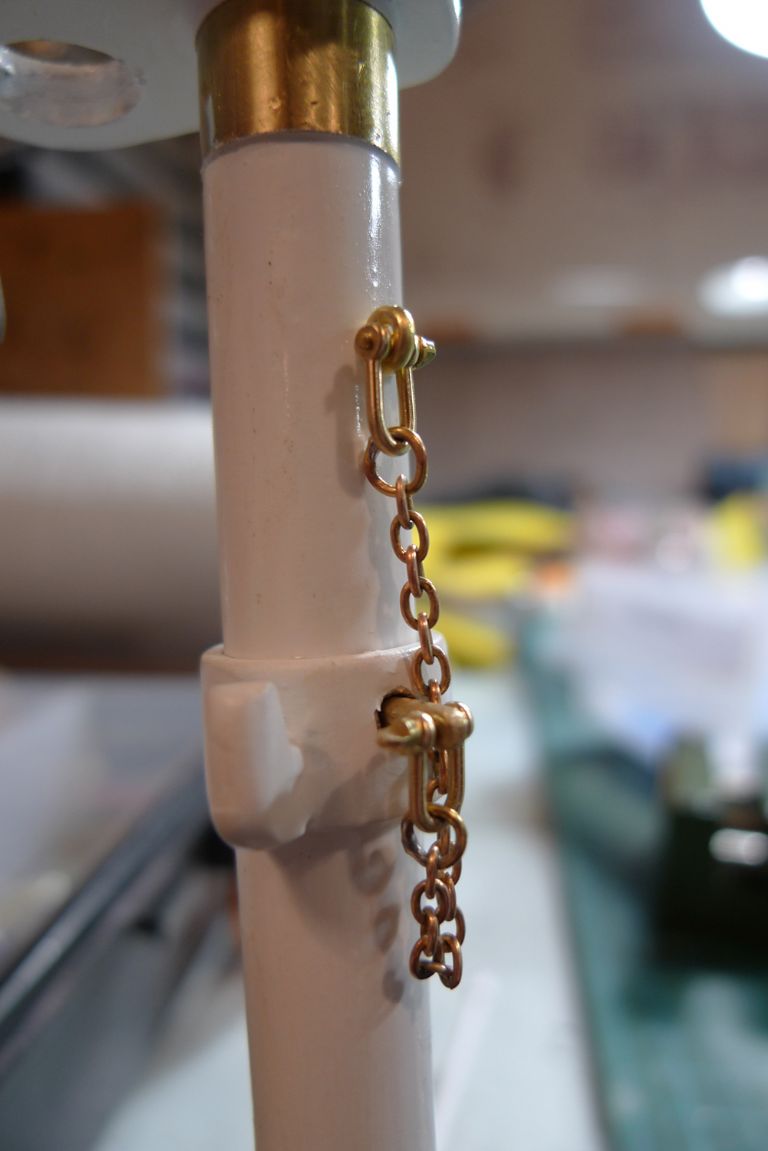
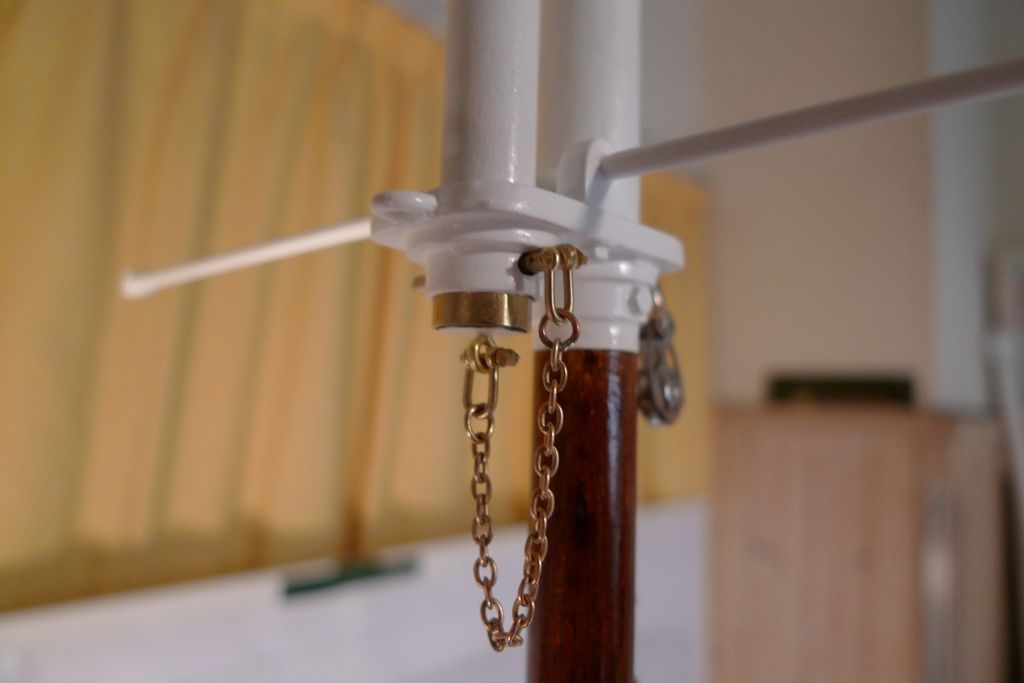
                  … while a small screw eye was screded into the mast above the top slip bracket 'up' position; the second shackle was made fast here, thus keeping the pin securely attached to the mast even when it is pulled out.

                  mbbygg769.jpg

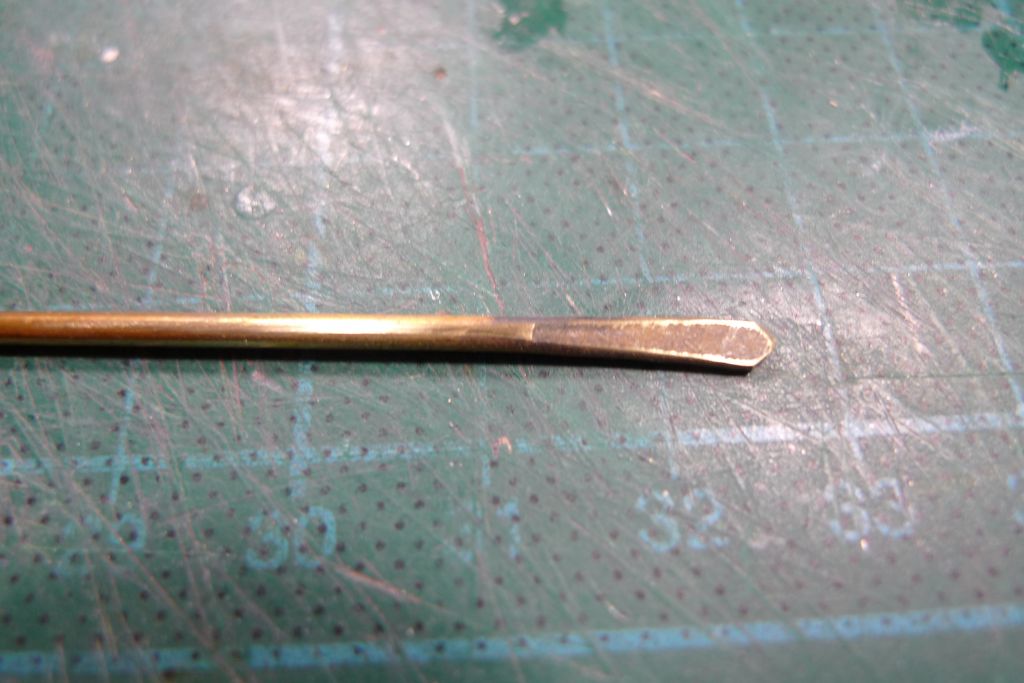
                  The two shackles just medntioned were the last two of that size that I had in stock, so while I'm waiting for some more to arrive from RB Models in Poland, I made up the topmast pin only. As the blank material here was a 2 mm brass rod, rather than 2.5, I decided not to file but to anneal and hammer flat the end …

                  mbbygg770.jpg

                  … to get those few but essential tenths of a millimeter more material through which to drill the required 1.2 mm hole.

                  mbbygg771.jpg

                  Once more shackles have arrived, this pin, too, will be secured with a short length of chain attached to the screw eye set into the topmast base.

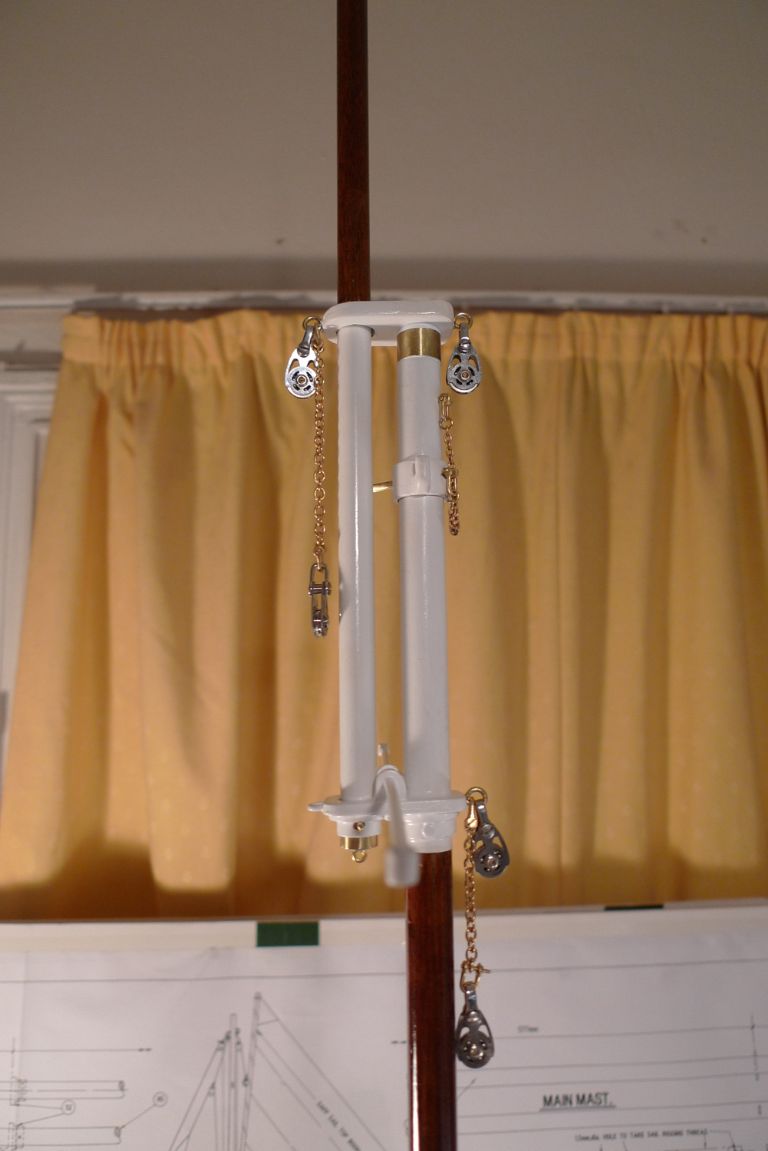
                  With all the necessary paint and varnish applied to the mast and topmast, I have now also permanently attached the remaining rigging blocks to the cross trees (although I will probably exchange the shackles connecting the chain pendants to their blocks with something more suitable – but that remains to be seen).

                  mbbygg772.jpg

                  To be continued …

                  Mattias

                  #69146
                  Bob Abell 2
                  Participant
                    @bobabell2

                    Hi Banjo

                    Your fittings are looking very pretty and most businesslike

                    Is the model a scale model based on a real boat?

                    And are there any cabins and furniture on the deck?

                    Bob

                    #69153
                    Banjoman
                    Participant
                      @banjoman

                      Hello Bob,

                      And thank you very much!

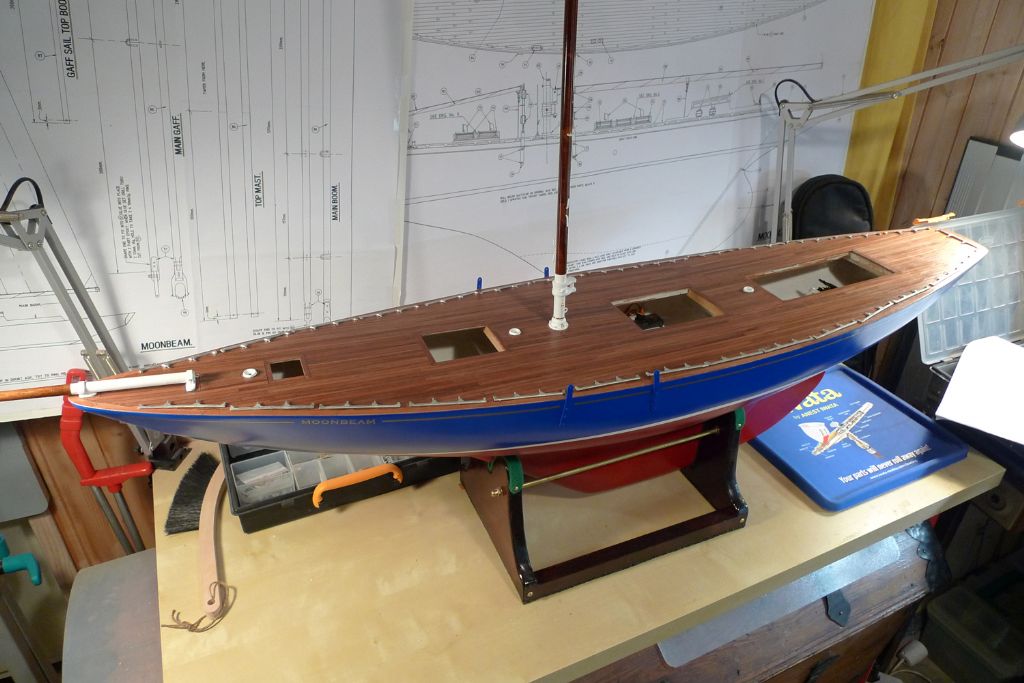
                      No, the Moonbeam kit as produced by David Metcalf is not a really a model of any known full size subject, but rather a model of a model, if you like, or perhaps one should say "a replica". The hull shape and the rig are both based on that of a pond yacht known to "have been free sailing on the Round Pond in Kensington in early 1913" according to David Metcalf. However, I believe that he has added a certain amount of semi-scale type details when it comes to deck furniture and superstructures that were not on the original pond yacht, and these will indeed figure once I get to that stage of the build.

                      Well, actually I should be at that stage now, but have decided to leap ahead and set up the mast and bowsprit before moving on to the cabins and deck furnishings, as I would prefer to get the former sorted before I varnish the deck, and to varnish the deck before I do the cabins etc.

                      Anyway, from what the descriptions in the instructions say, to the extent that there are semi-scale or scaleish features, they are more or less at 1:24 scale. And although there are enough differences to make it clear, I would say, that there is no direct link, the kit Moonbeam does share a general look, particularly aloft, with the Fife-built real Moonbeams I–IV, and one thus wonders to what extent that 1913 pond yacht model was inspired by the Fife Moonbeams … ?!

                      Mattias

                      Edited By Banjoman on 28/12/2016 19:48:43

                      #69175
                      Banjoman
                      Participant
                        @banjoman

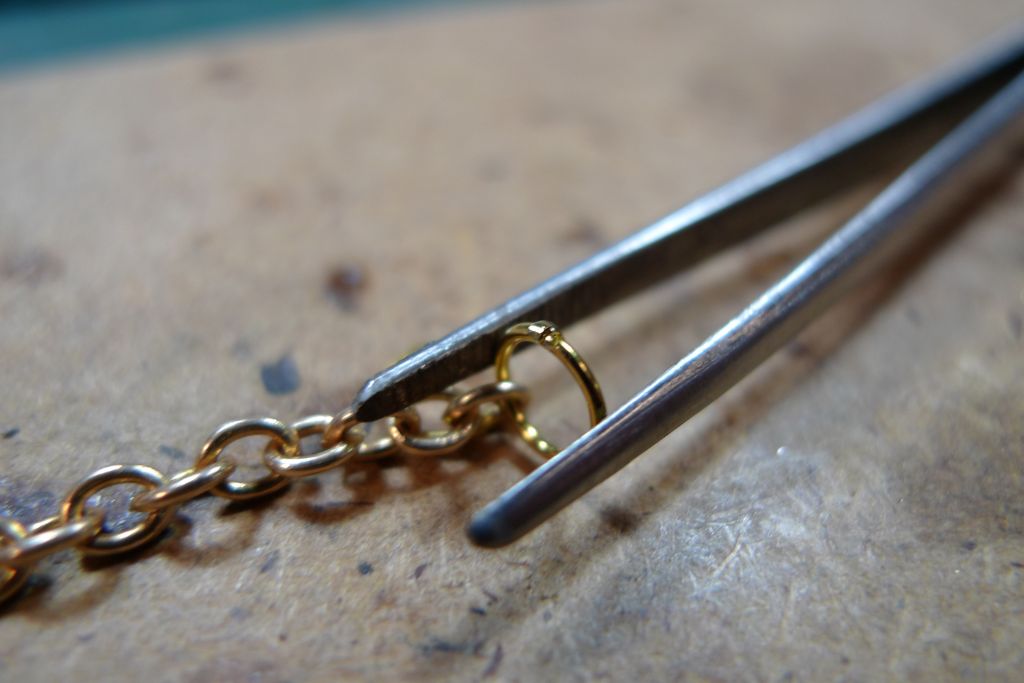
                        As mentioned yesterday, I didn't quite like the shackles on the end of the rigging block chain pendants, and so decided to replace them with rings added to the chain.

                        After setting a ring up n a self-closing tweezer, I applied a small drop of flux to the joint in the ring …

                        mbbygg773.jpg

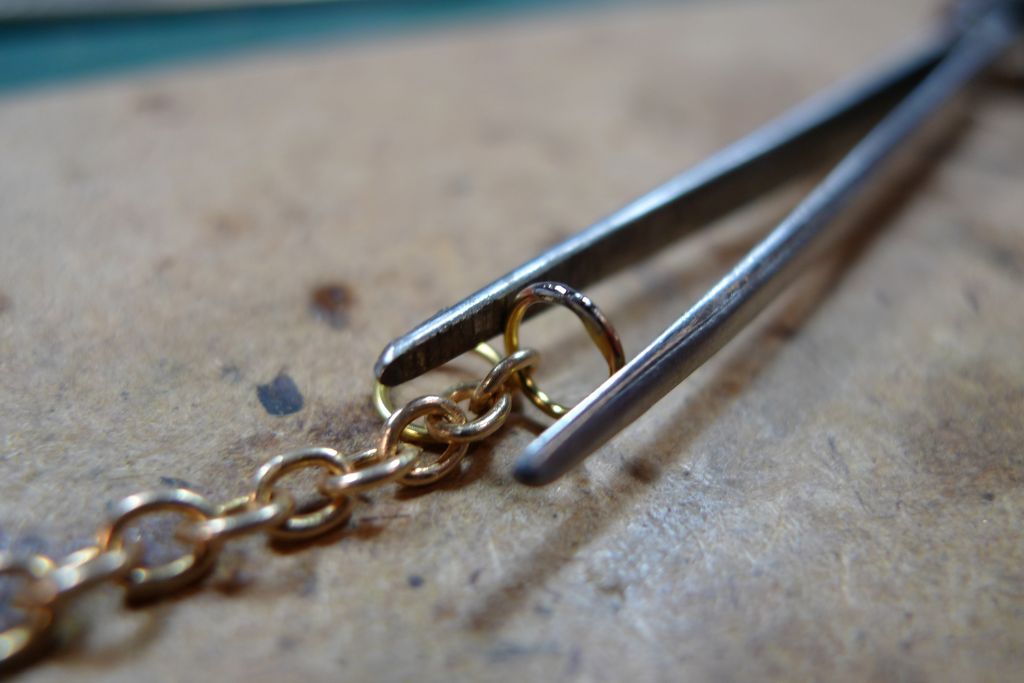
                        … and soldered it closed.

                        mbbygg774.jpg

                        As an extra precaution against such a soldered joint coming apart, I used two rings instead of one in each pendant; in any case, the block now hangs and moves as it should at the end of the pendant.

                        mbbygg775.jpg

                        I have also made up the remaining two pins, the first for pinning the bowsprit. I noticed when taking this photo that the paint on the aft edge of the bowsprit ring needs to be touched up a bit, as I have had to enlarge the ring a tad by filing for the bowsprit to still be a good slide fit with the additional thickness of paint and varnish included, and in the process managed to scuff said paint.

                        mbbygg776.jpg

                        The mast step pin has also been made up; as soon as I get more shackles, I'll add the securing chains.

                        mbbygg777.jpg

                        To be continued …

                        Mattias

                        Edited By Banjoman on 29/12/2016 21:16:11

                        Edited By Banjoman on 29/12/2016 21:16:37

                        #69230
                        Banjoman
                        Participant
                          @banjoman

                          Time now to get to grips with the rest of deck fittings before varnishing the deck …

                          mbbygg778.jpg

                          … first of which to be dealt with are the kicking rails.

                          mbbygg779.jpg

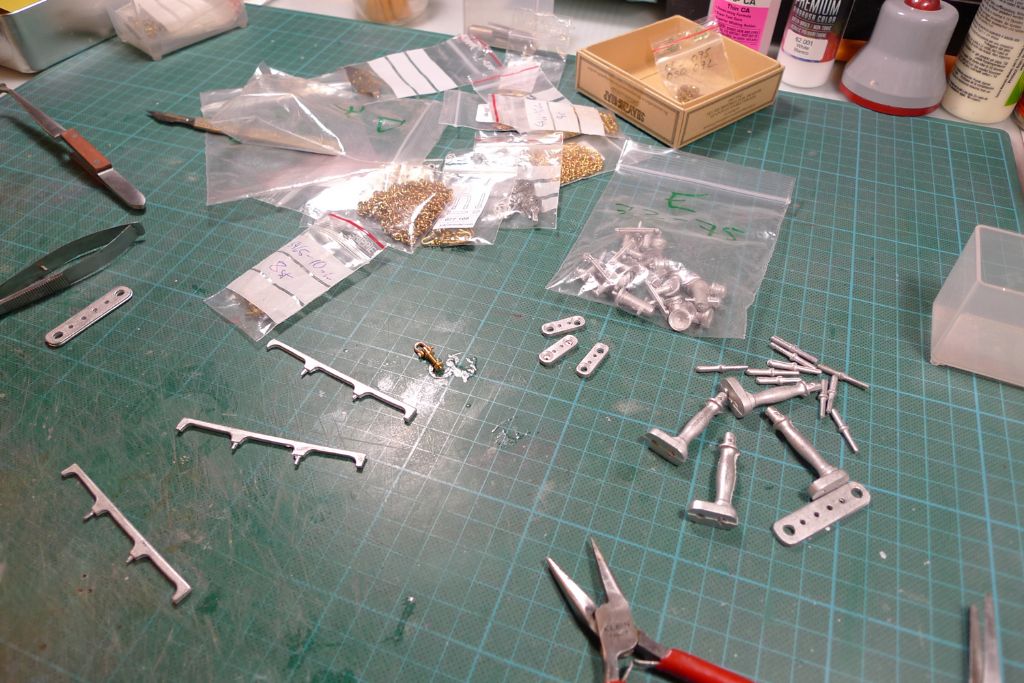
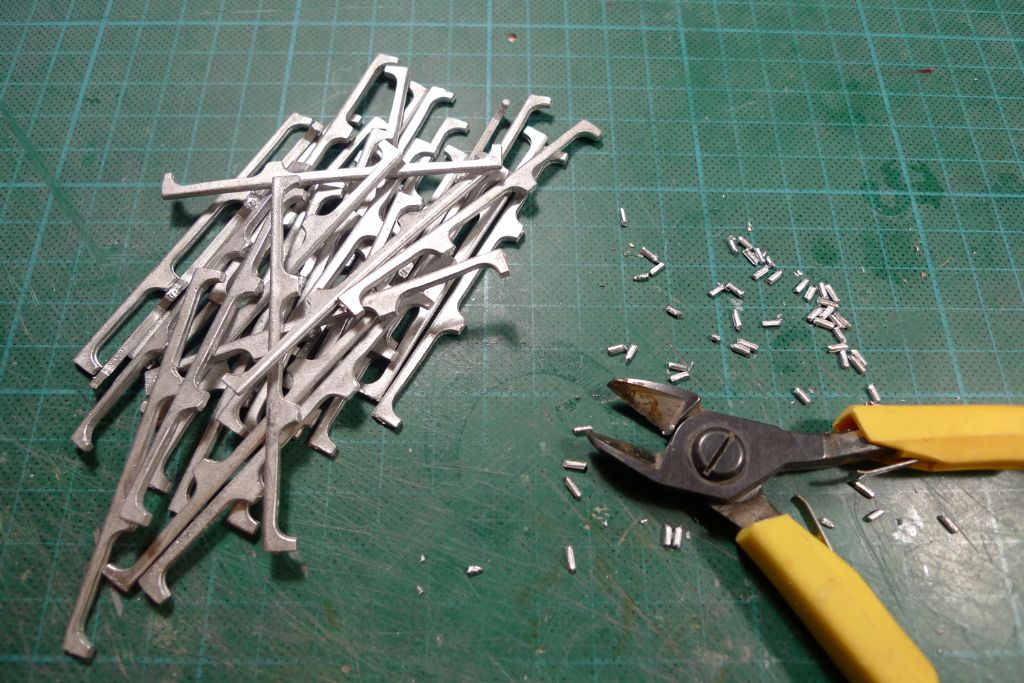
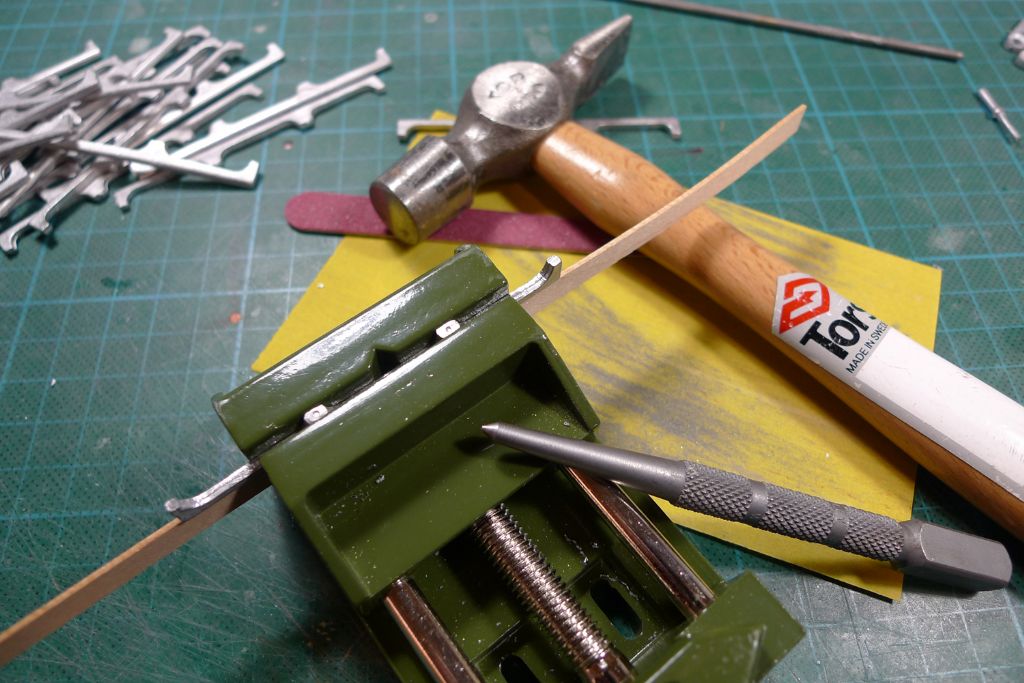
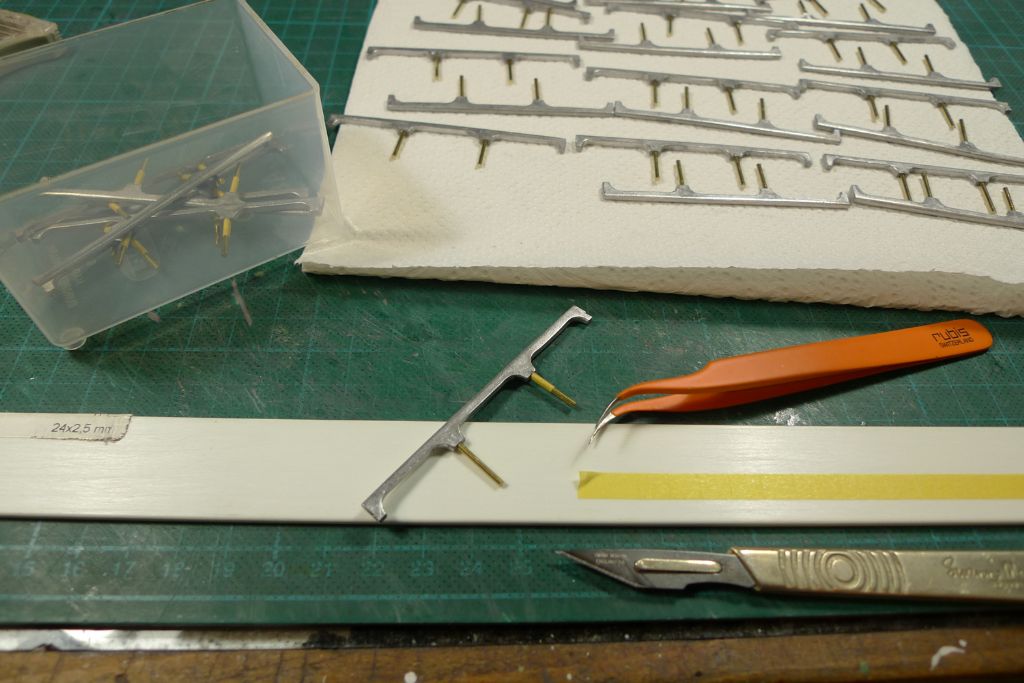
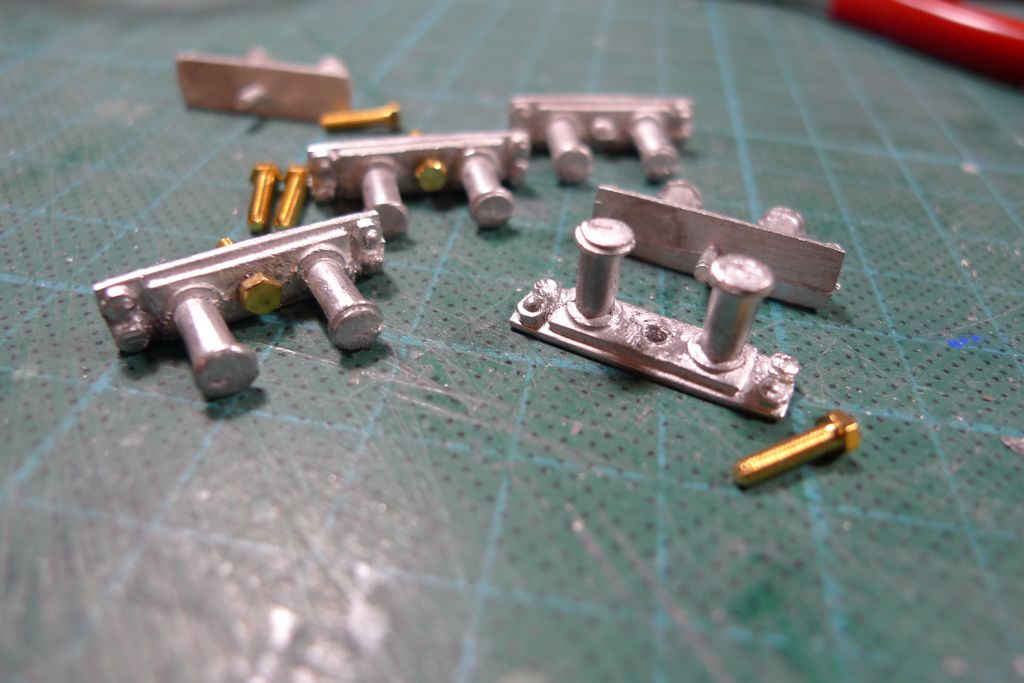
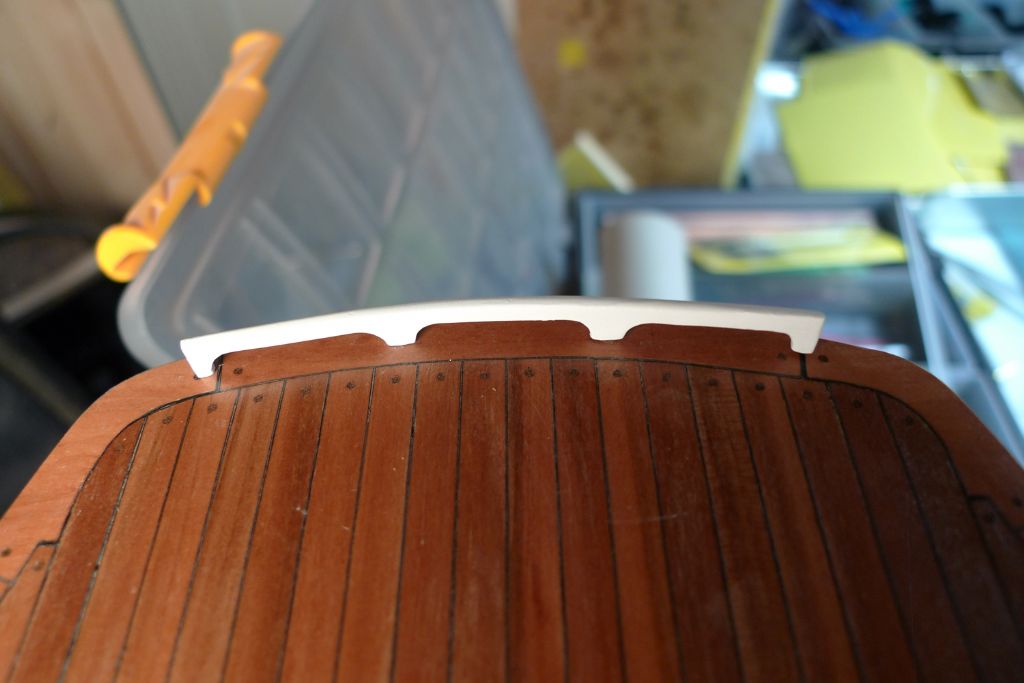
                          These are from white metal, and come complete with white metal pins for attaching them to the hull. These pins are likely to be way too fragile and easy to break, so I began work on the rails by cutting them all off!

                          mbbygg780.jpg

                          The underside of each rail was then sanded even, and the rails themselves fettled where necessary, after which starting points were punched into the undersides of the two central feet of each rail …

                          mbbygg781.jpg

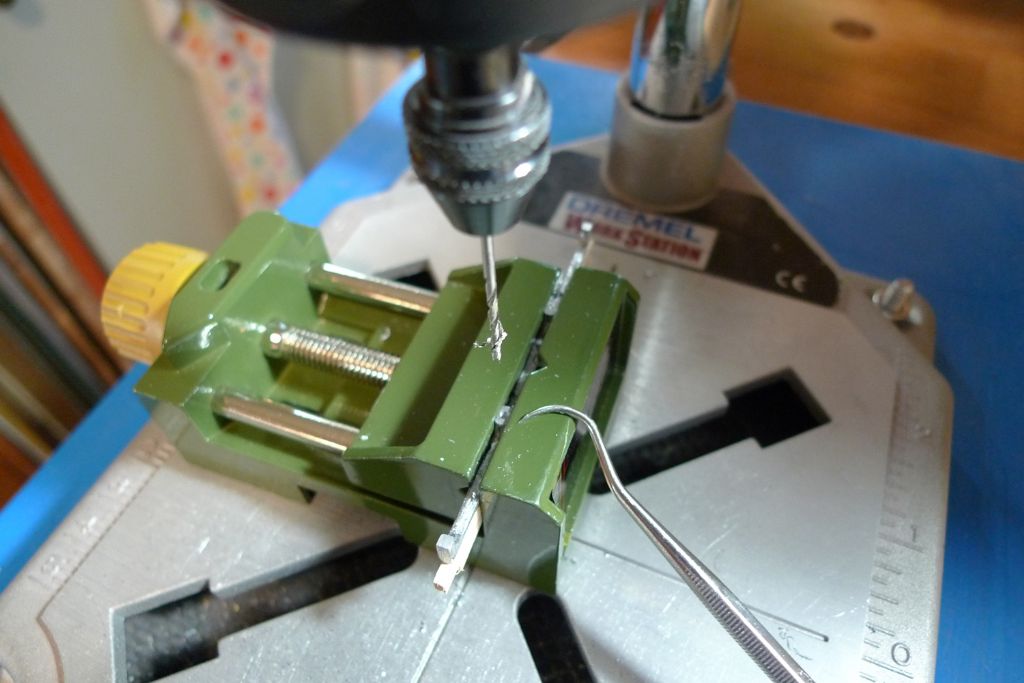
                          … as a starting point for drilling 1.5 mm holes into them.

                          Given that white metal tends to get quite soft and sticky when drilled, the flutes of the drill bit had to be cleaned out after each cut.

                          mbbygg782.jpg

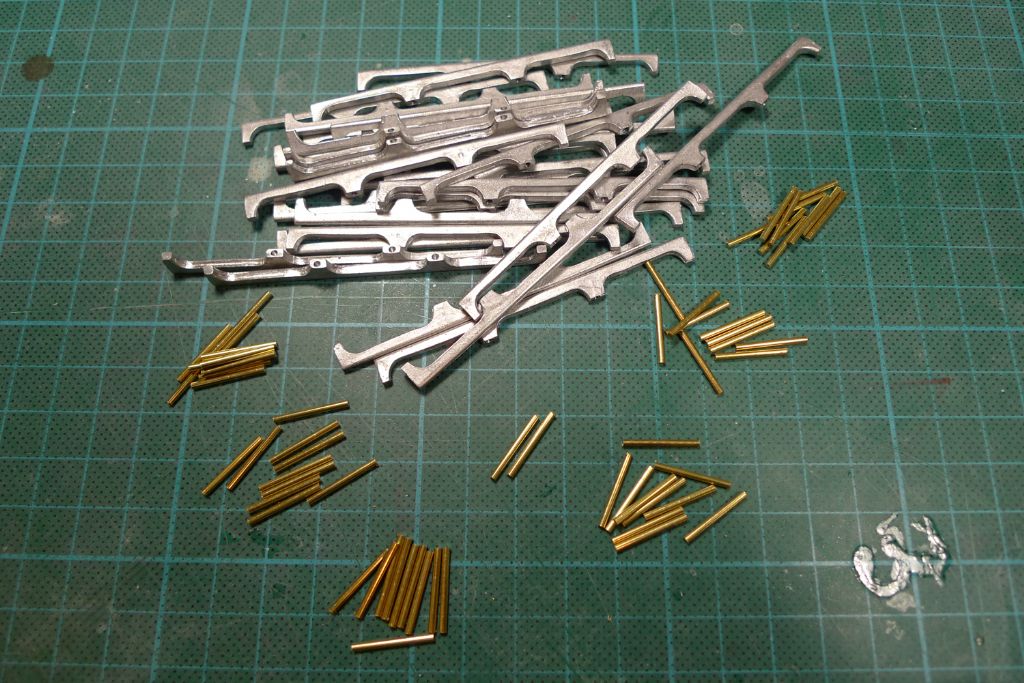
                          Next, I cut off a number of 16 mm lengths of 1.5 mm brass rod …

                          mbbygg783.jpg

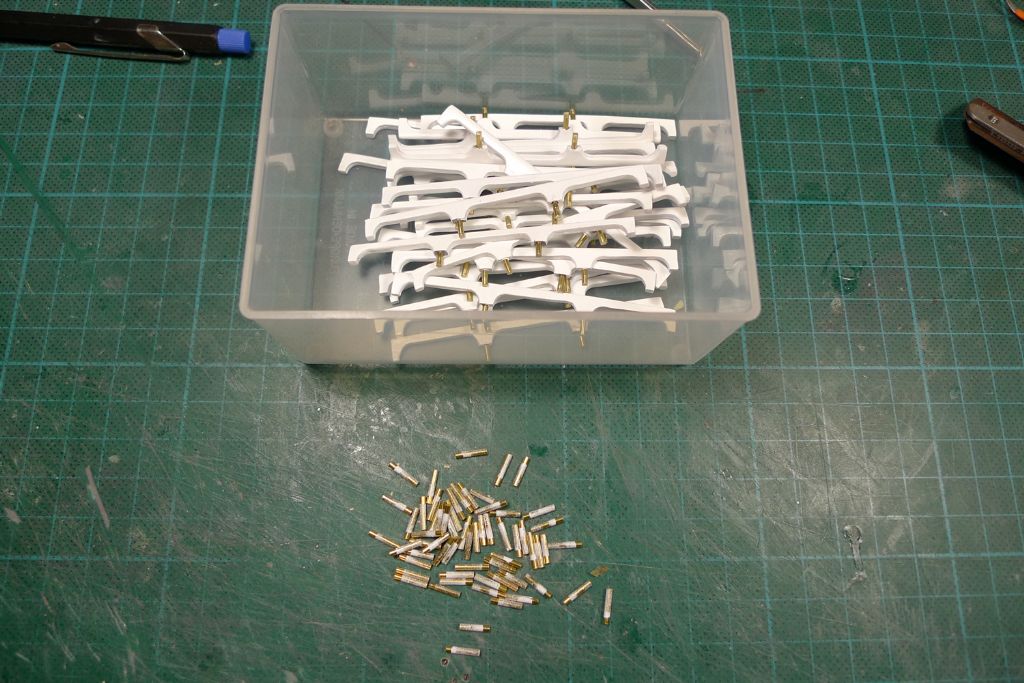
                          … until I had 62 of them …

                          mbbygg784.jpg

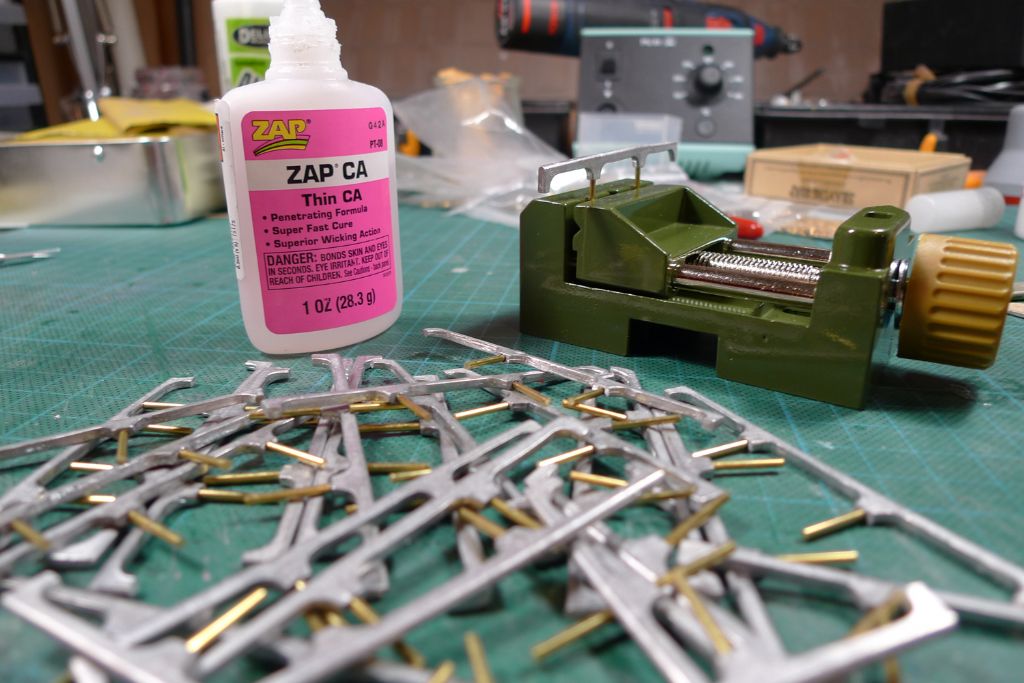
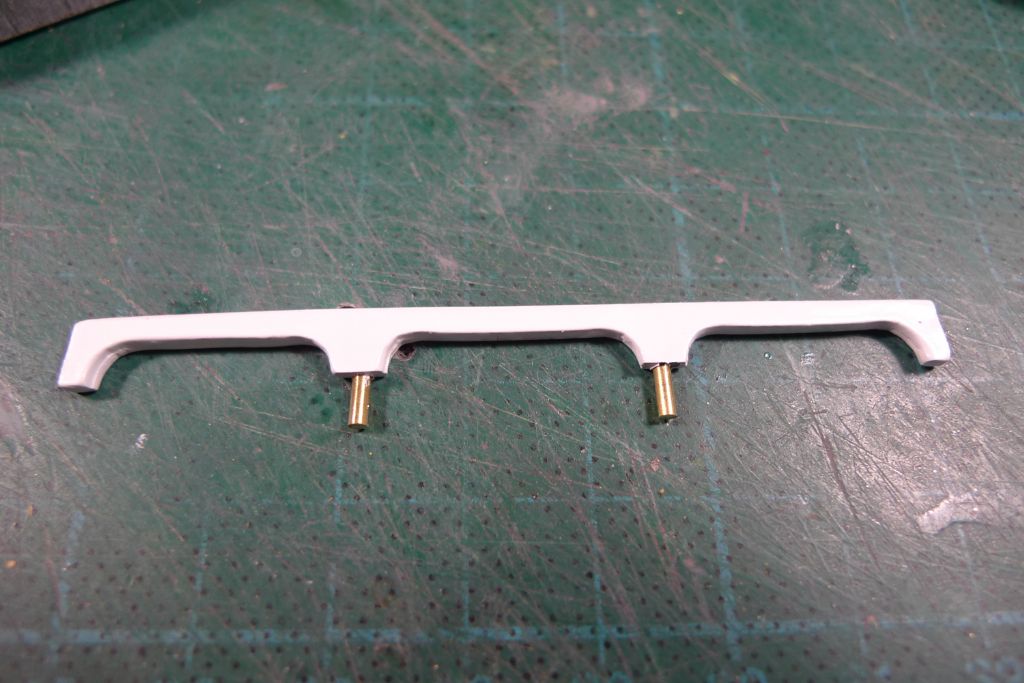
                          .. that were inserted into the fet of the rails, and secured with a wee drop each of thin CA. These brass pins currently are too long – they will be cut once more, to protrude 4 mm from the feet, but having them longer will be helpful while fettling the uppers and also while painting them.

                          mbbygg785.jpg

                          To be continued …

                          Mattias

                          Edited By Banjoman on 01/01/2017 14:27:53

                          #69249
                          Bob Abell 2
                          Participant
                            @bobabell2

                            Happy new year Banjo

                            My word!……….All this ironwork yet to be added, not to mention the furniture etc!

                            It should stand out well against the darkish deck planking though

                            Could be a tricky job, considering the curvature of the hull

                            Keep up the good work

                            Bob

                            #69257
                            Banjoman
                            Participant
                              @banjoman

                              And a very Happy New Year to you, too, Bob!

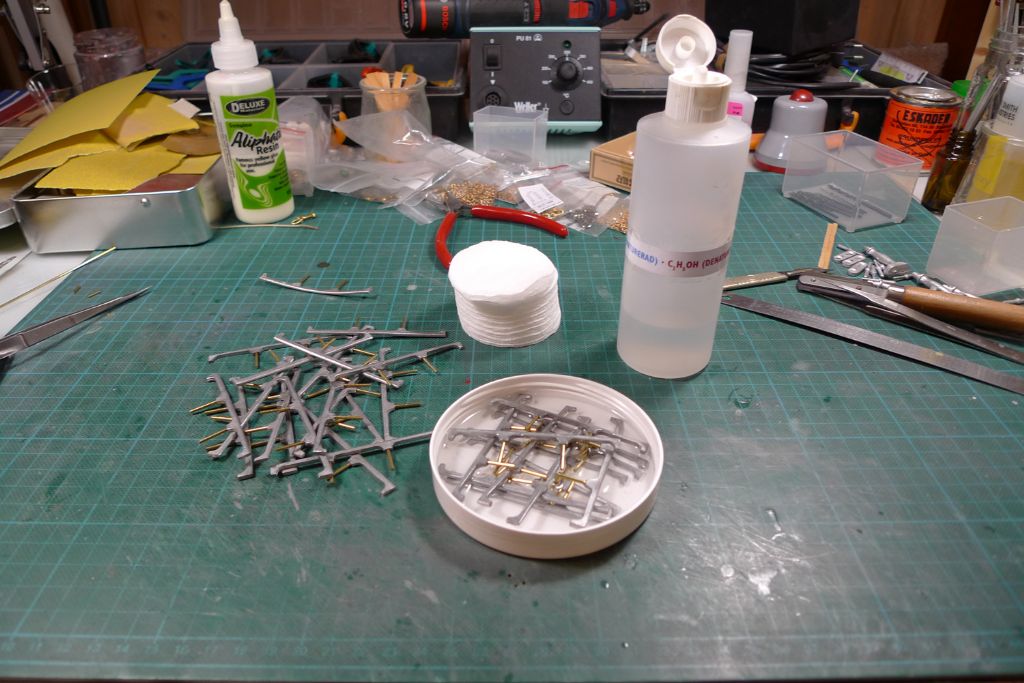
                              Yes – there is indeed quite an amount of white metal-mongery for this stage of the build, so best handled, I find, as a series of batch jobs. After fettling the rail uppers as well, I then cleaned and degreased the rails with some methylated spirits …

                              mbbygg786.jpg

                              … masked off the top ends of the brass pins (which will of course be the main surface for the glue, and thus needs to be kept free from paint) …

                              mbbygg787.jpg

                              … and set about the paint job.

                              mbbygg788.jpg

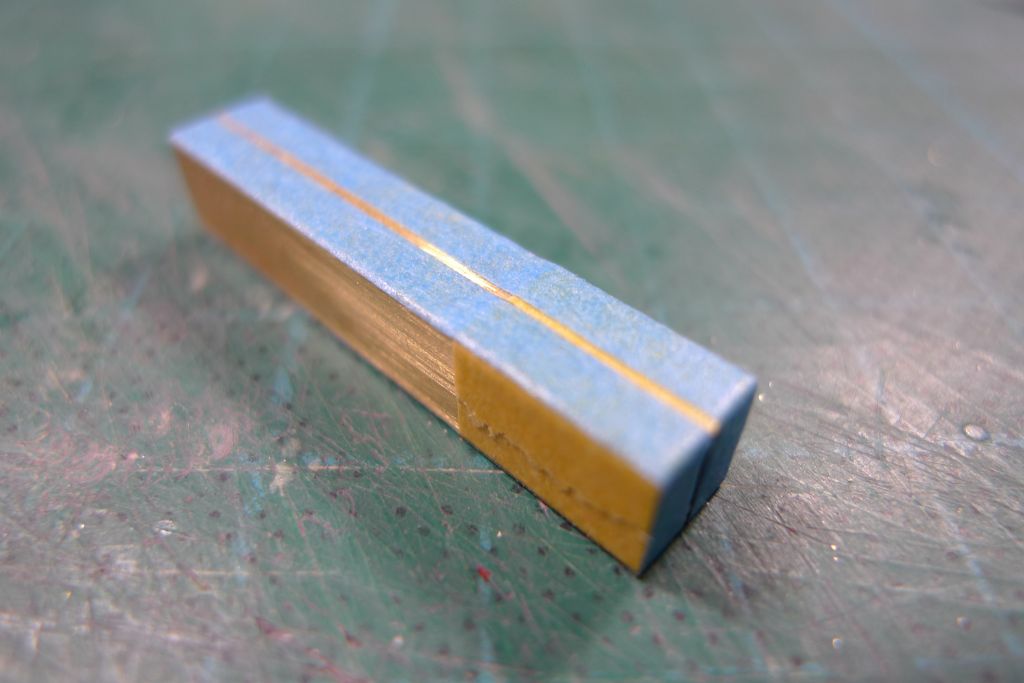
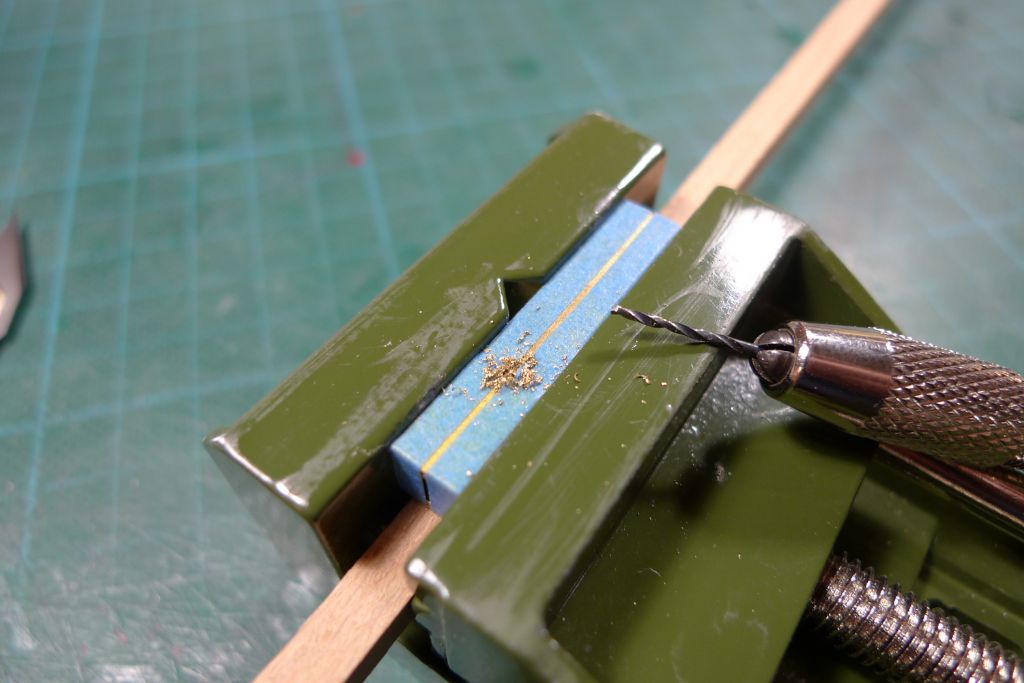
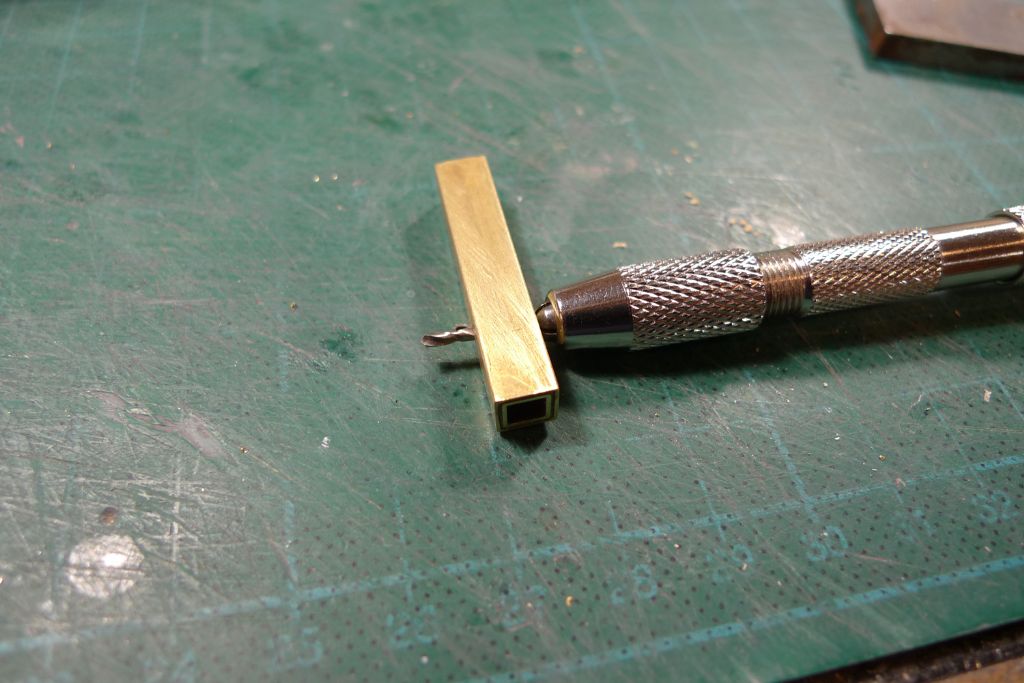
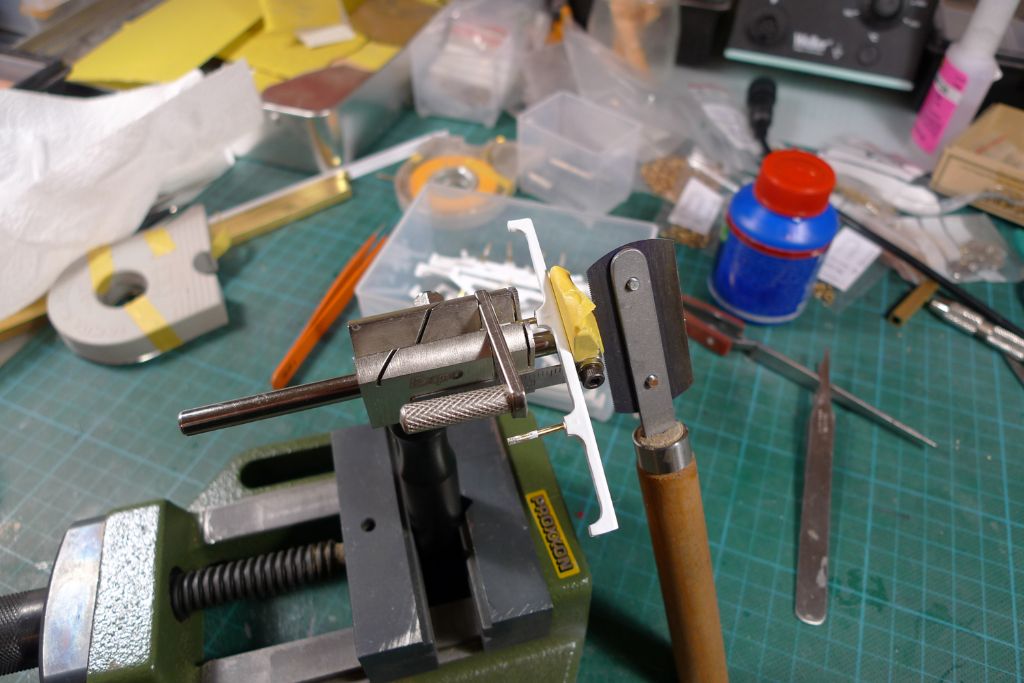
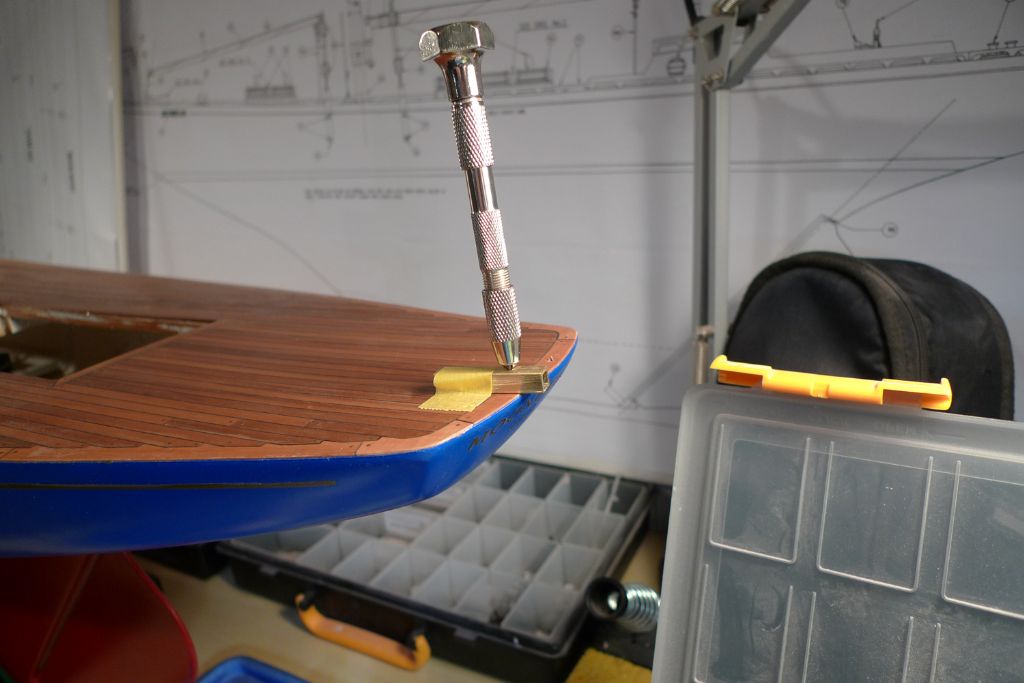
                              In between coats of paint, I also made up a small jig, by taking some pieces of slide-fit square brass tube, securing them against each other with thin CA, and then marking out the same spot on top and bottom by the simple expedient of masking tape.

                              mbbygg789.jpg

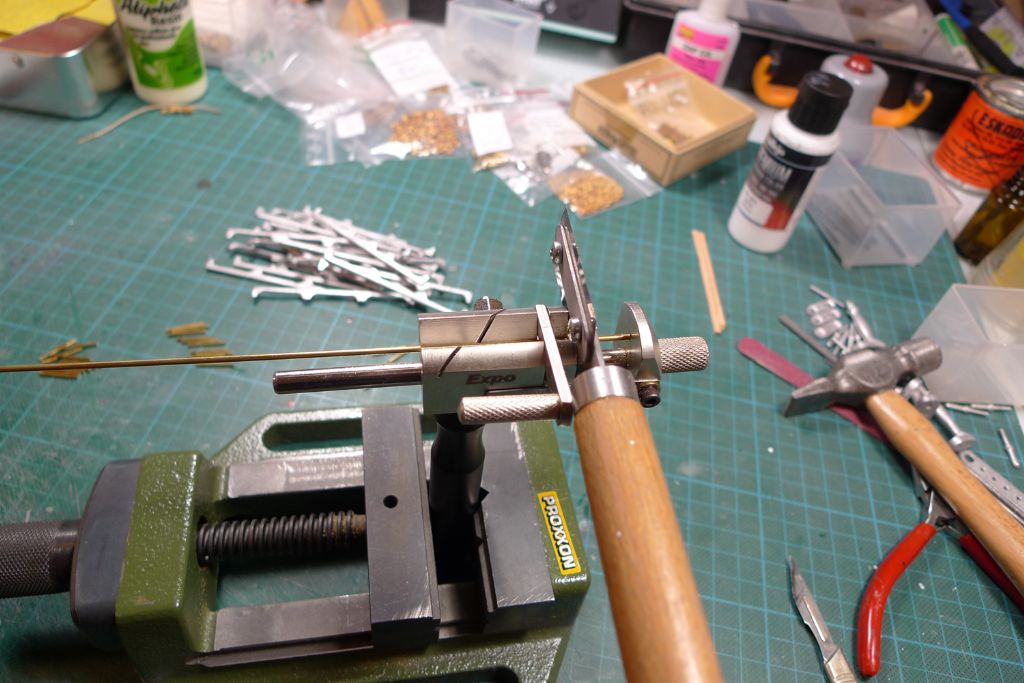
                              The marked-out points were drilled through with a 0.9 mm bit in the pin vise …

                              mbbygg790.jpg

                              … and then enlarged to 1.5 mm with the Dremel in its stand.

                              By drilling the (as) exact (as needed) opposite spots rather than going through from top to bottom in one cut, I made sure that the holes would line up properly; neither the Dremel nor its stand are sufficiently firm to give a truly vertical cut – on the contrary, the bit is almost guaranteed to wander off centre.

                              I have started saving up for one of these **LINK** but it'll be a while before I have accumulated the werewithal to actually put in an order, so in the meantime I have to make do with what I've got …

                              In any case, the resulting jig will do double duty as depth stop and keeping the pin vise vertical while drilling the 62 holes around the deck edge to take the kick rail pins.

                              mbbygg791.jpg

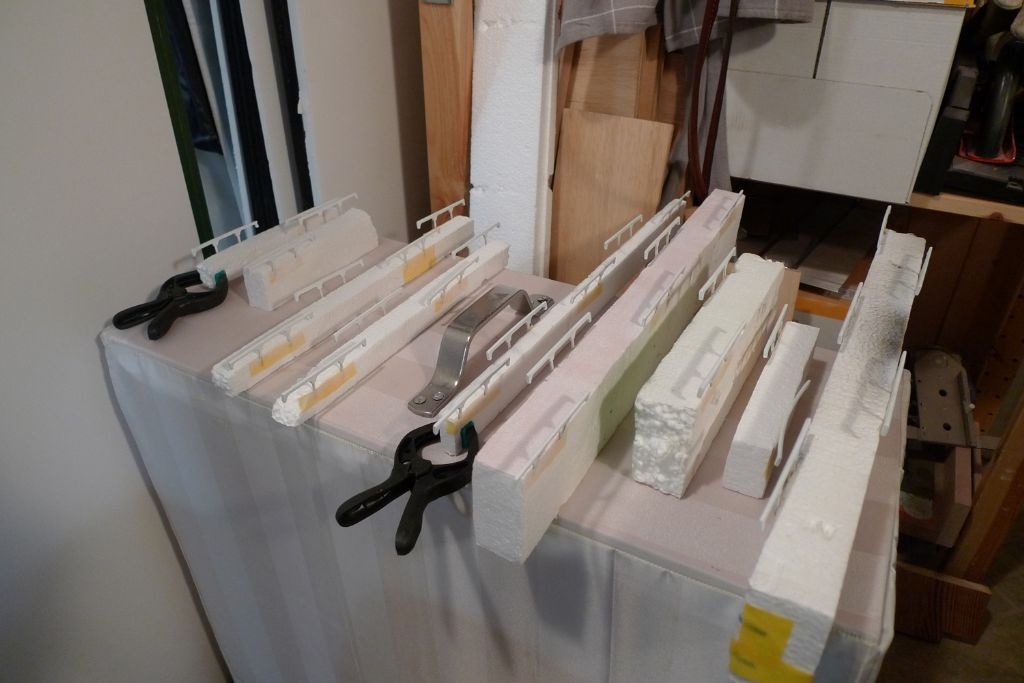
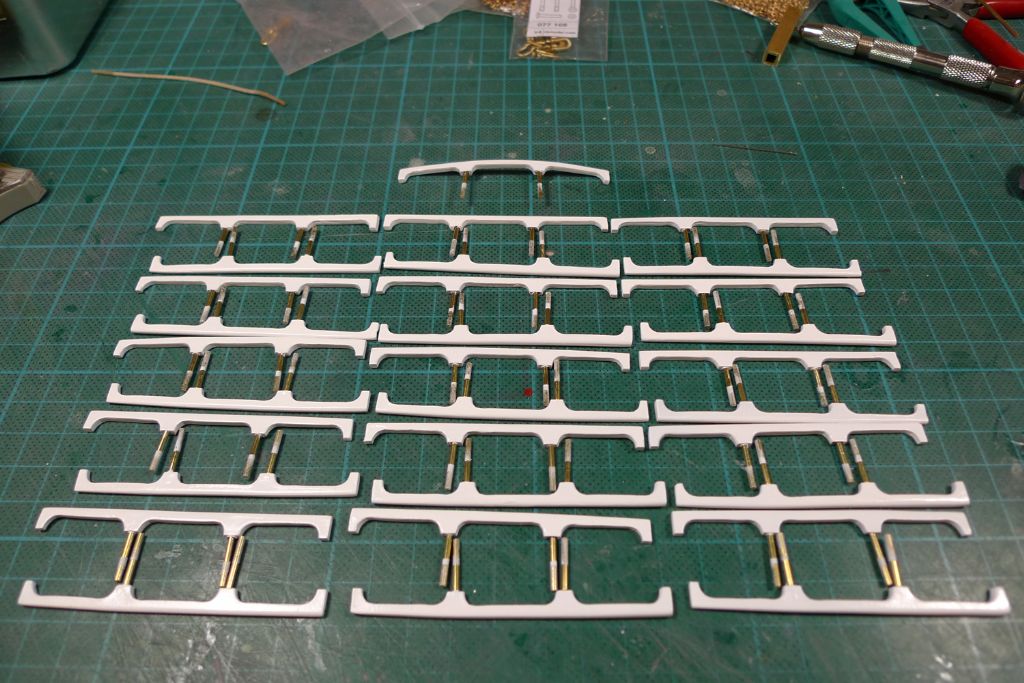
                              In the meantime, the kick rails have received the usual one coat of white primer, two coats of white gloss paint and one coat of gloss varnish, and now look like this.

                              mbbygg792.jpg

                              Next up will be drilling all those holes, but that'll have to wait until next weekend, as I'm now off to the airport two pick up some friends from Tasmania that are coming to stay …

                              mbbygg793.jpg

                              To be continued …

                              Mattias

                              Edited By Banjoman on 02/01/2017 12:42:17

                              Edited By Banjoman on 02/01/2017 12:43:22

                              #69334
                              Banjoman
                              Participant
                                @banjoman

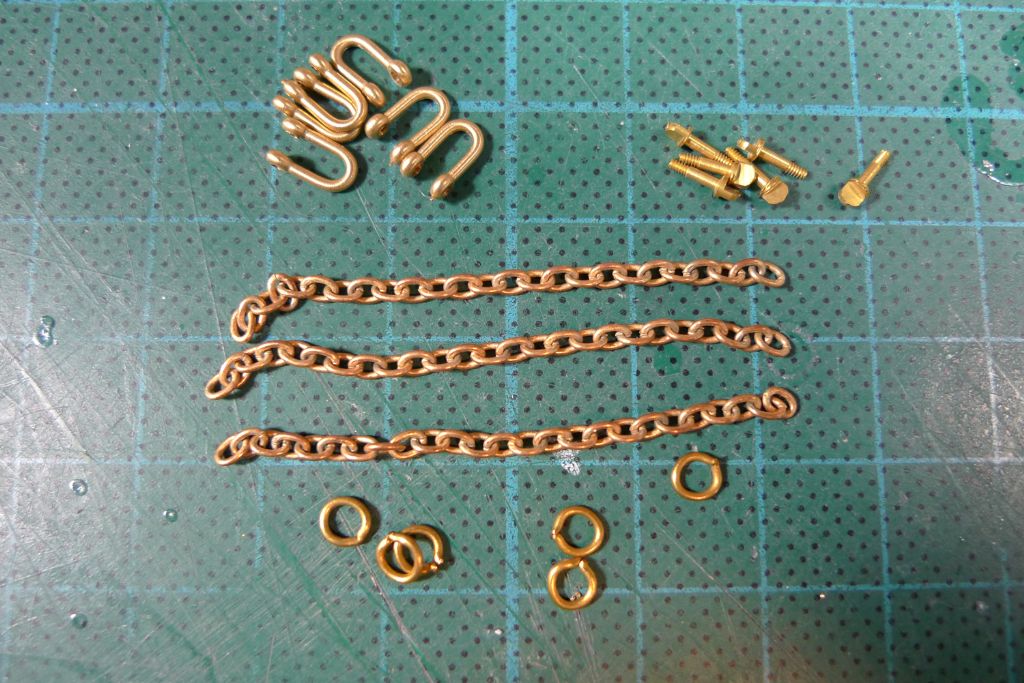
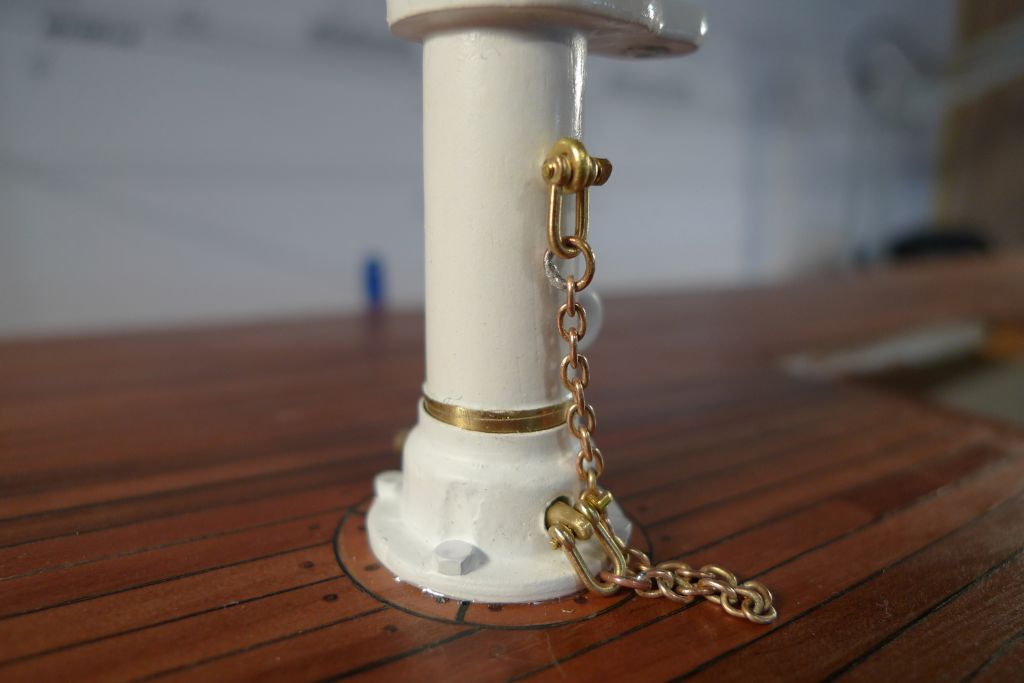
                                With my stock of 7×4 mm M-type shackles finally replenished, it was time to gather the necessary materials for making up the pin securing chains …

                                mbbygg794.jpg

                                … add the 4 mm rings to the chain ends and solder them closed, before shackling one end to each pin …

                                mbbygg795.jpg

                                … and the other ends to the eye screws in respectively the bowsprit …

                                mbbygg796.jpg

                                … the top mast …

                                mbbygg797.jpg

                                … and the base of the mast.

                                mbbygg798.jpg

                                This way, there is no risk that a pin will go AWOL …

                                To be continued …

                                Mattias

                                #69335
                                Bob Abell 2
                                Participant
                                  @bobabell2

                                  I like your iron mongery, Banjo

                                  Very interesting attractive solution

                                  The contrasting white area`s look really Whizzo!

                                  Bob

                                  #69372
                                  Banjoman
                                  Participant
                                    @banjoman

                                    Thank you very much, Bob!

                                    Or should that be brass mongery?

                                    Anyway, with the kicking rails painted and the paint properly dry it was time to start cutting off the excess parts of the brass pins …

                                    mbbygg799.jpg

                                    … to produce pins all the same length at +/- 4.2 mm.

                                    mbbygg800.jpg

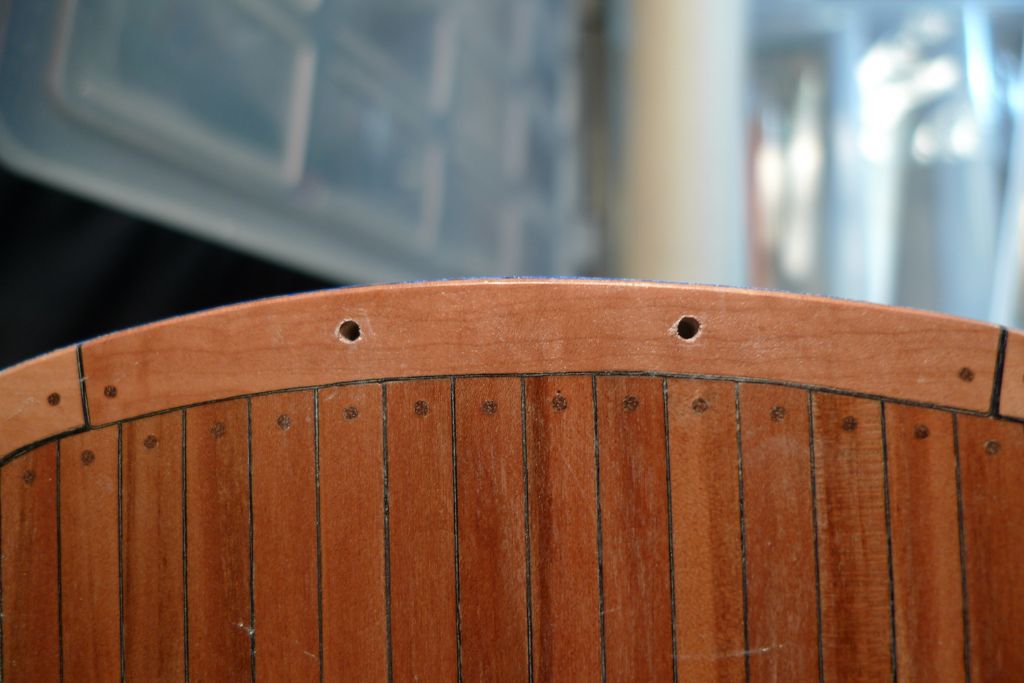
                                    I noticed early on when fettling the rails that they are thicker by maybe 0.5 mm or so at one end compared to the other. In all probability this is not a casting error, as they are all the same in that respect; more likely the pattern from which the moulds were made was this way.

                                    Along the port and starboard sides this won't matter so much, as I can simply turn each piece around in such a way that a thicker end always meets another thick one, and vice versa, but at the stern, where there is but a single rail piece I took care to sand the thicker end of it down until it was similar to the thinner one.

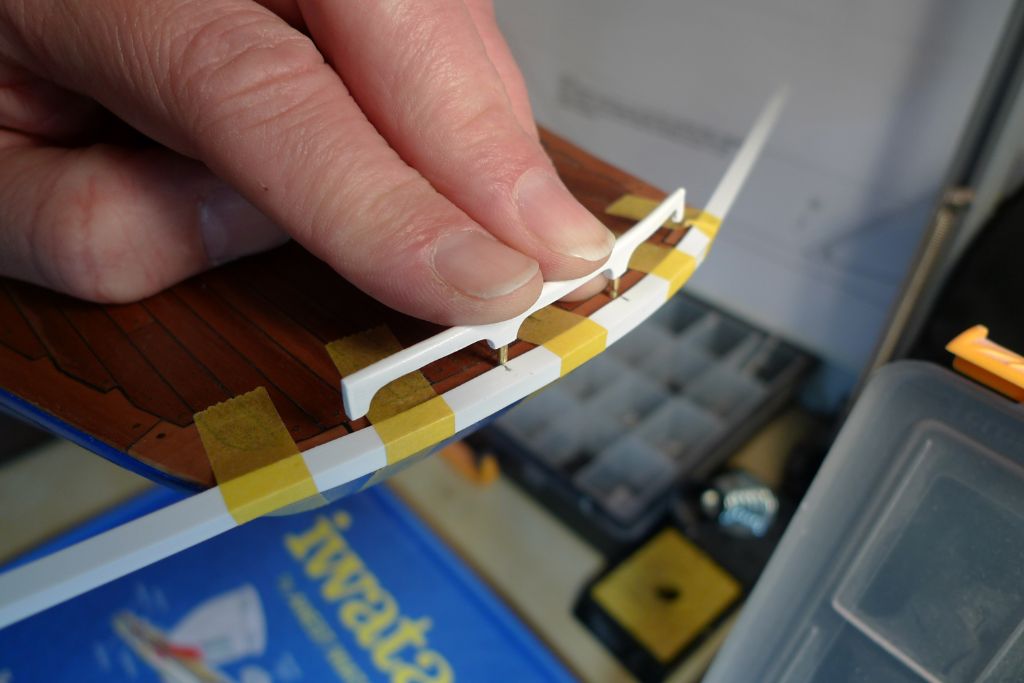
                                    To help me locate the proper spots to drill the holes for the rail pins, I decided to use some 4×4 mm styrene L-shaped profile, which is flexible enough to follow the curvature of the hull edge, will take a pencil mark and provides an edge 3.2 mm inside the actual edge of the hull.

                                    I started with the stern rail, held it up to the styrene edge and marked off the position of the two pins with pencil …

                                    mbbygg801.jpg

                                    … and then, with the pencil marks as a guide, pricked out the locations to be drilled with a sharp, thin awl.

                                    mbbygg802.jpg

                                    Using my recently produced brass guide piece and a 1.5 mm bit in the pin vise …

                                    mbbygg803.jpg

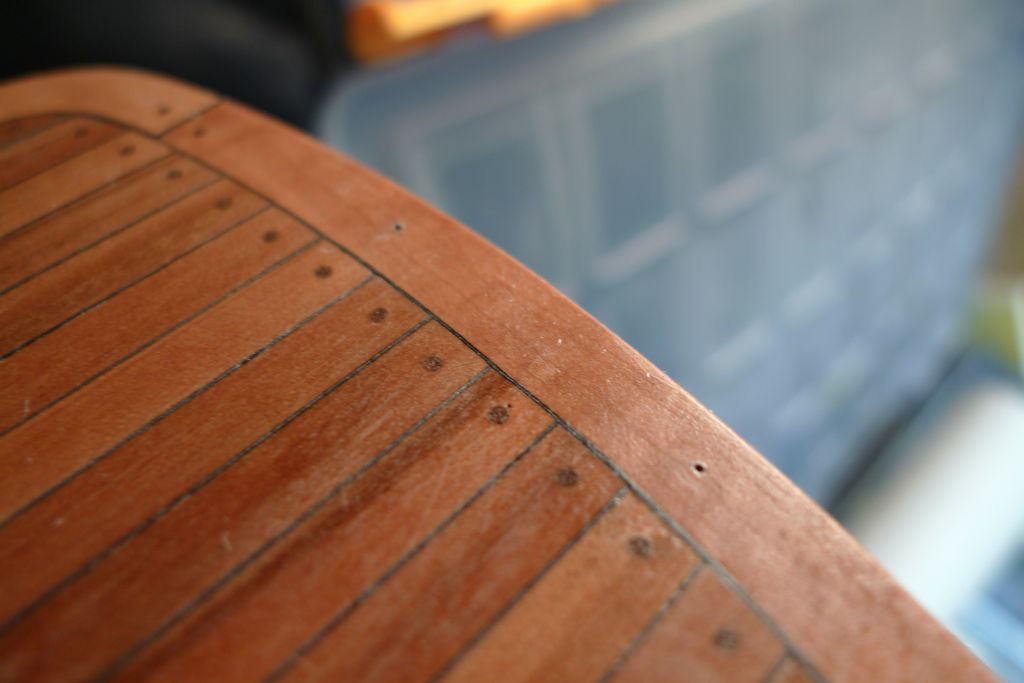
                                    … two holes were drilled vertically into the edge planking to a depth of +/- 5.5 mm; deep enough to take the 4.2 mm long pins, but shallow enough not to risk piercing the hull …

                                    mbbygg804.jpg

                                    … into which the rail pins was a nice, light push fit.

                                    mbbygg805.jpg

                                    After a couple of hours spent sawing the excess off a further 60 pins …

                                    mbbygg806.jpg

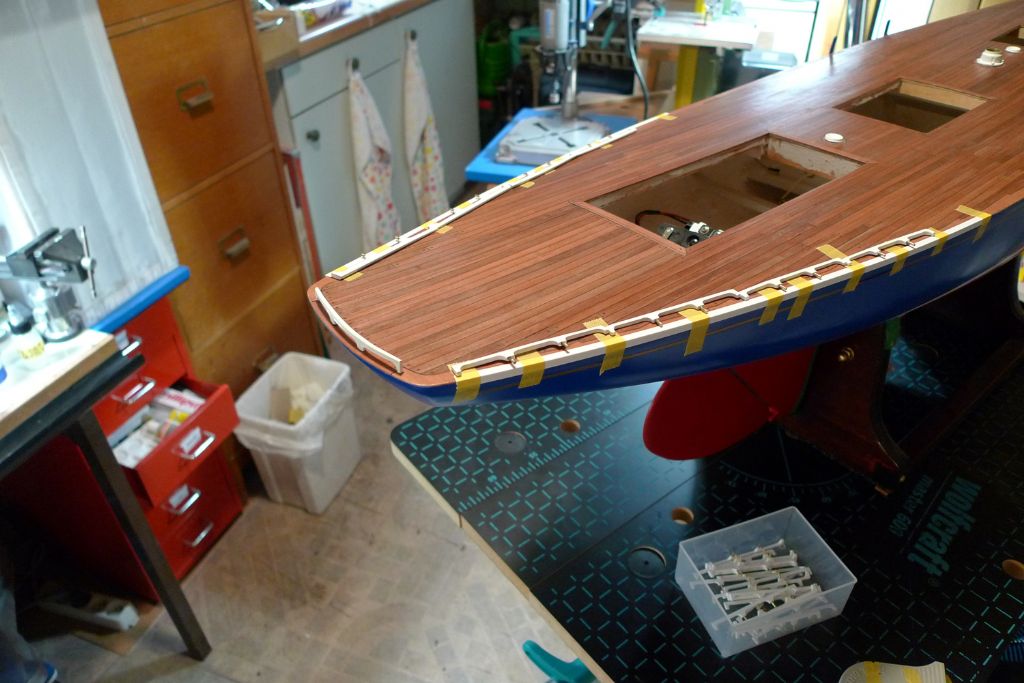
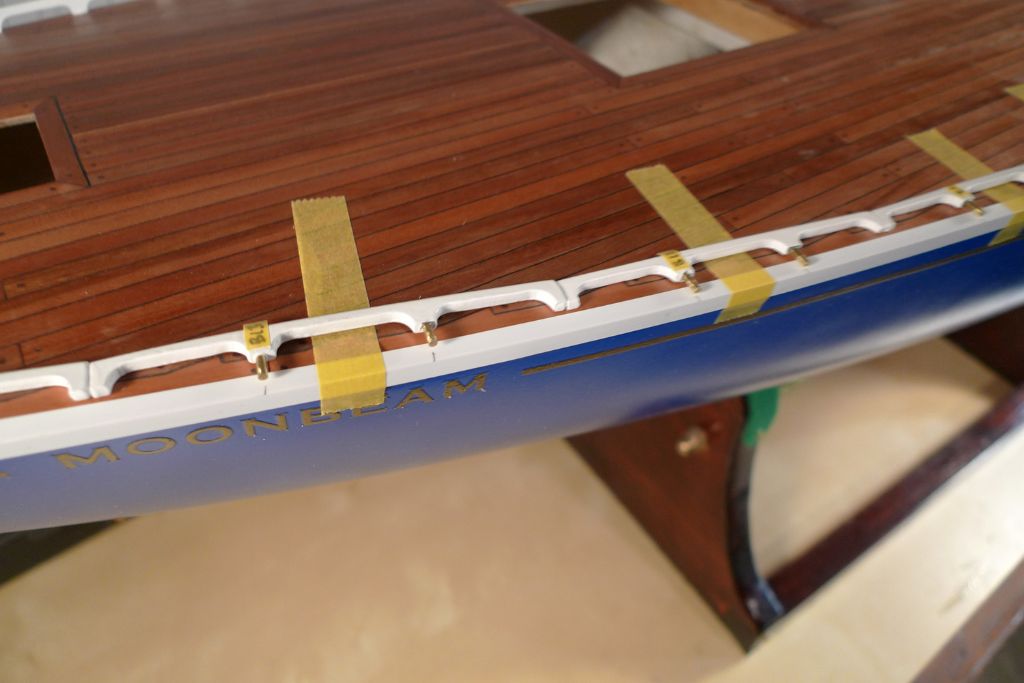
                                    … I was ready to add the first four rail pieces to port and starboard.

                                    mbbygg807.jpg

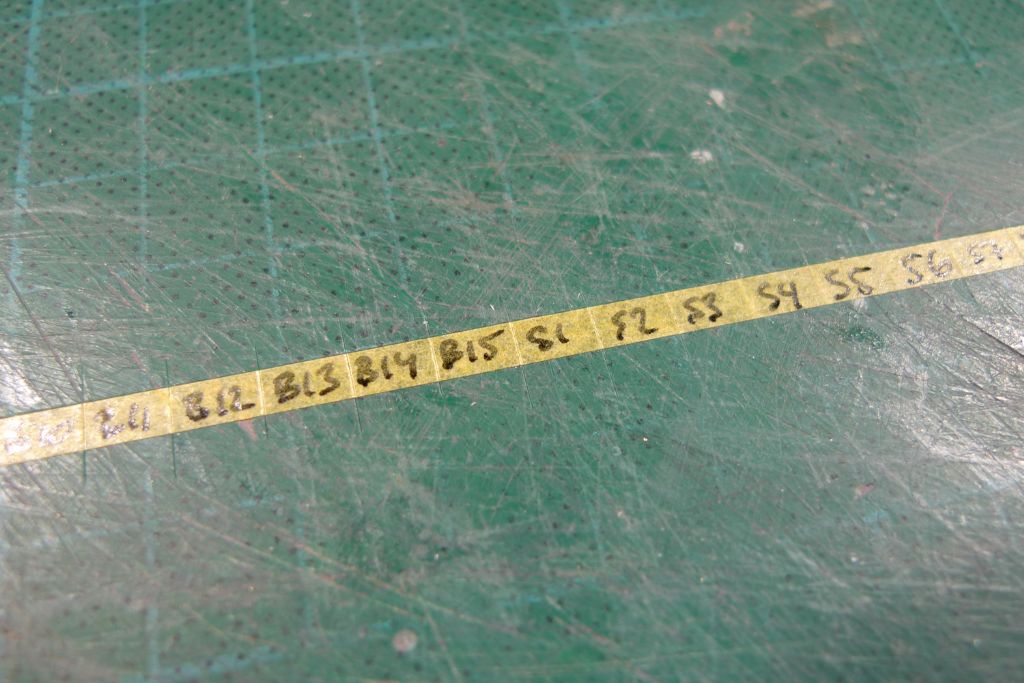
                                    As the distance between each pair of pins may vary by a few tenths of a millimeter, and also because each rail piece is bent ever so slightly to follow the curvature of the hull, each pair of holes needs to be spotted to fit a specific piece of rail; I therefore made up some small bits of masking tape, numbering the port and starboard rails from 1 to 15 …

                                    mbbygg808.jpg

                                    … and applied them as I went along …

                                    mbbygg809.jpg

                                    … until this first set of rails were in place.

                                    mbbygg810.jpg

                                    To be continued …

                                    Mattias

                                    #69379
                                    Banjoman
                                    Participant
                                      @banjoman

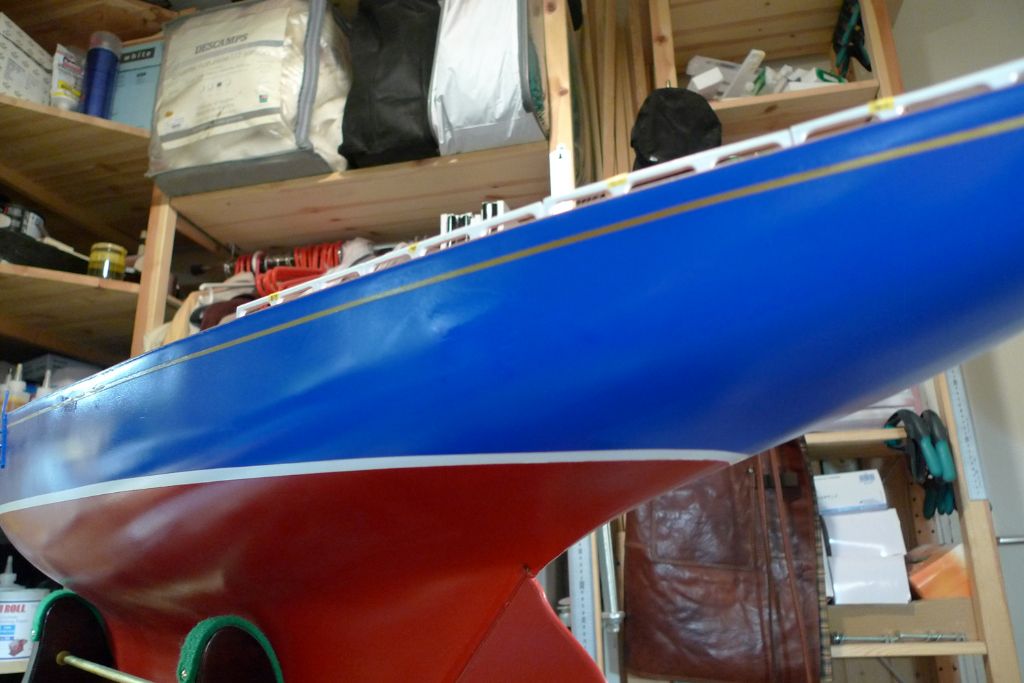
                                      As a very careful observer might have noticed in the second to last photo in my previous post, the gold trimline had become detached in a few places along the after hull. I'm not quite sure why, as I handled the entire painting sequence of the hull, including the trimline, wearing disposable nitrile gloves, so the surface should have been quite free from grease all the way around, although I suspect that I may have slightly overstretched the trimline when applying it, and that the subsequent coats of varnish made it retract ever so slightly but enough for the top edge to come away from the surface in a few places.

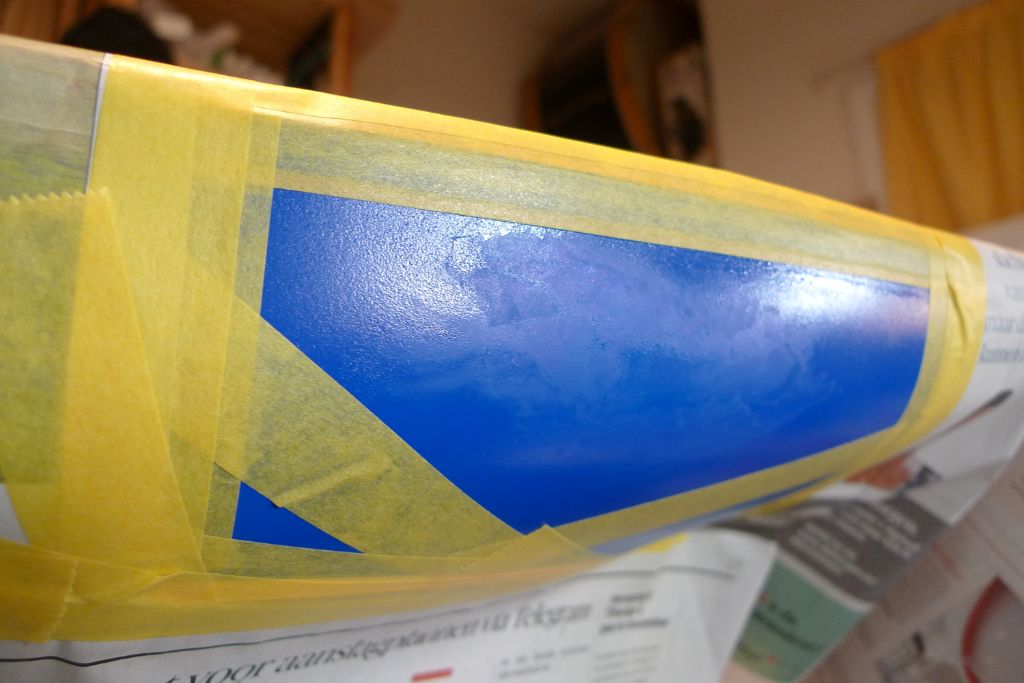
                                      As the hull was upside down at this stage, I only noticed it later, and had left until now to do something about it. However, as the job of applying varnish to the deck approaches, I wanted to get this sorted, and begain searching for a method of retacking the loose bits. In the end, I found that repeated small doses of thin CA did the trick, but before I got to that stage an accident while (unsuccesfully) trying out varnish as a tacking medium led to an urgent need to repaint a small part of the port quarter.

                                      mbbygg811.jpg

                                      This was not too much of a hassle, and a decent surface was restored soon enough (although there are still a few imperfections visible that'll require attention and one more such limited painting session) …

                                      mbbygg812.jpg

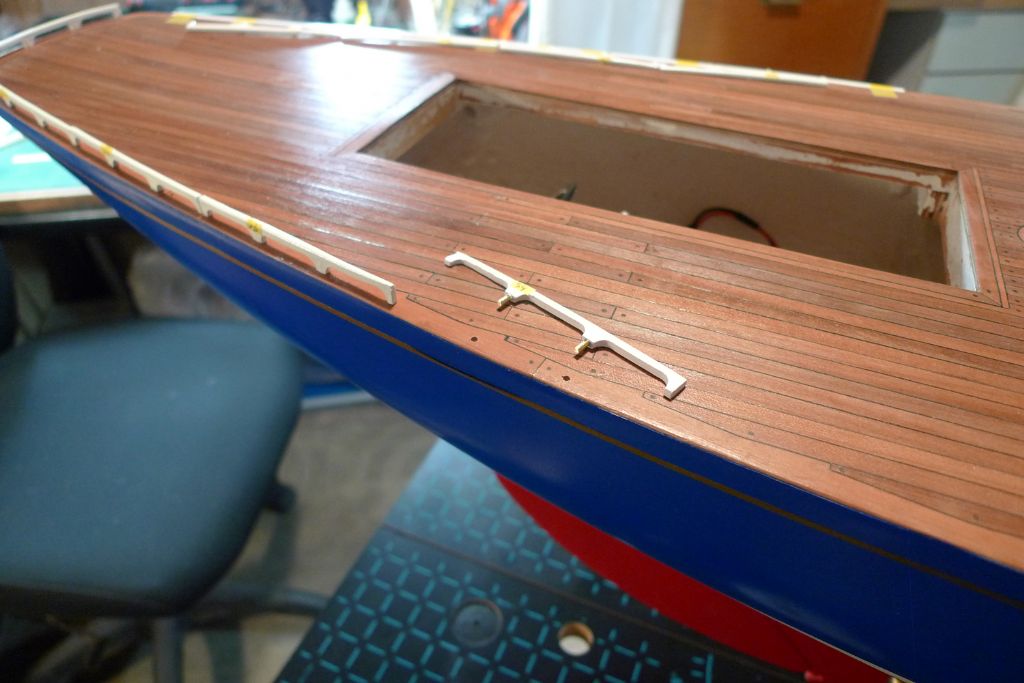
                                      … after which it was back to the kicking rails, this time working one complete remainder of a side at a time, starting with the starboard side.

                                      mbbygg813.jpg

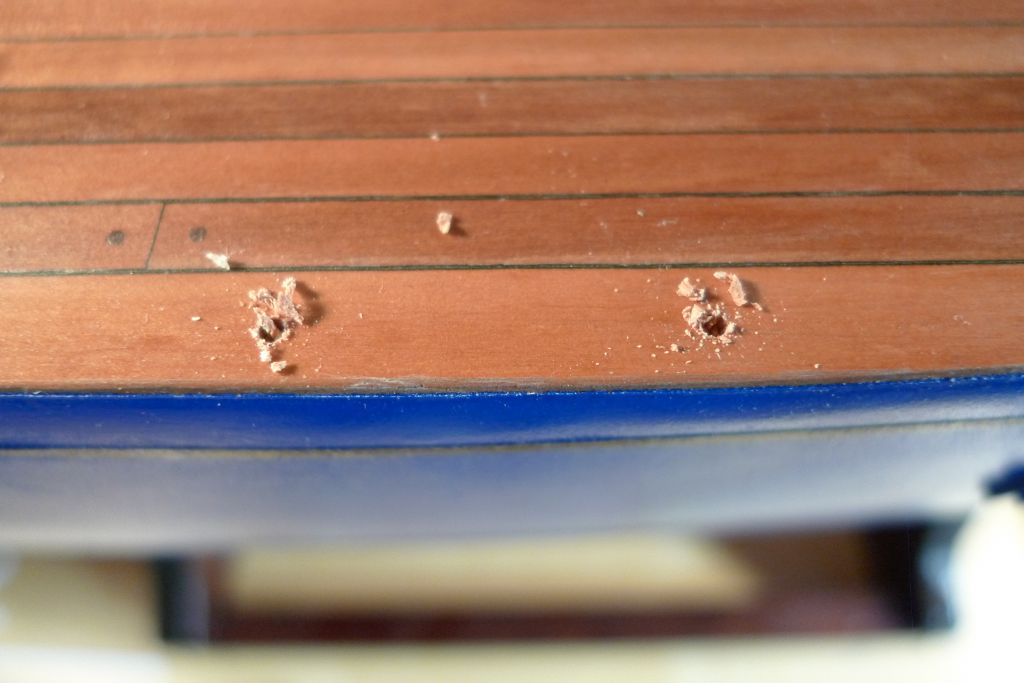
                                      Before drilling the deeper holes with the help of my home-made guide, each location was pre-drilled freehand to enough depth (+/- a mm) that there would be a starting location into which the drill bit would fit precisely, as the guide when set against the deck of course completely hides the spot from view.

                                      mbbygg814.jpg

                                      Next up was the port side, where each location was also marked out …

                                      mbbygg815.jpg

                                      … pricked, pre-drilled, drilled and the holes finally cleaned out …

                                      mbbygg816.jpg

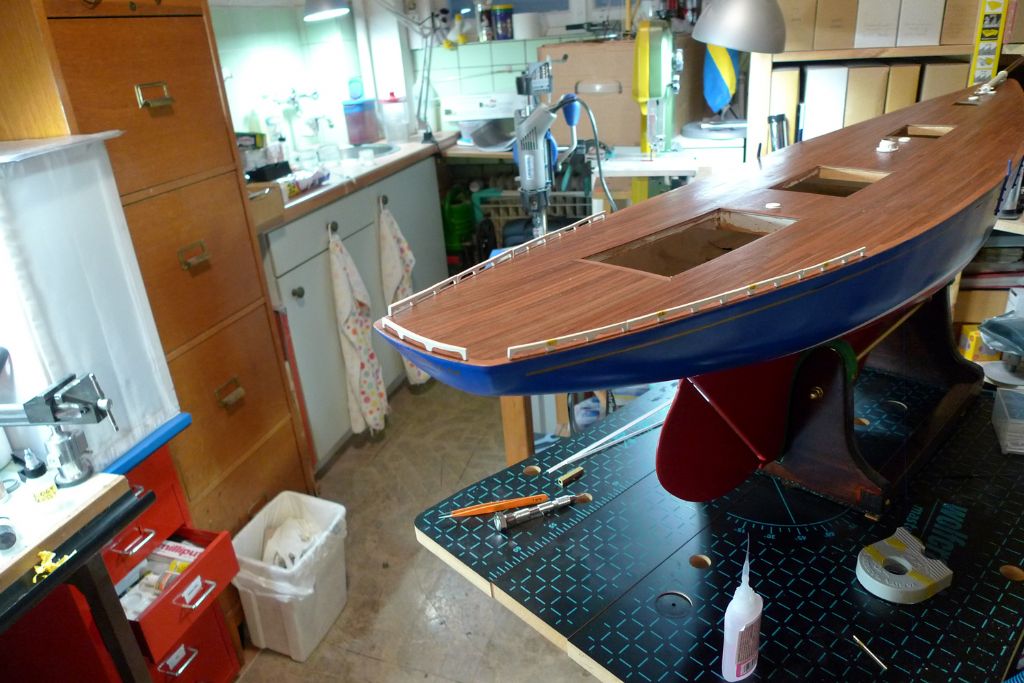
                                      … until all 31 pieces of kicking rail had been dryfitted …

                                      mbbygg817.jpg

                                      … in location. I will only epoxy them in place once the deck has been varnished, but at least  they have now been made up and their locations prepared.

                                      mbbygg818.jpg

                                      To be continued …

                                      Mattias

                                      Edited By Banjoman on 09/01/2017 10:40:46

                                      Edited By Banjoman on 09/01/2017 10:42:48

                                      #69402
                                      Banjoman
                                      Participant
                                        @banjoman

                                        So … more brassmongery!

                                        According to the instructions, the points for attaching the forestay and the top mast shrouds should be made up from 1.5 mm brass rod, and secured to the deck by being glued to holes drilled through screwed-down white metal plates and the deck itself.

                                        As usual, when it comes to points that will have to carry a load — in this case the tension from the stay and shrouds — I am loath to put my trust in either white metal or glue joints, and much prefer a mechanical connection in stronger material.

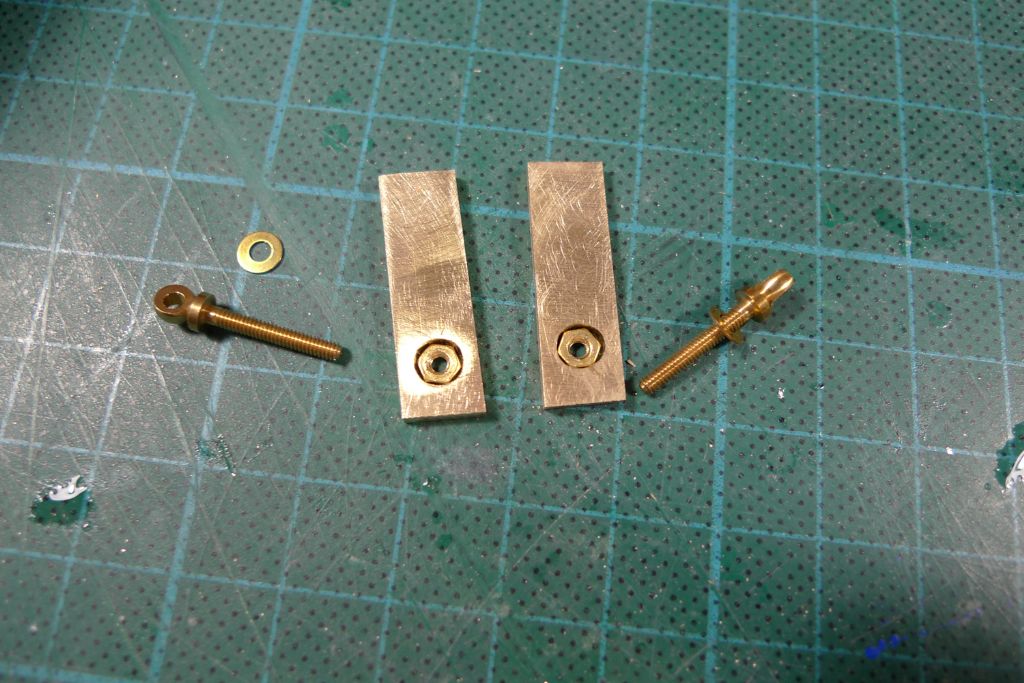
                                        Going through my box of assorted fittings, bits and bobs, I found some brass eye bolts with M2-threaded shafts and fitting shackles.

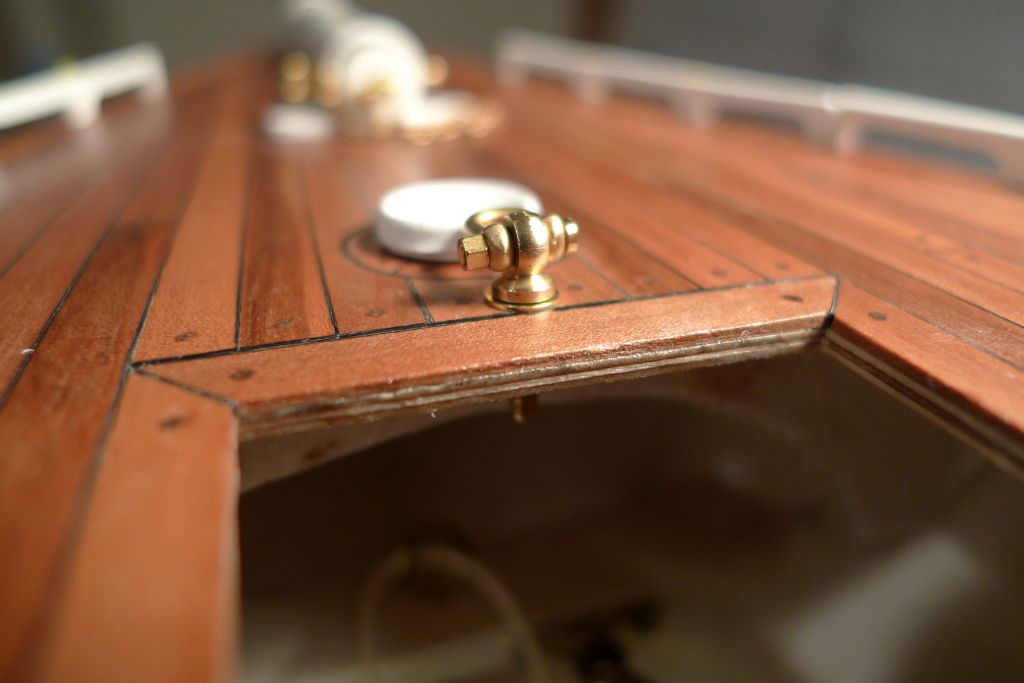
                                        The forestay attaching point was easy enough to get in place, as the hole is less than a centimeter inside the edge of a hatch opening, and the nut could be held in place without too much trouble …

                                        mbbygg819.jpg

                                        … but the two top mast shroud points will be a trickier matter; they sit in the waist, close to the outer edge of the deck, and between two of the athwartships deck support beams.

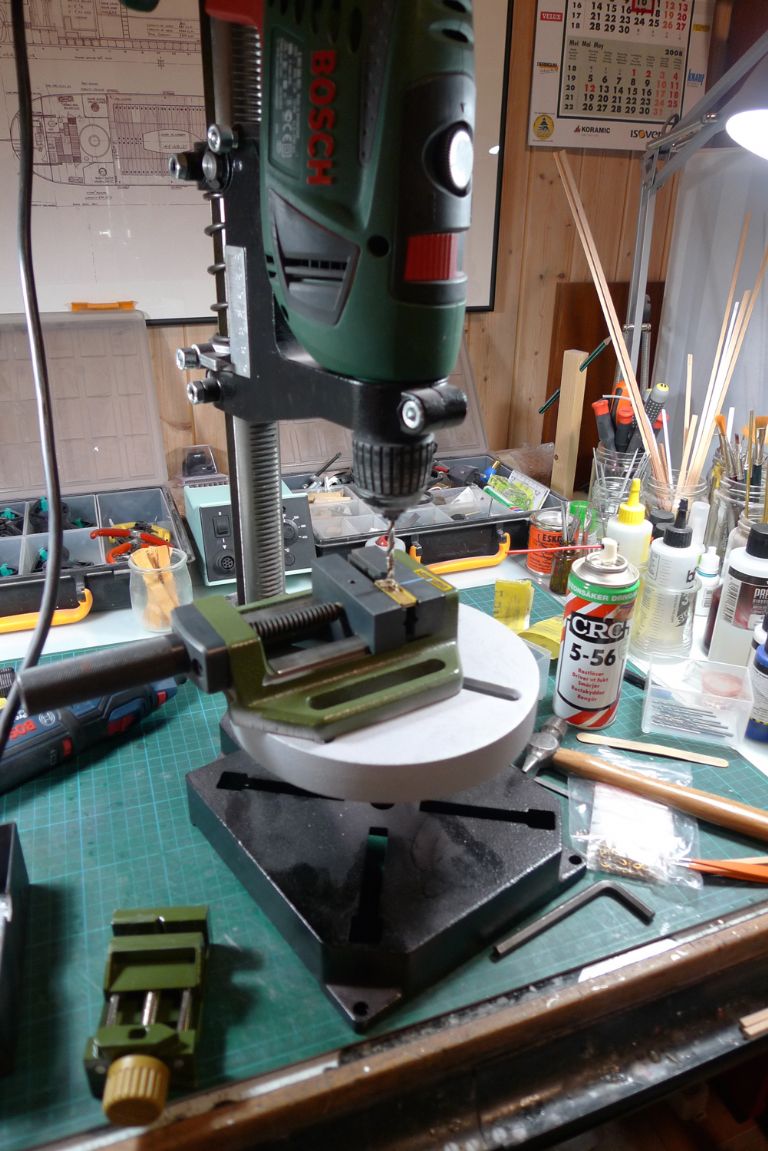
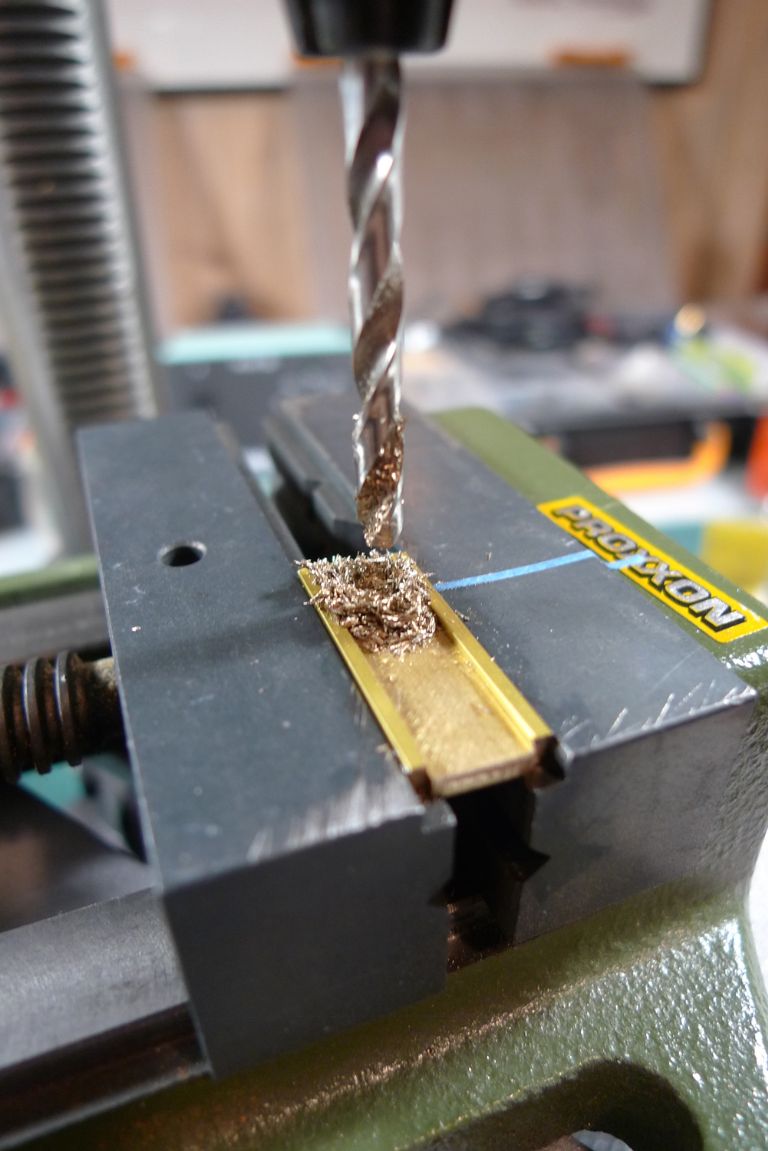
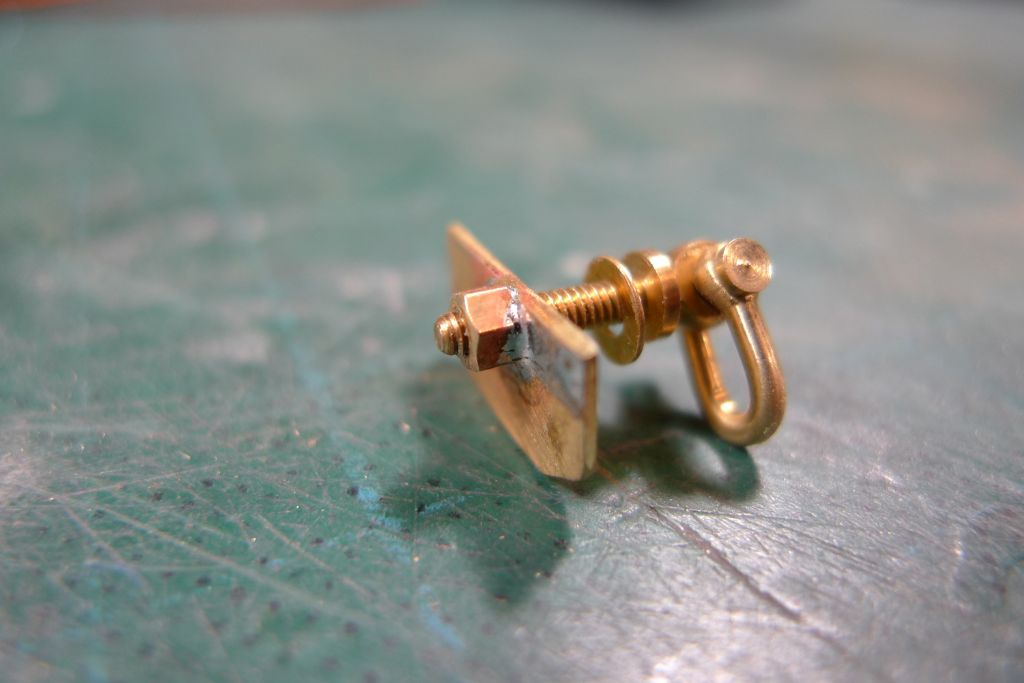
                                        I therefore cut off two short lengths of 2×8 mm brass strip and set it up in the large drill stand …

                                        mbbygg820.jpg

                                        … where I proeeded to drill a 4 mm hole through each piece.

                                        mbbygg821.jpg

                                        These holes were then filed a couple of tenths of a millimeter larger, until the M2 nuts were a tight push fit in the holes …

                                        mbbygg822.jpg

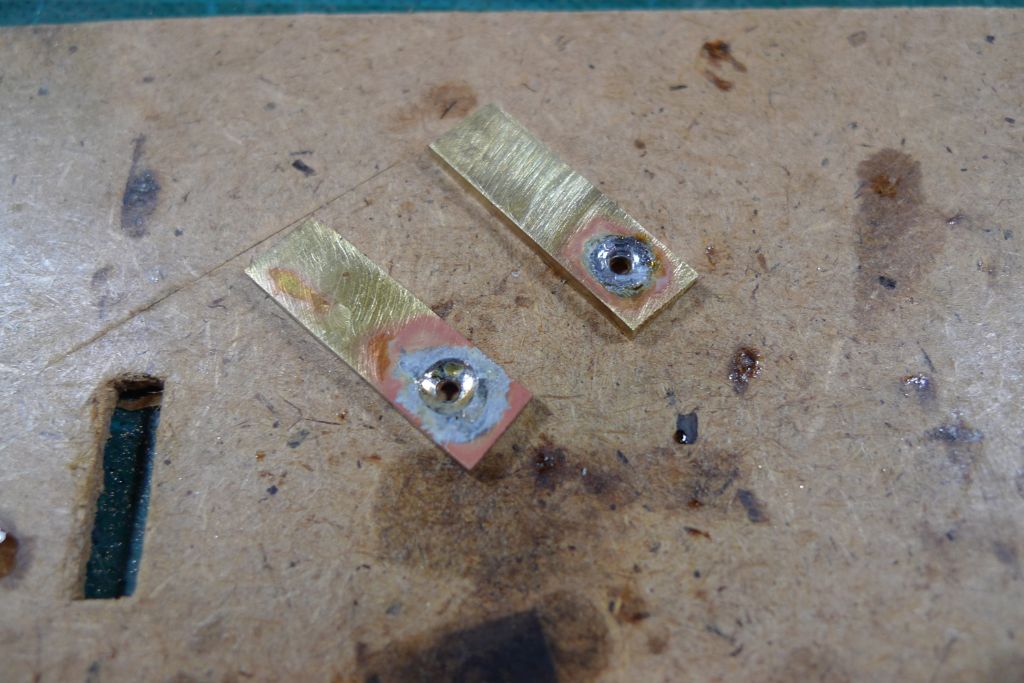
                                        … after which said nuts were secured in place with solder …

                                        mbbygg823.jpg

                                        … to produce the below result.

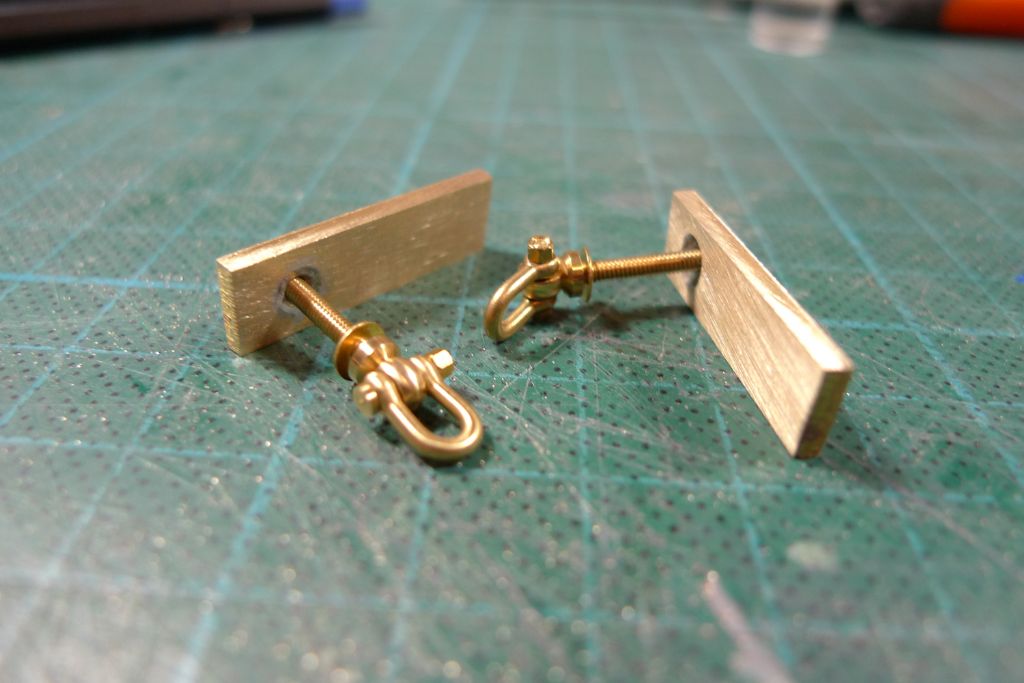
                                        I could of course also have just drilled a 1.6 mm hole through each strip and tapped it to M2, but this way the solder produced a slope down to the edges of the threaded hole through the nut that I think will make it just that little bit easier to find the nut with the bolt even though I'll be working blind in an awkward corner on the underside of the deck.

                                        The two pieces of strip will further give an improved finger hold while working blind, will also serve as a sort of large washers, and, when the eyebolts are screwed into the nuts, will catch against one of the surrounding deck beams and thus stop the nut from just turning on the bolt when tightened.

                                        The solder joints, though fairly solid and strong, will of course have limited torsional resistance, but then they won't really have to deal with much in the way of torque, and should be more than adequate for the purpose.

                                        mbbygg824.jpg

                                        To be continued …

                                        Mattias

                                        #69466
                                        Banjoman
                                        Participant
                                          @banjoman

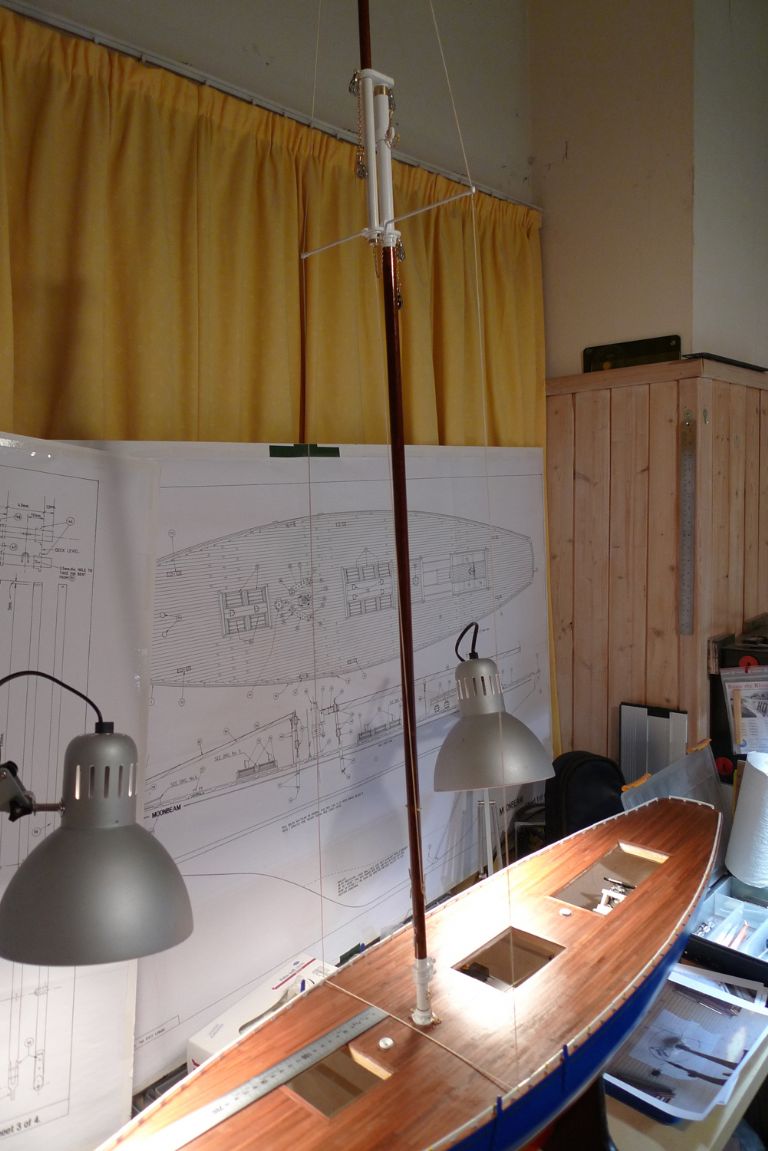
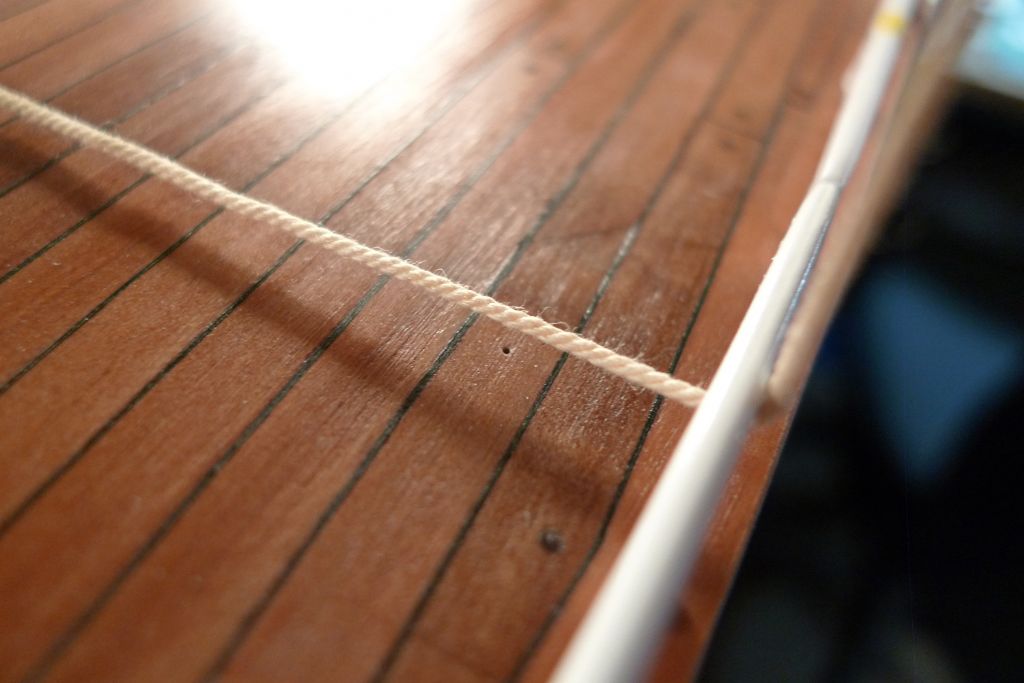
                                          To find the right locations for the the two anchoring points for the top mast shrouds, I set up a line from said top mast, through the spreader stay and around under the kicking rails …

                                          mbbygg825.jpg

                                          … allowing me to prick out …

                                          mbbygg826.jpg

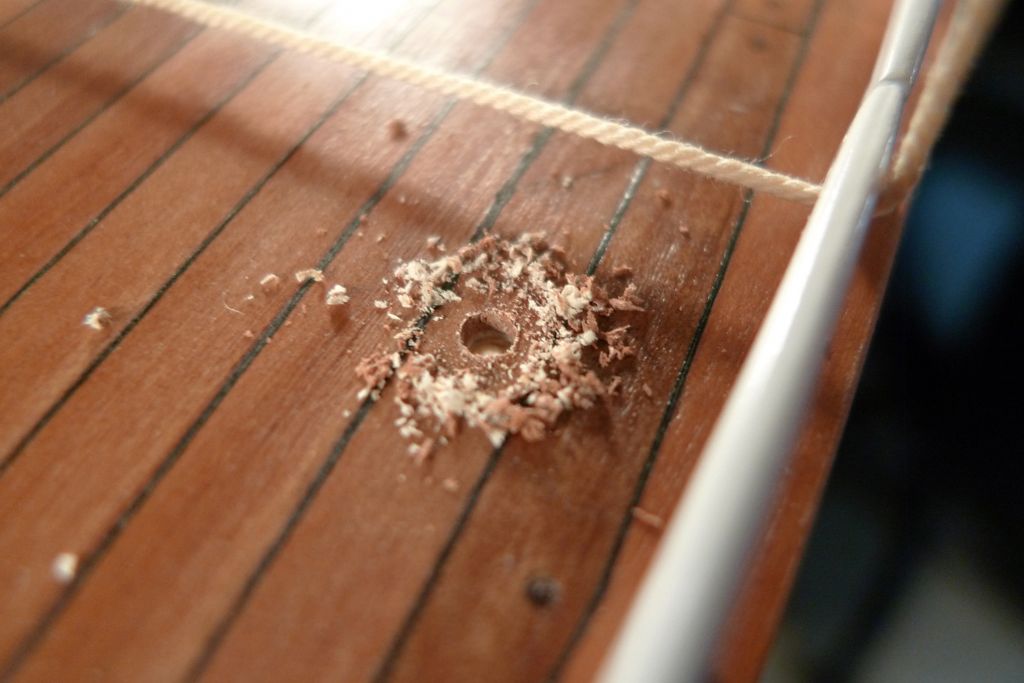
                                          … and drill …

                                          mbbygg827.jpg

                                          … for them in line, both athwartships between themselves and with the attaching points in the top mast.

                                          mbbygg828.jpg

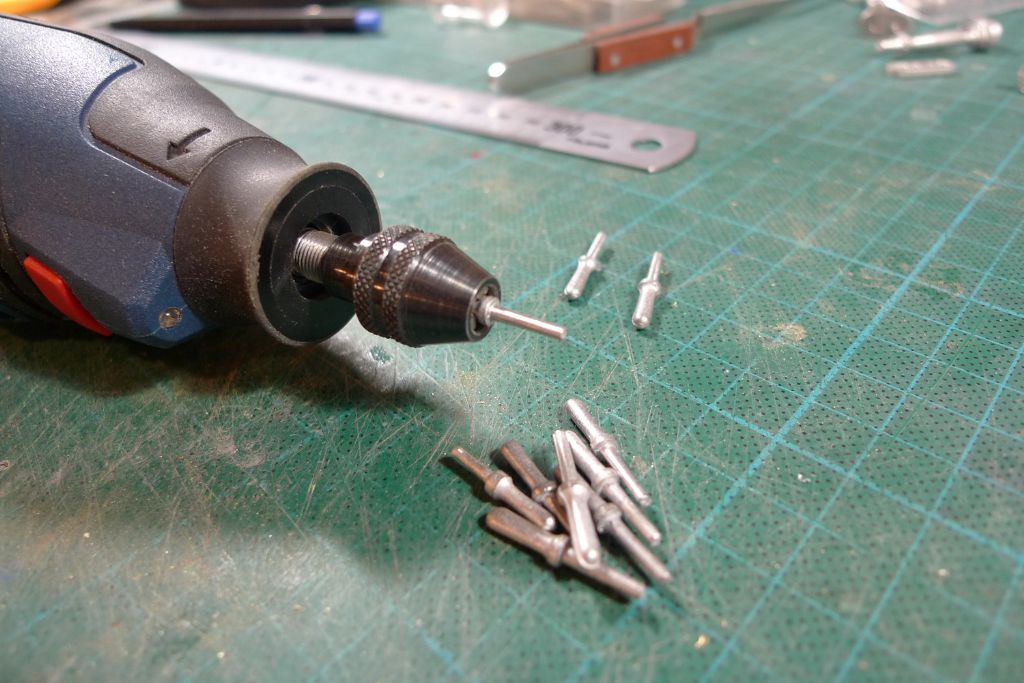
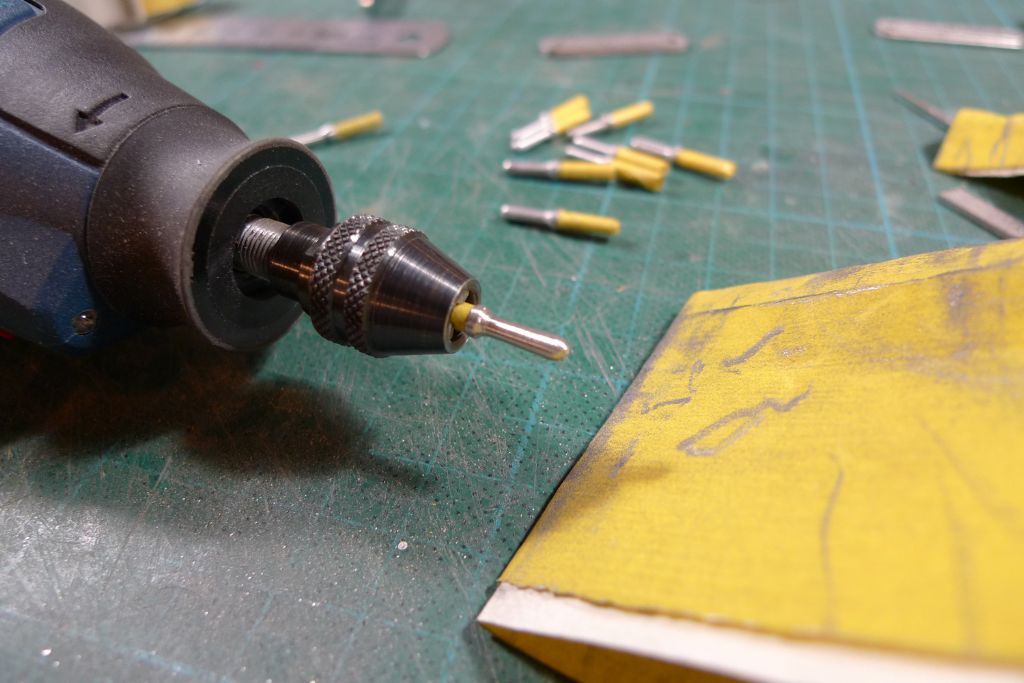
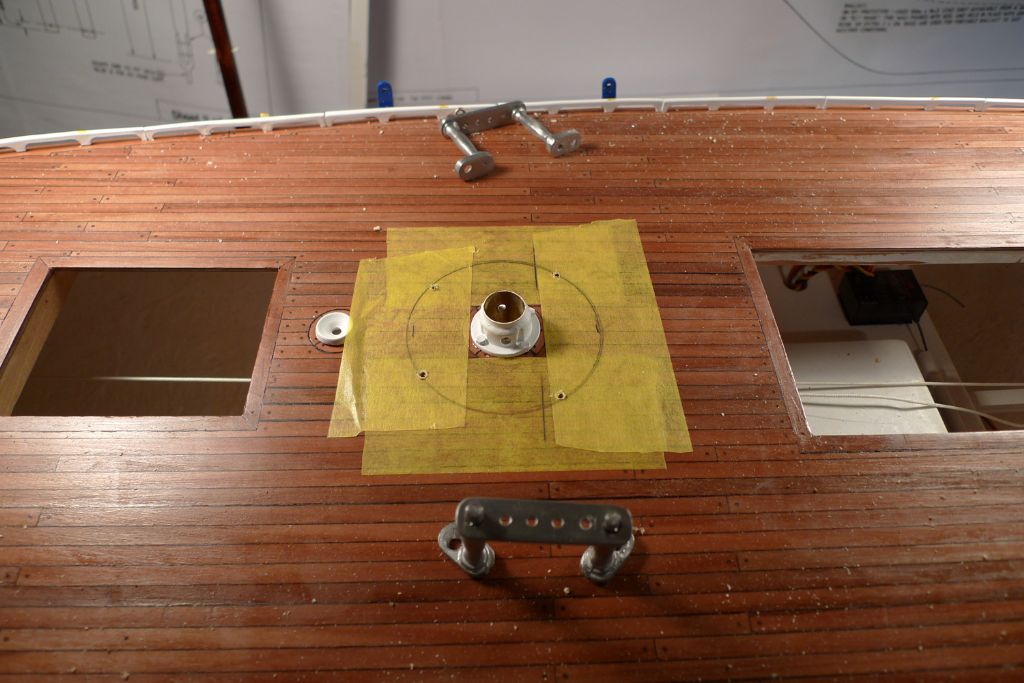
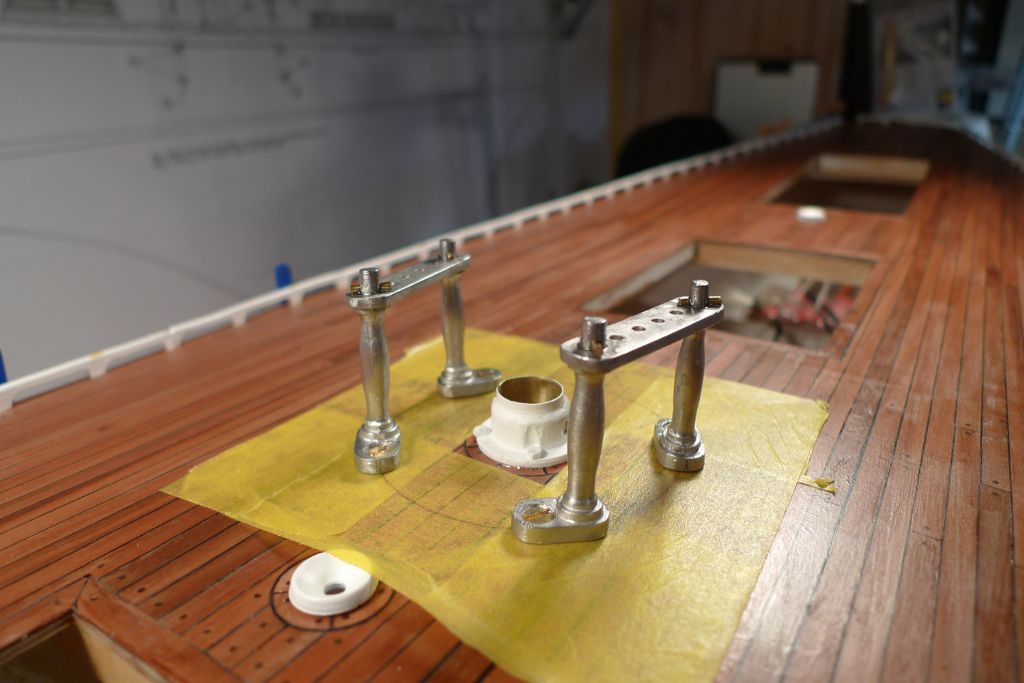
                                          Next up, I began sorting out the two pin rails by fettling the belaying pins …

                                          mbbygg829.jpg

                                          … held in the rotary tool and run at low speed against some abrasive paper.

                                          mbbygg830.jpg

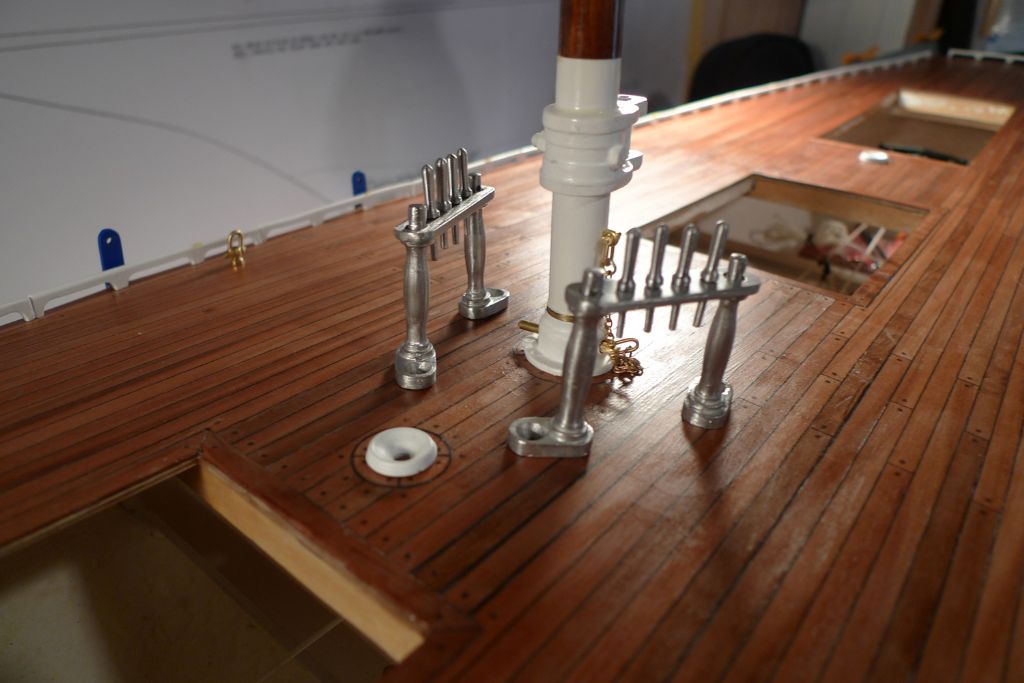
                                          The pin rail pillars and rails were also cleaned up …

                                          mbbygg831.jpg

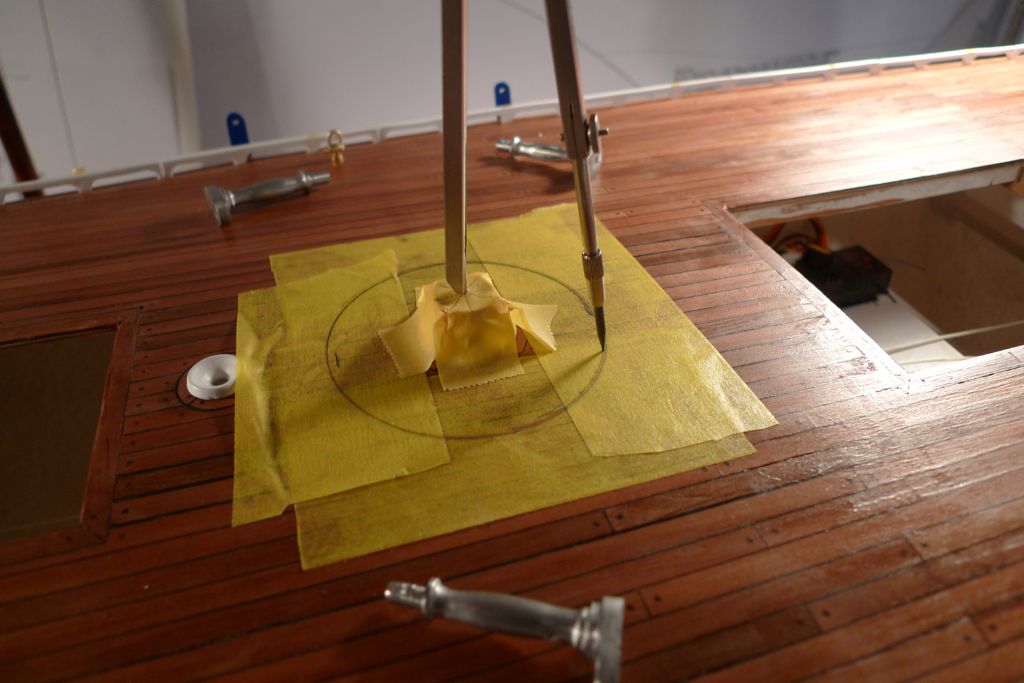
                                          … after which a circle with a 30 mm radius was drawn onto osme masking tape around the mast step …

                                          mbbygg832.jpg

                                          … and the deck and mast support block drilled …

                                          mbbygg833.jpg

                                          … to take the wood screws with which the pillars will be secured. Once the pillars had been screwed down, the rails and their securing pins were epoxied in place and left for the epoxy to go off.

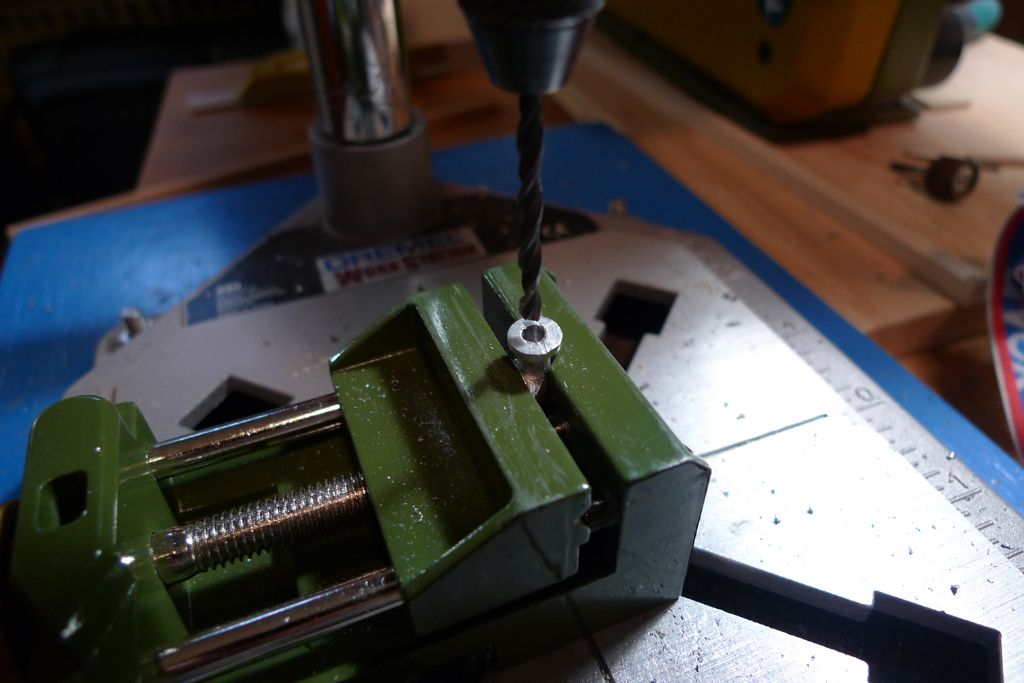
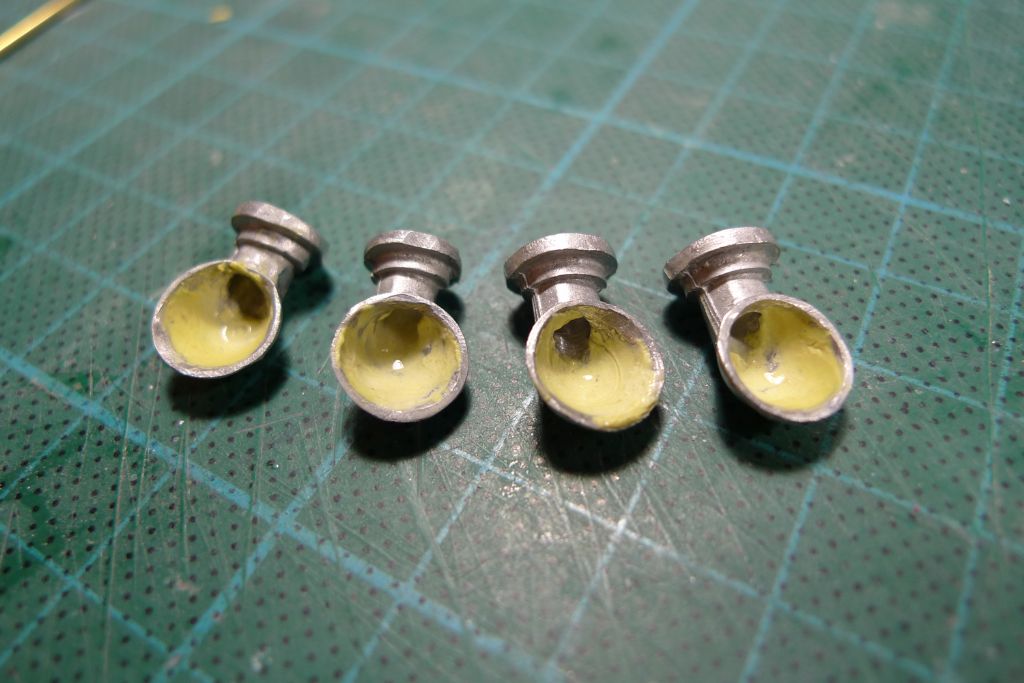
                                          mbbygg834.jpg

                                          In the meantime, I took in hand the ventilators for the skylights, and drilled out their funnels …

                                          mbbygg835.jpg

                                          … and then opened up the interior of the hoods with various milling bits held in the Dremel. To even out the resulting surfaces, some Milliput was added, which shall have to be sanded slightly once it is cured.

                                          I do not at all intend to make the ventilators functional, but I think it looks so much better when they actually have a proper throat opening, not least when one – as I shall do – paints them red on the inside.

                                          mbbygg836.jpg

                                          I also went through the remainder of the deck fittings, fettling and cleaning them up as needed, and also exchanging their cast white metal pins for brass in one form or another; for the double bollards, I used some M2 bolts, while others were solid enough for the base to be drilled into and some brass rod inserted.

                                          mbbygg837.jpg

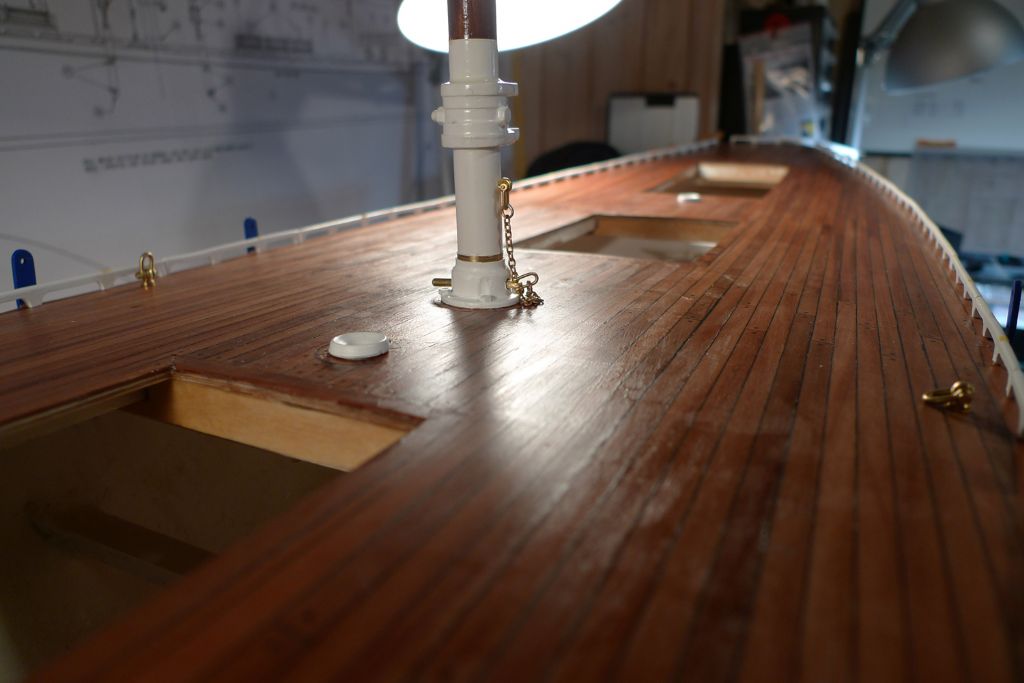
                                          These fittings shall of course be painted and glued in place …

                                          mbbygg838.jpg

                                          … but at this stage, I just drilled the deck in the appropriate places and dryfitted them.

                                          mbbygg839.jpg

                                          To be continued …

                                          Mattias

                                          Edited By Banjoman on 16/01/2017 18:50:36

                                          #69469
                                          Banjoman
                                          Participant
                                            @banjoman

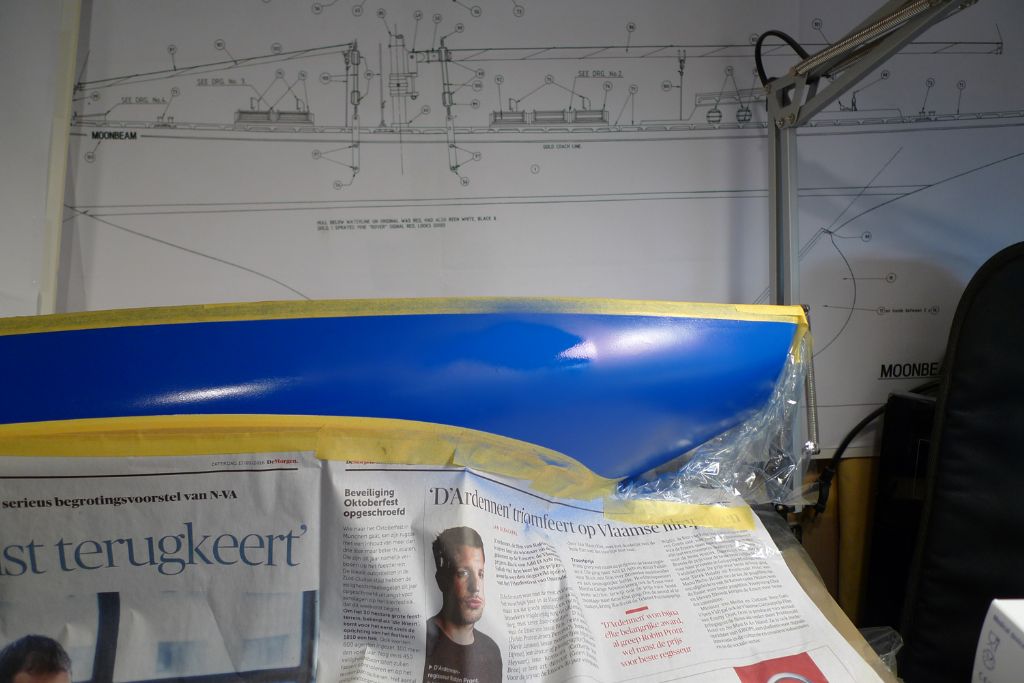
                                            With all the deck detailing prepared and drilled for, the dryfitted bits were removed again, and the port quarter masked off for a final touch-up of the paint. For my previous attempt at this job, I had made the mistake of masking off too close to the area needing the touch-up, as a result of which there appeared minor but noiticable ridges in the new paint where it had been gone on tight against the edge of the masking tape.

                                            mbbygg840.jpg

                                            With the top masking against the edge of the trimline, and the bottom one against the upper waterline edge, and for the rest a good free area both aft and forrard of the spot, the new paint blended in much better …

                                            mbbygg841.jpg

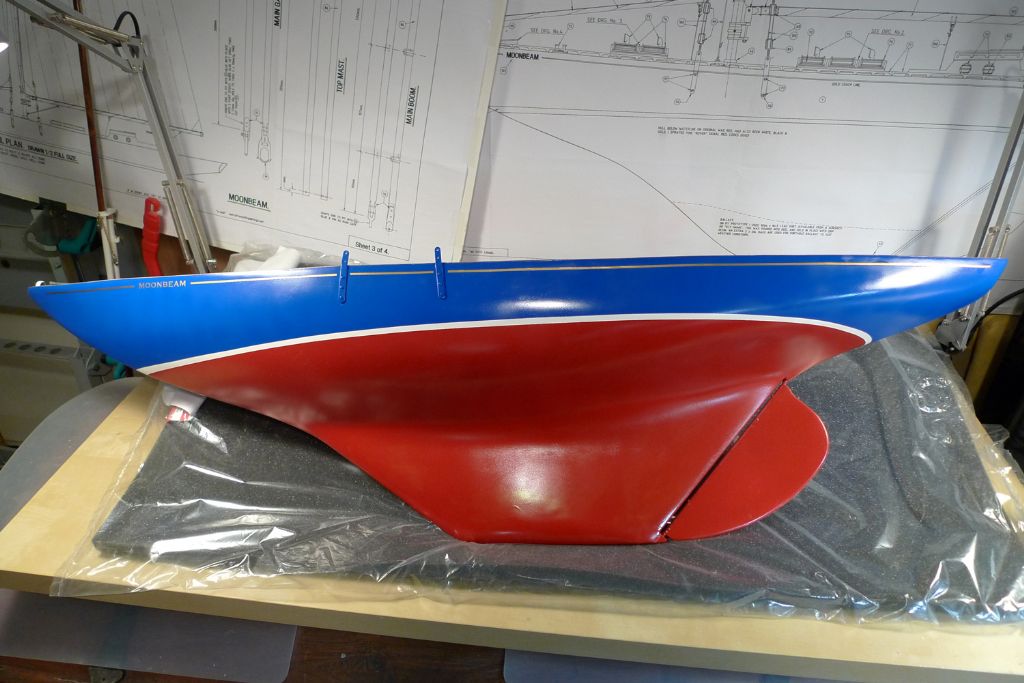
                                            … and the end result was good enough (although I know only too well where I should not look too closely) that I could declare the hull …

                                            mbbygg842.jpg

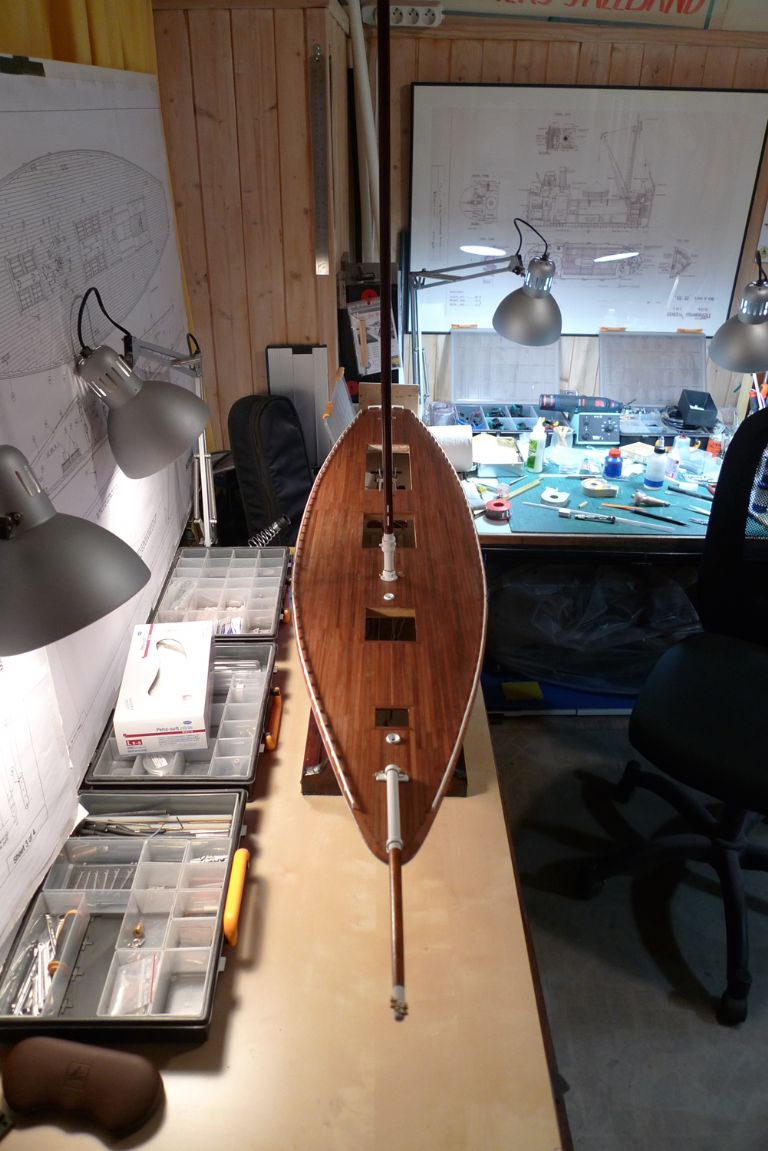
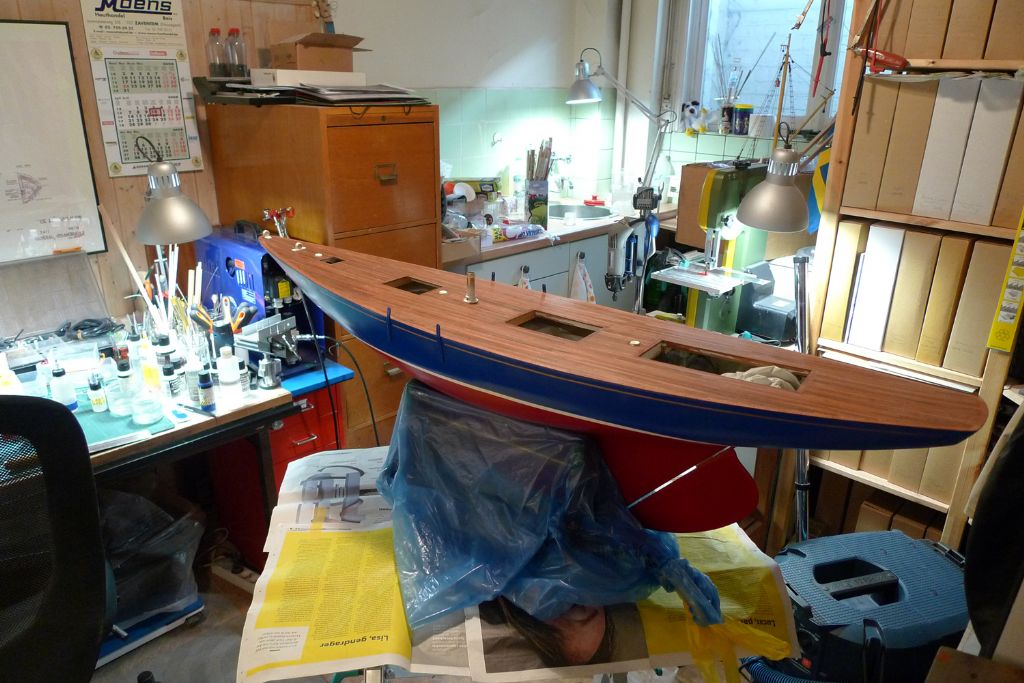
                                            … ready for the deck to finally be varnished!

                                            After going over the deck with a series of finer and finer steel wools, and removing all the ensuing fine dust, I epoxied the shet through-puts in place …

                                            mbbygg843.jpg

                                            … and began applying the varnish. So far four coats have gone on; how many will be needed is hard to say, but probably somehwere in the region of ten to fifteen …

                                            mbbygg844.jpg

                                            To be continued …

                                            Mattias

                                            Edited By Banjoman on 16/01/2017 20:02:06

                                            Edited By Banjoman on 16/01/2017 20:02:37

                                            #69529
                                            Banjoman
                                            Participant
                                              @banjoman

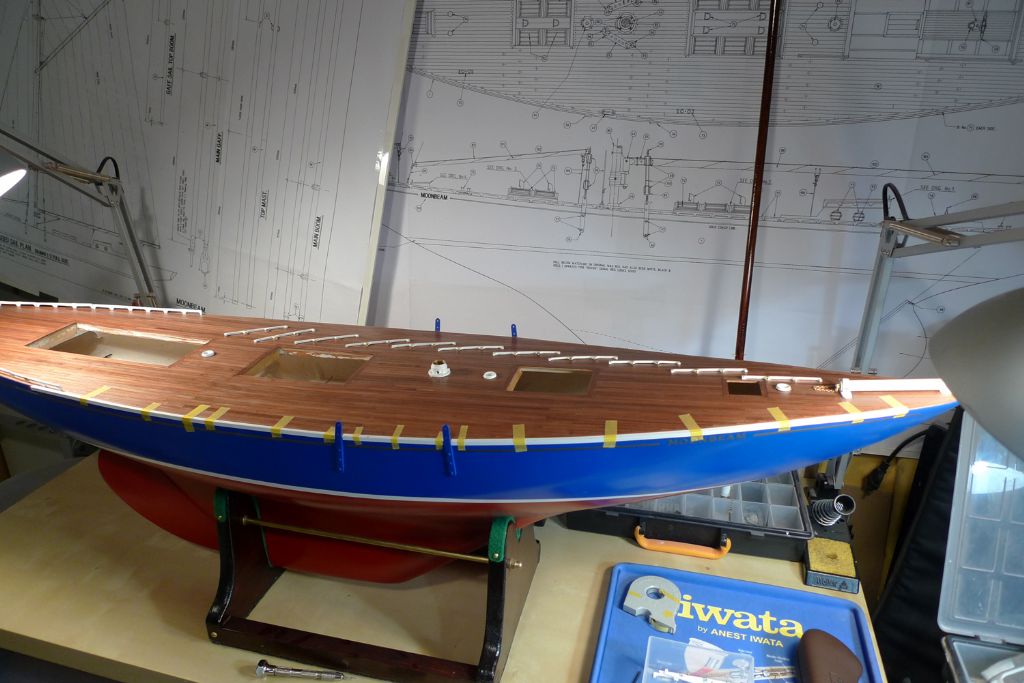
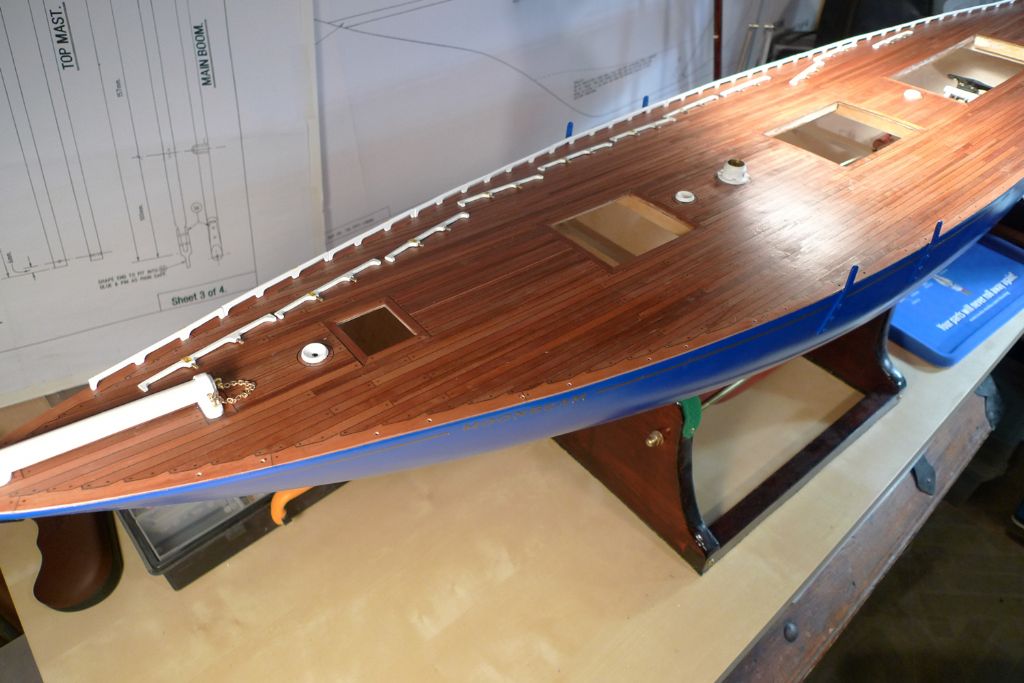
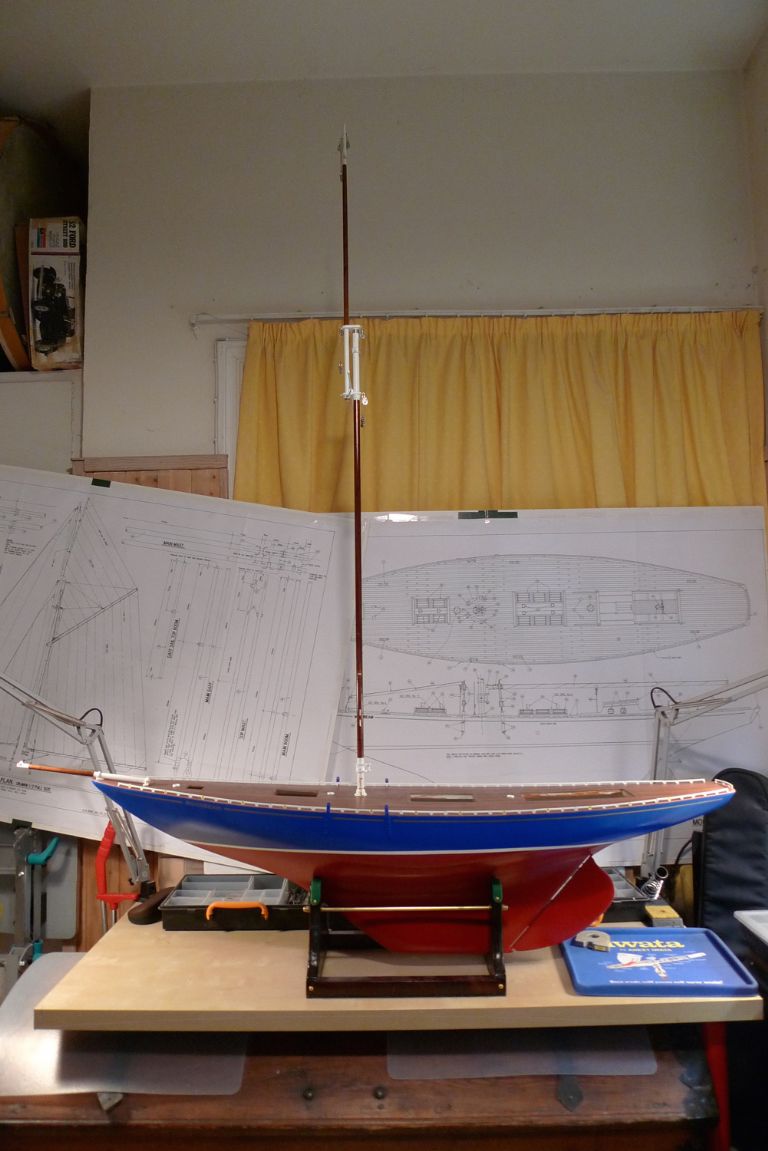
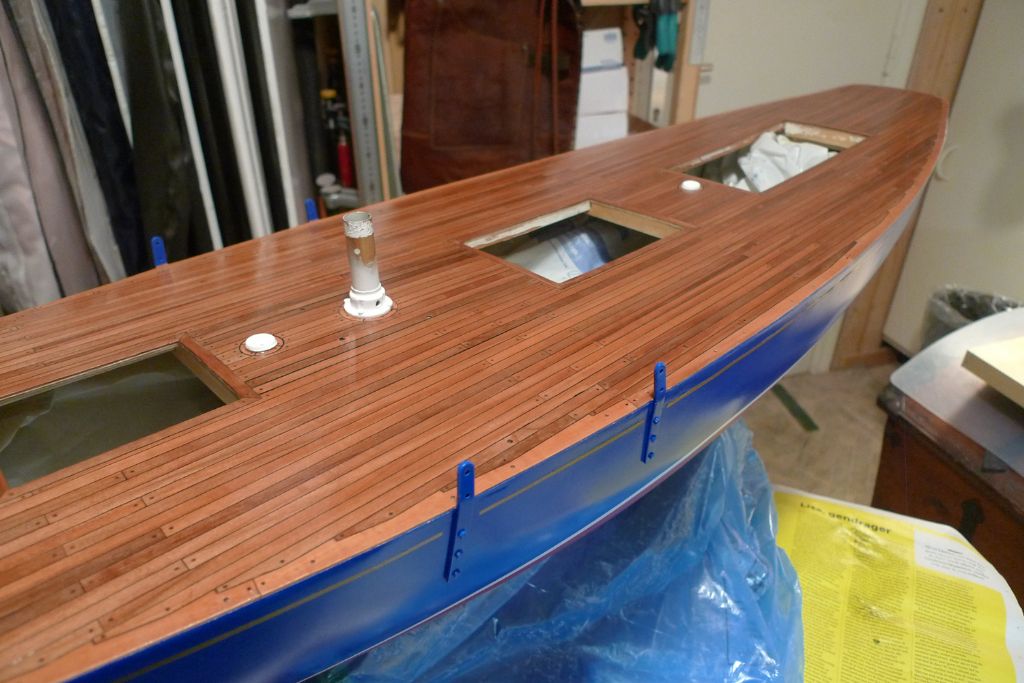
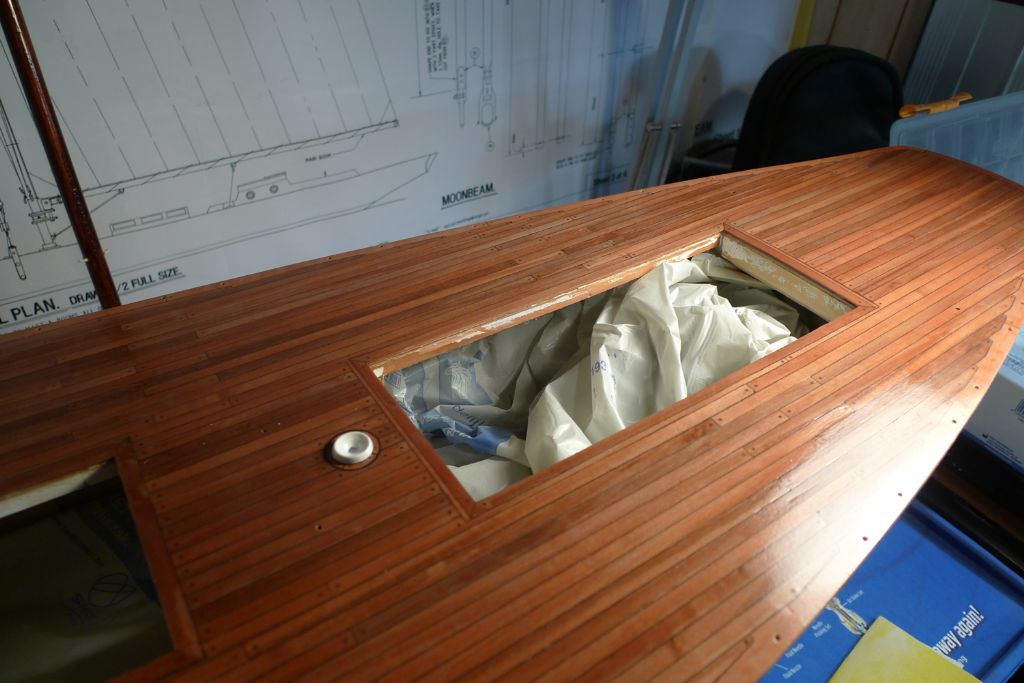
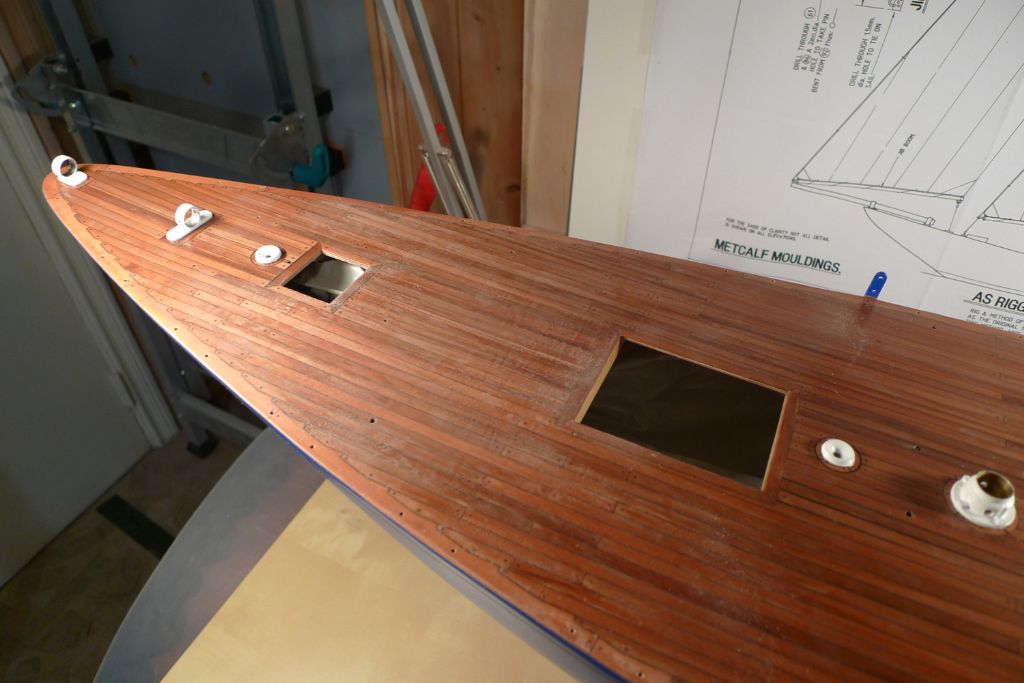
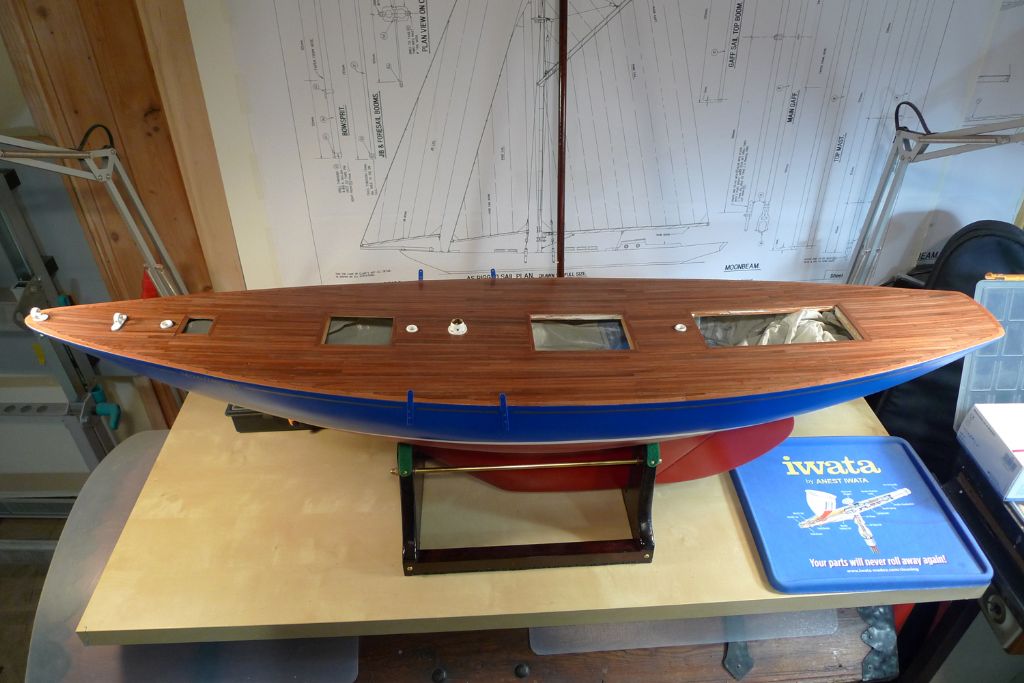
                                              Over the last four days, I've added about 15 coats of varnish to the deck with on the whole tolerable results …

                                              mbbygg845.jpg

                                              … except for a part of the foredeck, where I'd managed to spray on too much with one of the later coats, and thus had produced runs and other inegalities. The main cause I think was that when I set the hull up on a turntable in the middle of my workshop for maximum access all round, the light is quite bad, which makes it rather difficult to actually see what is happening in the way of build-up and coverage as I spray on paint or varnish.

                                              I therefore moved the hull back to the fixed work bench, where light is much better, and went over the faulty area with 000 steel wool as well as 600 and 2500 grit paper, until it had been smoothed down …

                                              mbbygg846.jpg

                                              … sufficiently to put on three more coats of varnish, thinned to 75% and with a few drops of retarder added for slower drying times and thus better self-equalisation.

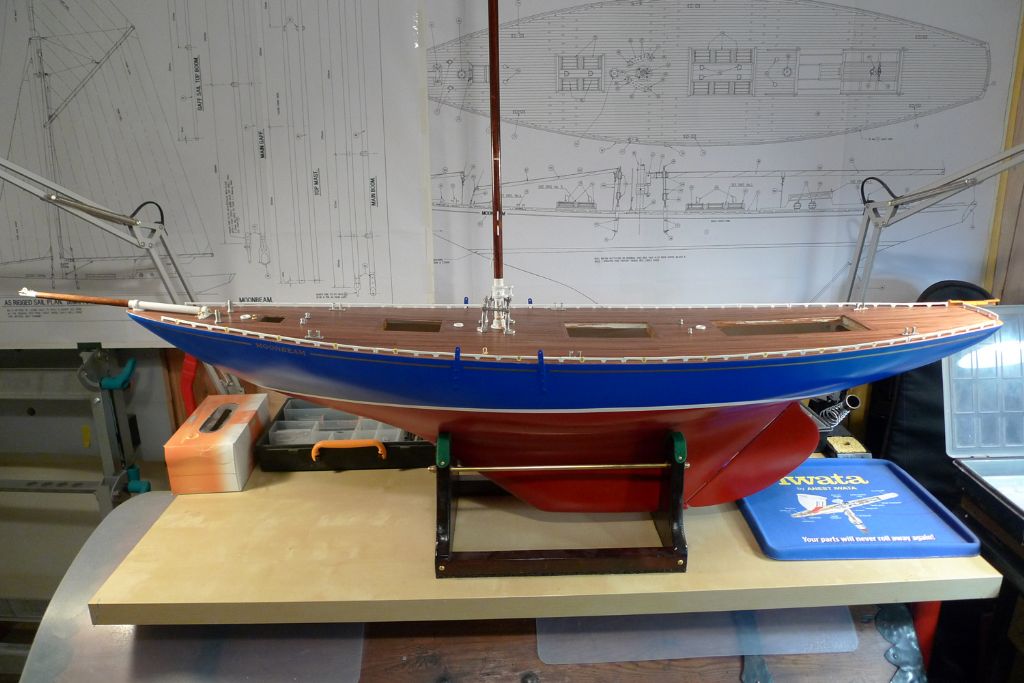
                                              Although the final result would not really stand up to a close and critical examination, and would certainly never win any prizes, I am reasonably happy with it, which means that the painting and varnishing of the hull is finally done.

                                              mbbygg847.jpg

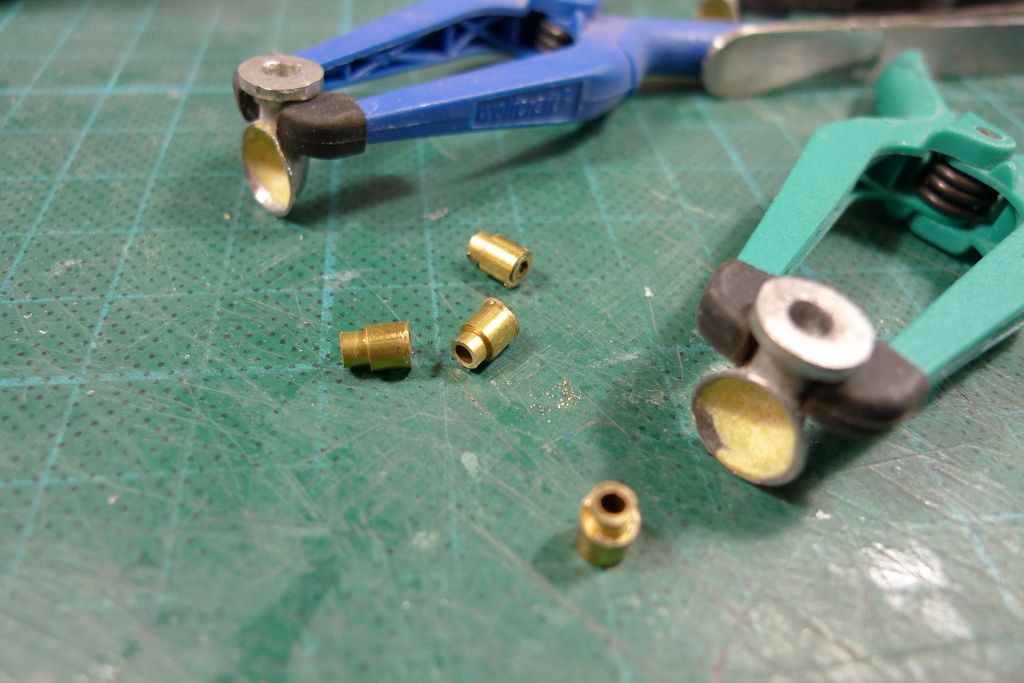
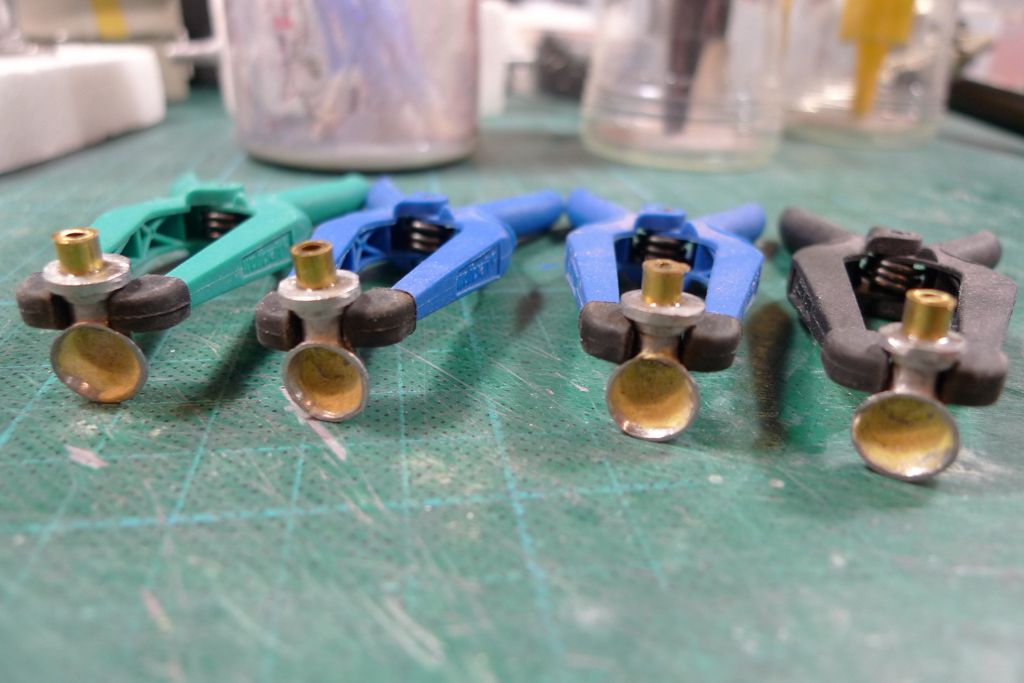
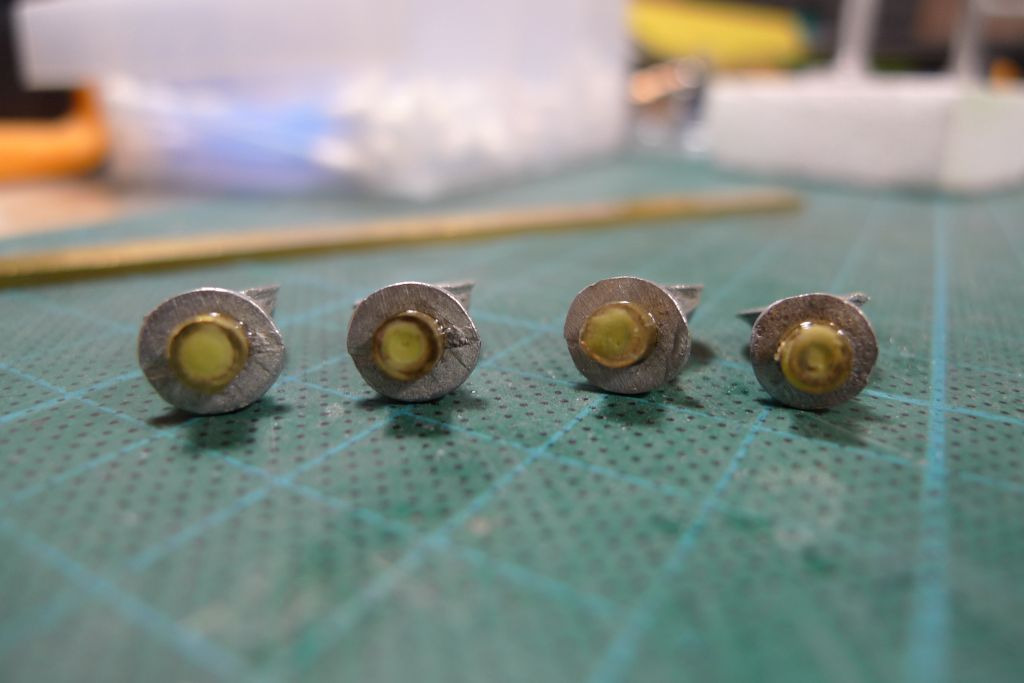
                                              Inbetween coats of varnish, I produced bases for the ventilators by CA-glueing short lengths of 3 mm brass tube into even shorter lengths of 4 mm brass tube …

                                              mbbygg848.jpg

                                              … and then epoxied them to the ventilator shafts.

                                              mbbygg849.jpg

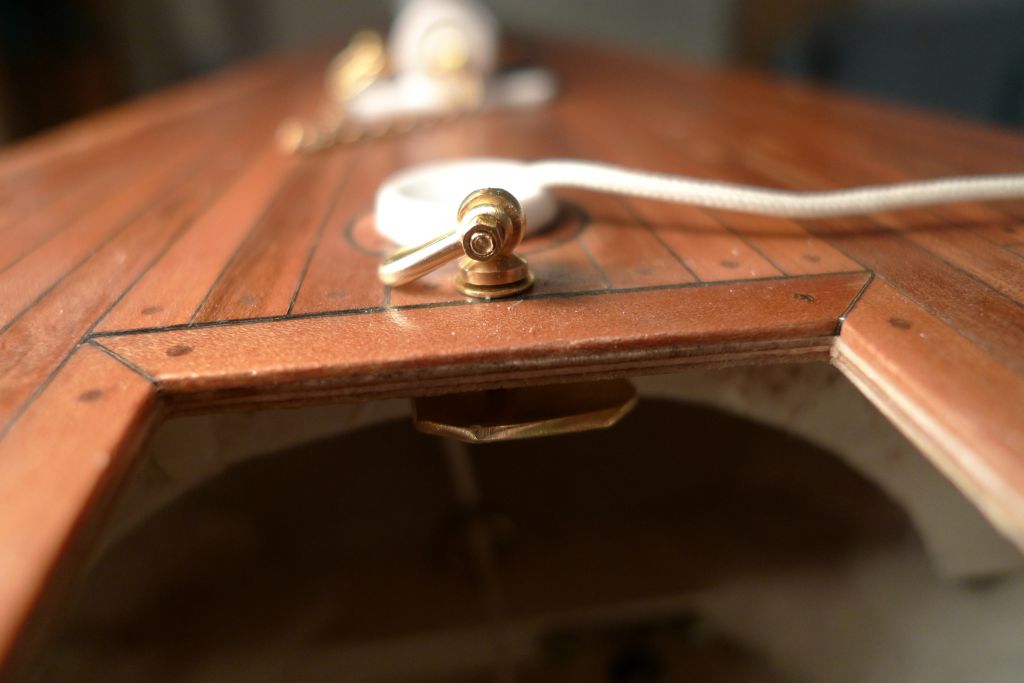
                                              I also made up a better nut-and-washer assembly for the fore stay anchor point by drilling a 2.2 mm hole through the edge of a small brass shim, and then soldered an M2 nut to the shim to match the hole …

                                              mbbygg850.jpg

                                              … both to facilitate handling and to provide a stronger hold from below for the anchor point bolt.

                                              mbbygg851.jpg

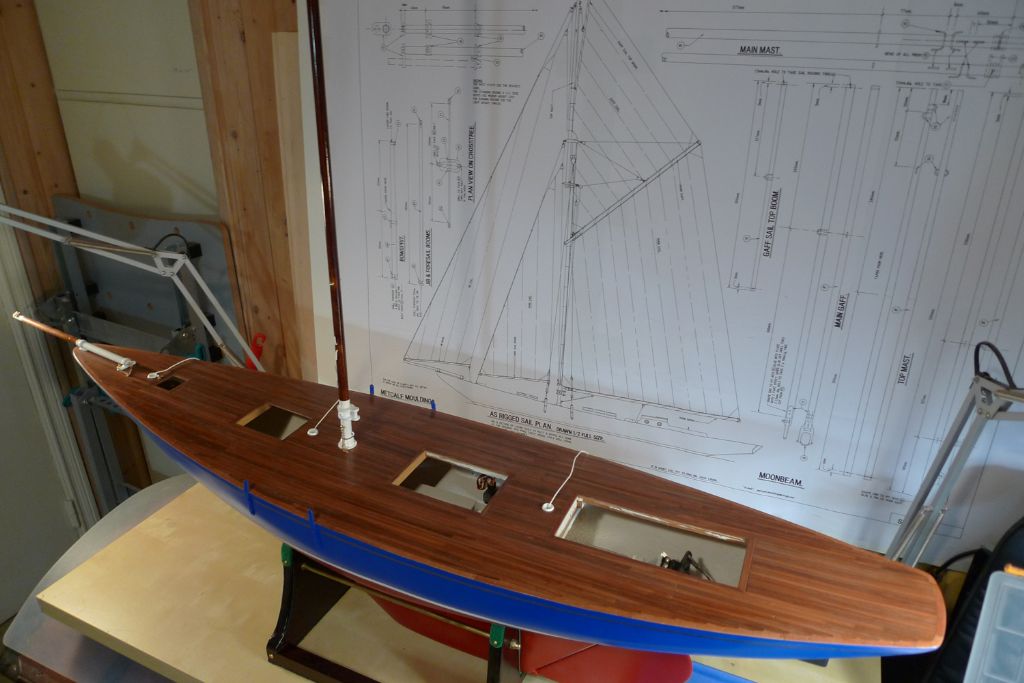
                                              With the deck finished, it was also time to thread the three sheets through their deck throughputs. The sheets are of course still much too long, but I'll wait with shortening them until most everything else is ready, to be sure that I don't at any time cut them off too short.

                                              mbbygg852.jpg

                                              To be continued …

                                              Mattias

                                              Edited By Banjoman on 20/01/2017 21:30:28

                                              Edited By Banjoman on 20/01/2017 21:31:23

                                              #69530
                                              Colin Bishop
                                              Moderator
                                                @colinbishop34627

                                                It is a work of art Mattias – will you ever dare get it wet?

                                                Colin

                                                #69531
                                                Rudy Why
                                                Participant
                                                  @rudywhy43146

                                                  I like those deep clamps. I've looked around and haven't found any. Who makes them?


                                                  And, when you say varnish are you talking about regular marine varnish?

                                                  Rudy

                                                  Edited By Rudy Why on 21/01/2017 01:03:12
                                                  #69533
                                                  Banjoman
                                                  Participant
                                                    @banjoman

                                                    Colin,

                                                    Thank you very much indeed! And yes: I shall most certainly take it to the pond and attempt to sail it once it is ready, although I will admit to some minor trepidations; not so much because of fear of getting things wet, but because the last time I tried my hand at an r/c yacht was when I was 15, and then it was one with rudder control only, so I fear I that the learning curve I have to climb is likely to be steepish. Nothing ventured and all that, though!
                                                    Rudy,

                                                    The clamps are made by the German DIY brand Wolfcraft (**LINK**). I am unable to find these exact ones on their website – I bought these over the counter from Albatros Modelbouw (**LINK**) outside Mechelen, where they had a big jar full on the top of said counter; they were, I think, €5 for ten or summat like that. There is, however, a similar Wolfcraft clamp available from i.a. Amazon, albeit at a somewhat higher price: **LINK**.

                                                    The varnish I use is not the regular marine variety! I do almost all of my model painting with an airbrush, and given the insufficient ventilation of my workshop, I am very loath to use anything solvent based. When one airbrushes a solvent based product, not only the paint but also the solvent is highly atomised, and if inhaled those atomised vapors will go straight to the finest alveoli of one's lungs, were any potentially nasty effects can occur most efficiently.

                                                    In fact, all the paint and varnish work on this model has been done with Vallejo Premium RC paints (**LINK**), which is a series of acrylic polyurethane paints and related products primarily intended for the r/c car hobby.

                                                    These paints have certain drawbacks, as do most acrylic paints, and are, I suspect, not as strong as for example the rattle can car body paints favoured by many boat model builders. However, they are, I also think, about as strong as acrylic model paints ever get, and my experience of them is pretty good. They are also very agreeable to work with, and the pigments are absolutely top notch. They have very good cover, and also have excellent self-levelling qualities. The fact that there are no solvents also means that there is absolutely no risk of pin-holing.

                                                    As always, it is a trade-off, but for me the advantage of being able to paint indoors all year round, and not having to worry about ventilation or nasty smells on the staircase bothering the neighbours outweighs the slight loss of final strength and the lengthier multi-coat process of airbrush painting compared with rattle cans. Your mileage is, as they say, of course quite likely to vary … 

                                                    Mattias

                                                    Edited By Banjoman on 21/01/2017 10:18:14

                                                    Edited By Banjoman on 21/01/2017 10:19:40

                                                    #69556
                                                    Banjoman
                                                    Participant
                                                      @banjoman

                                                      Having plugged the lower ends of the ventilators with some Milliput (just in case, so that they cannot become an ingress way for any water) …

                                                      mbbygg853.jpg

                                                      … it was time to get painting!

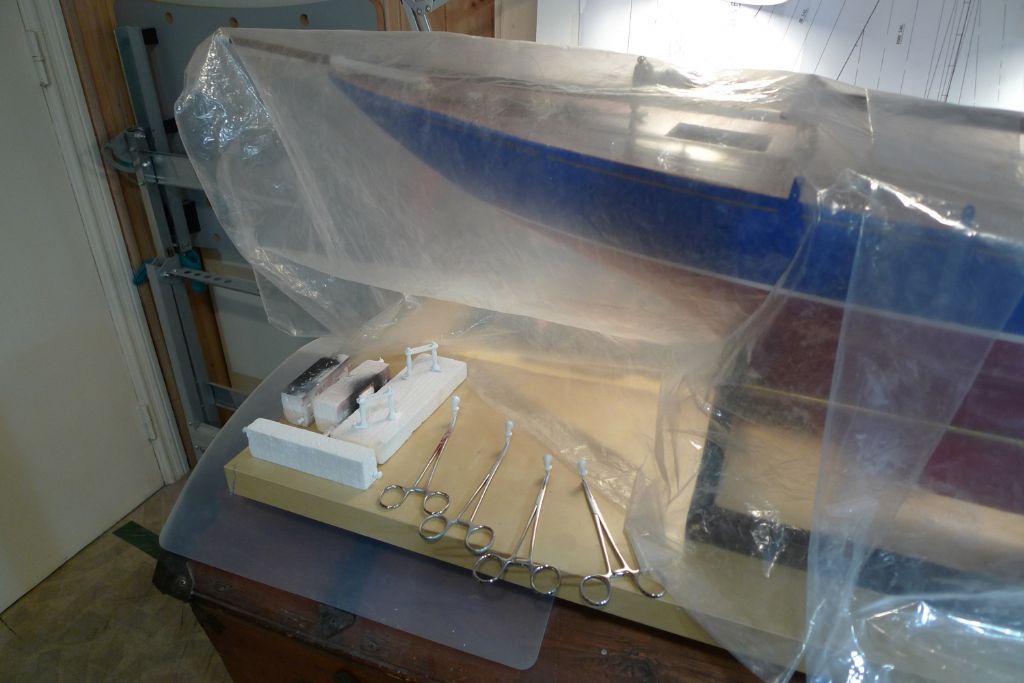
                                                      (When airbrush painting, I always cover the hull and other major parts with plastic sheets or similar, to protect against paint dust.)

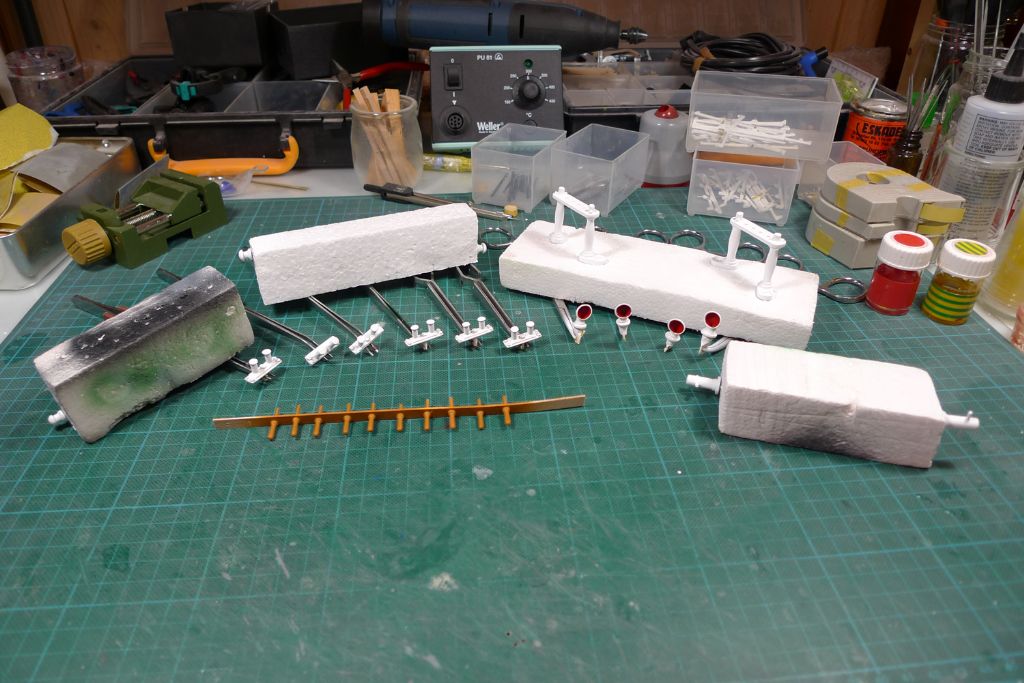
                                                      Most of the deck fittings were painted white …

                                                      mbbygg854.jpg

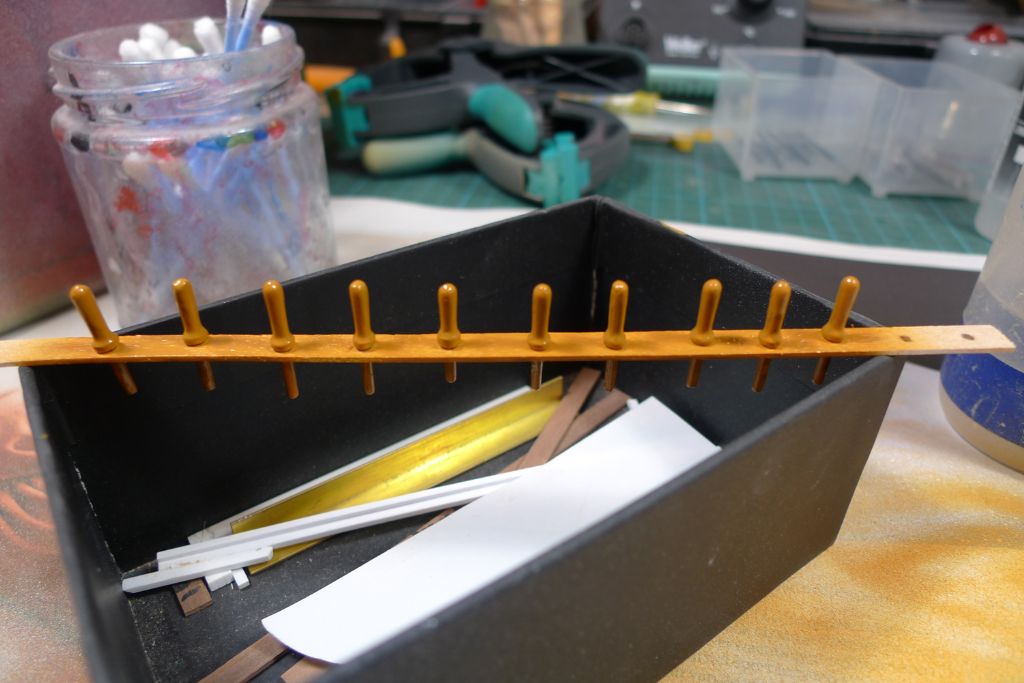
                                                      … except for the belaying pins, that were given a coat of brown in preparation for painting them to look like they were made of wood …

                                                      mbbygg855.jpg

                                                      … and the interior of the ventilator hoods, which were painted bright red.

                                                      mbbygg856.jpg

                                                      To be continued …

                                                      Mattias

                                                    Viewing 25 posts - 276 through 300 (of 440 total)
                                                    • Please log in to reply to this topic. Registering is free and easy using the links on the menu at the top of this page.

                                                    Code of conduct | Forum Help/FAQs

                                                    Latest Replies

                                                    Home Forums Sailing Models Topics

                                                    Viewing 25 topics - 1 through 25 (of 25 total)
                                                    Viewing 25 topics - 1 through 25 (of 25 total)

                                                    View full reply list.