
This is Spooky

This is Spooky

Home Forums Sailing Models This is Spooky

  • This topic has 86 replies, 6 voices, and was last updated 1 month ago by Philip Oxley.
Viewing 12 posts - 76 through 87 (of 87 total)
  • Author
    Posts
  • #127624
    Ray Wood 3
    Participant
      @raywood3

      Hello guys,

      Yes I have the same issues with epoxy laminating resin I coated the inside of the Lass was still tacky after 2 weeks 🙁

      That’s why I love the water based stuff , no issues with that 🙂

      Regards  Ray


      #127645
      Tim Rowe
      Participant
        @timrowe83142

        Skinny Jeans (Spooky) is now more or less finished and has been for a trial sail.  I say more or less because I always seem to find something else I want to do.

        The most satisfying moment came when I found that my weight and centre of gravity calculations were correct and the boat floats on its proper waterline and not the drawn one!   The rudder does point forward very slightly but as the forward edge is raked, it does not show up too much.

        Here are a couple of on-the-way photos.

        P1020969

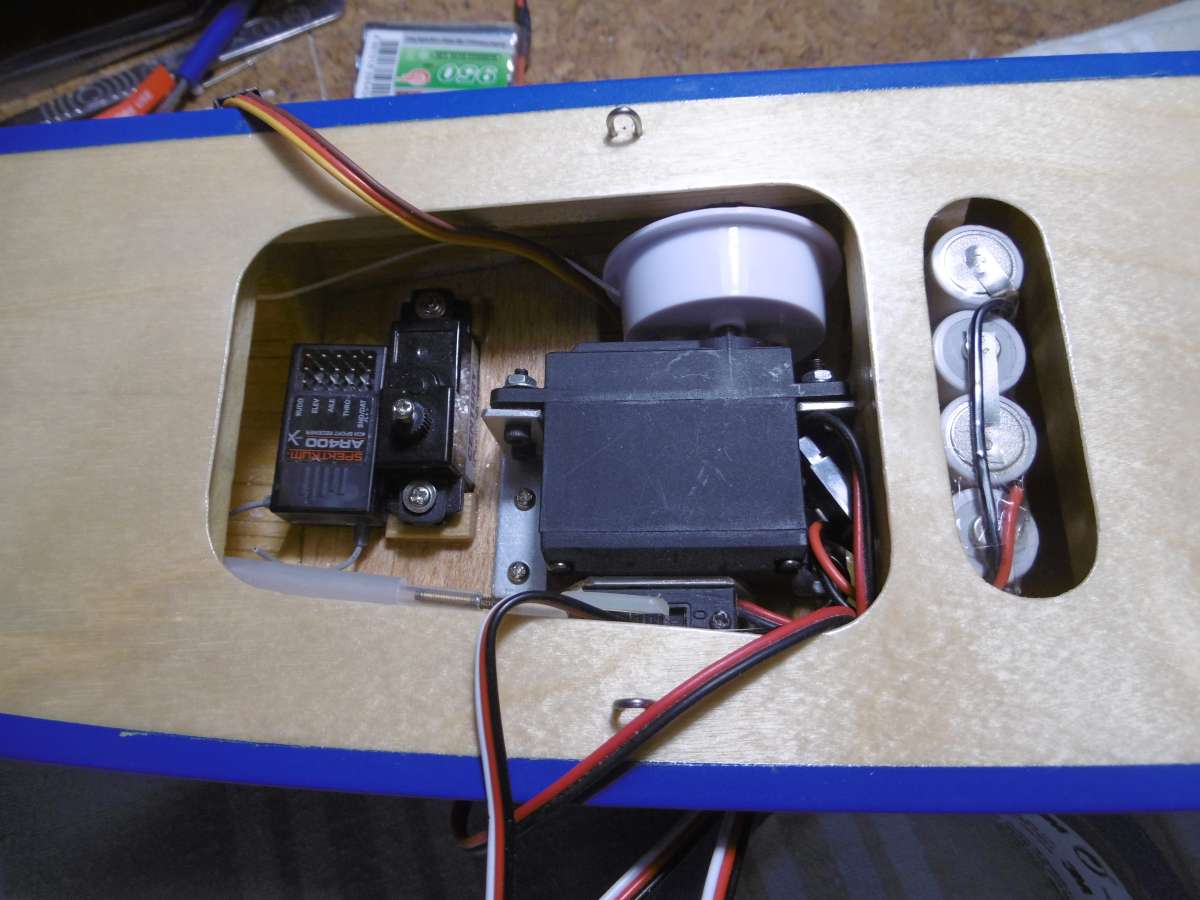
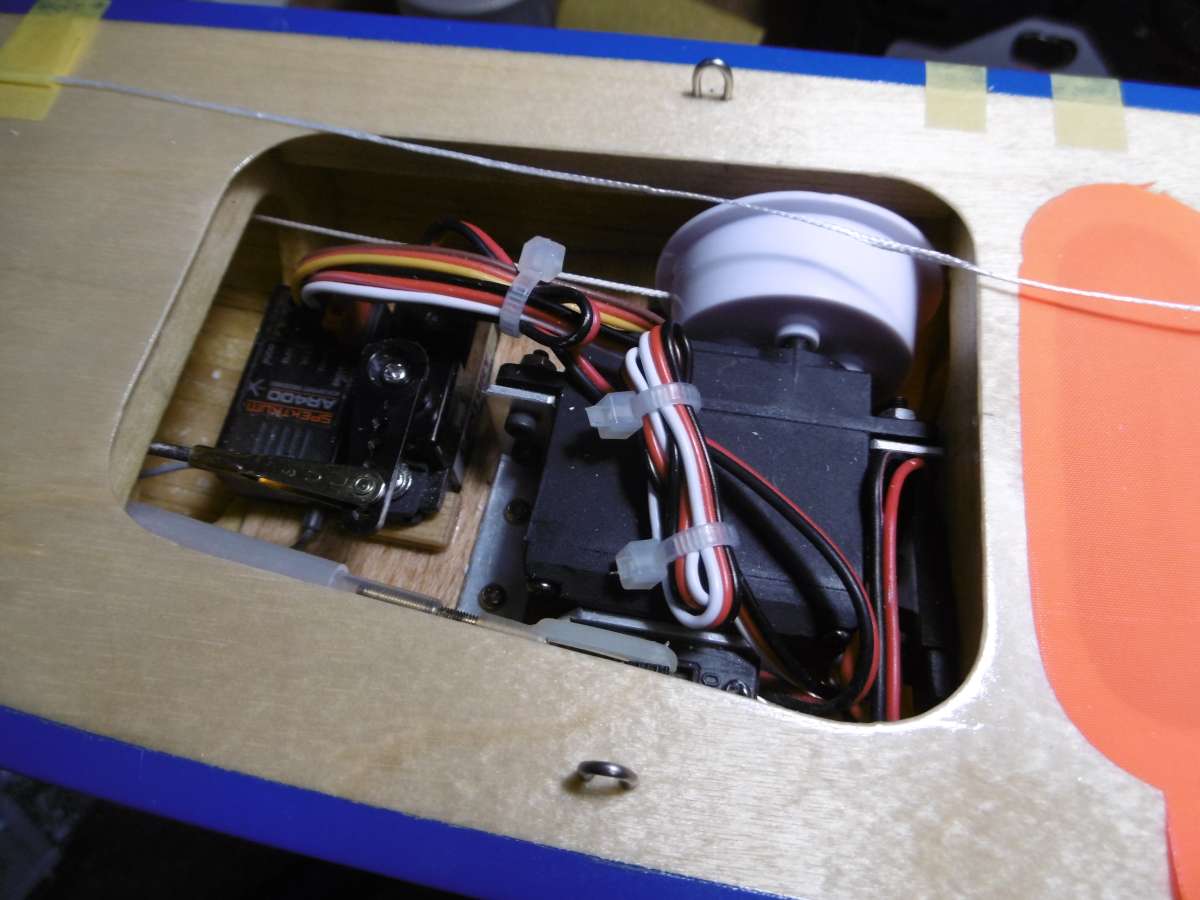
        Here is the radio gear in progress.  It is a tight fit but everything is portable and can be exchanged in the event of a failure.

        The side mounted winch is mounted on some aluminium alloy brackets as it will only fit that way around.  The rudder servo had to go across the boat which is not the best orientation but the loads are light.  The receiver just fits in behind the rudder servo and almost out of sight is the switch which is operated by a snake leading out of the transom.

        The stainless steel hoops are for the mainsheet bridle copying the arrangement from Ray on his DF65.

        P1020970

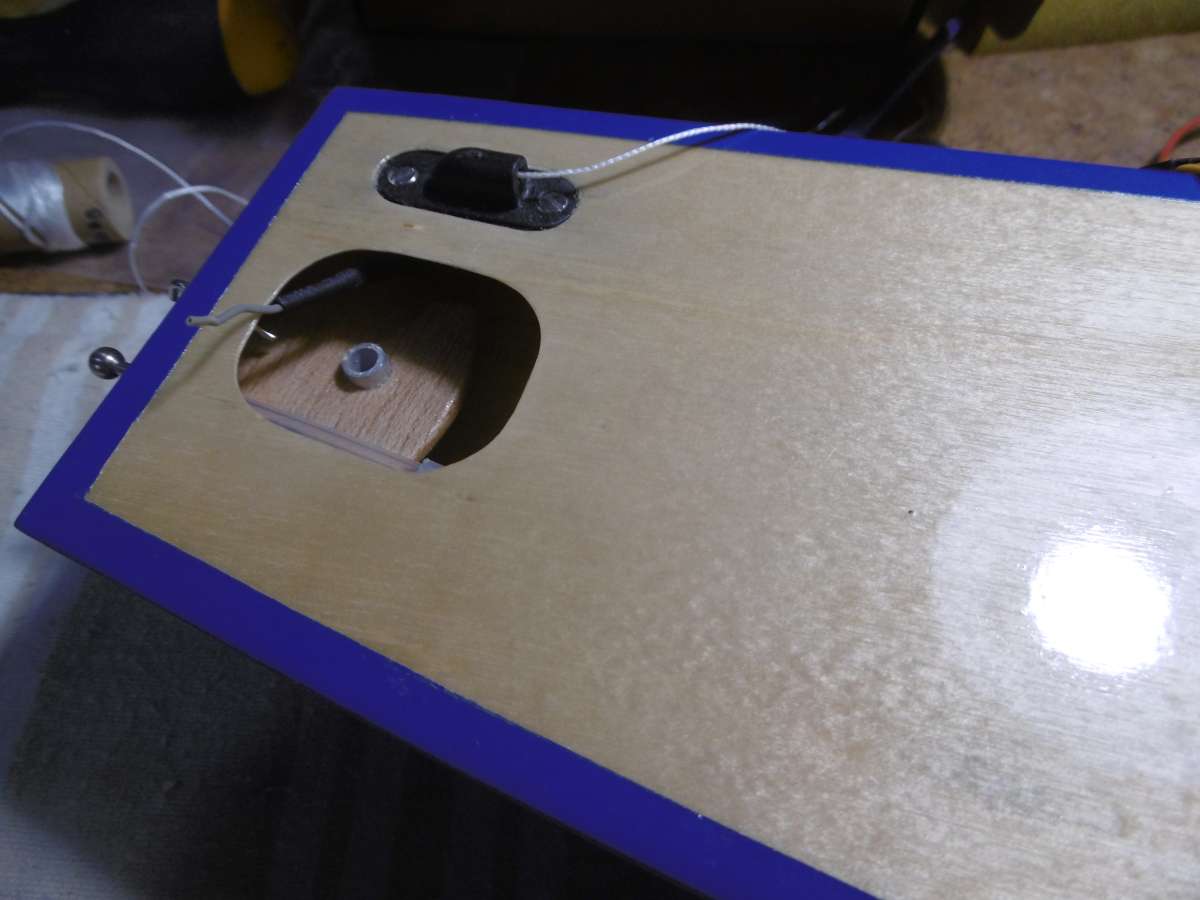
        Here is the deck turning block which is a really neat item from SailsEtc.  It is ball-raced and on the top entry has a tiny silicone seal to keep the water out.  The plan showed a copper tube bent to a U shape but this has quite a lot of friction and leaks like a sieve.  Friction on the sheet reduces the battery life and can affect the repeatability of the end of travel which is particularly import when going to windward when the boom angle is critical.

        P1020974

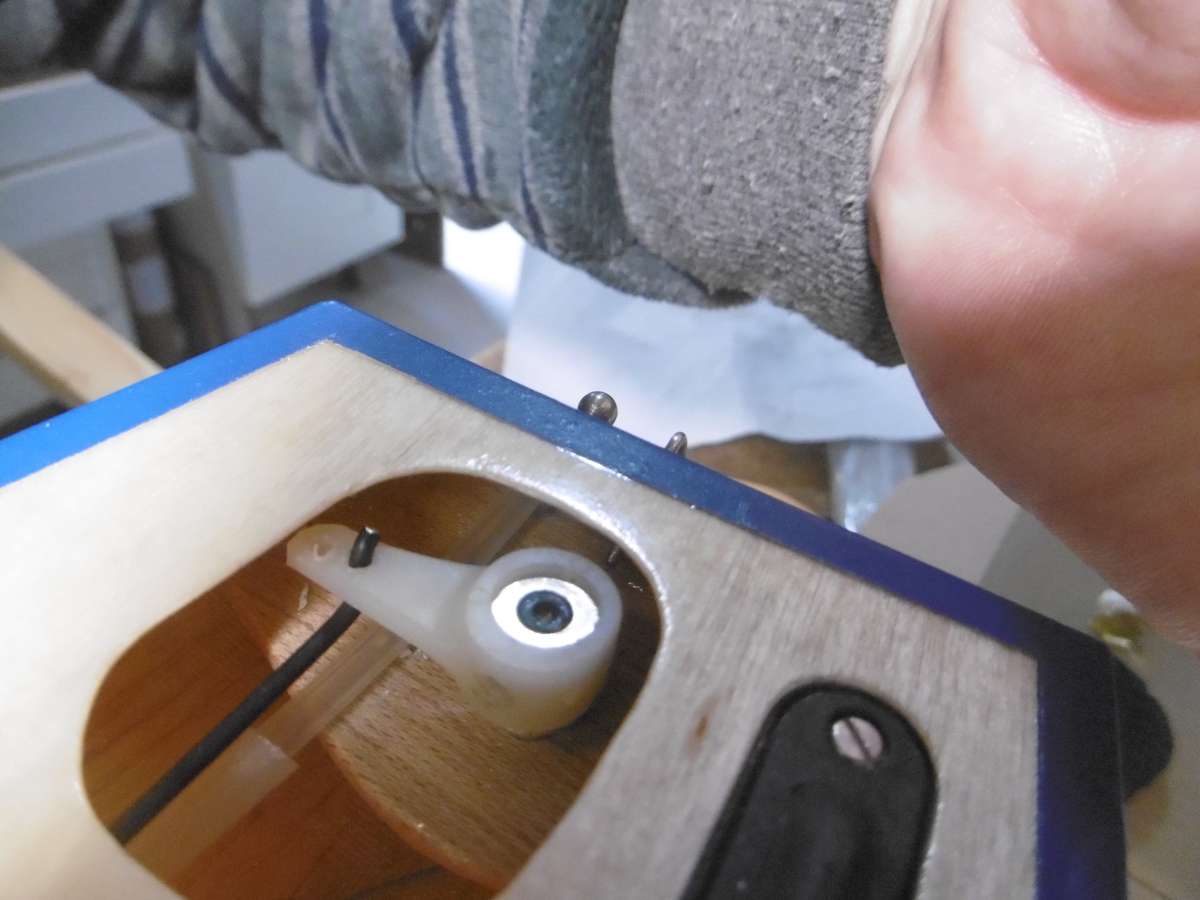
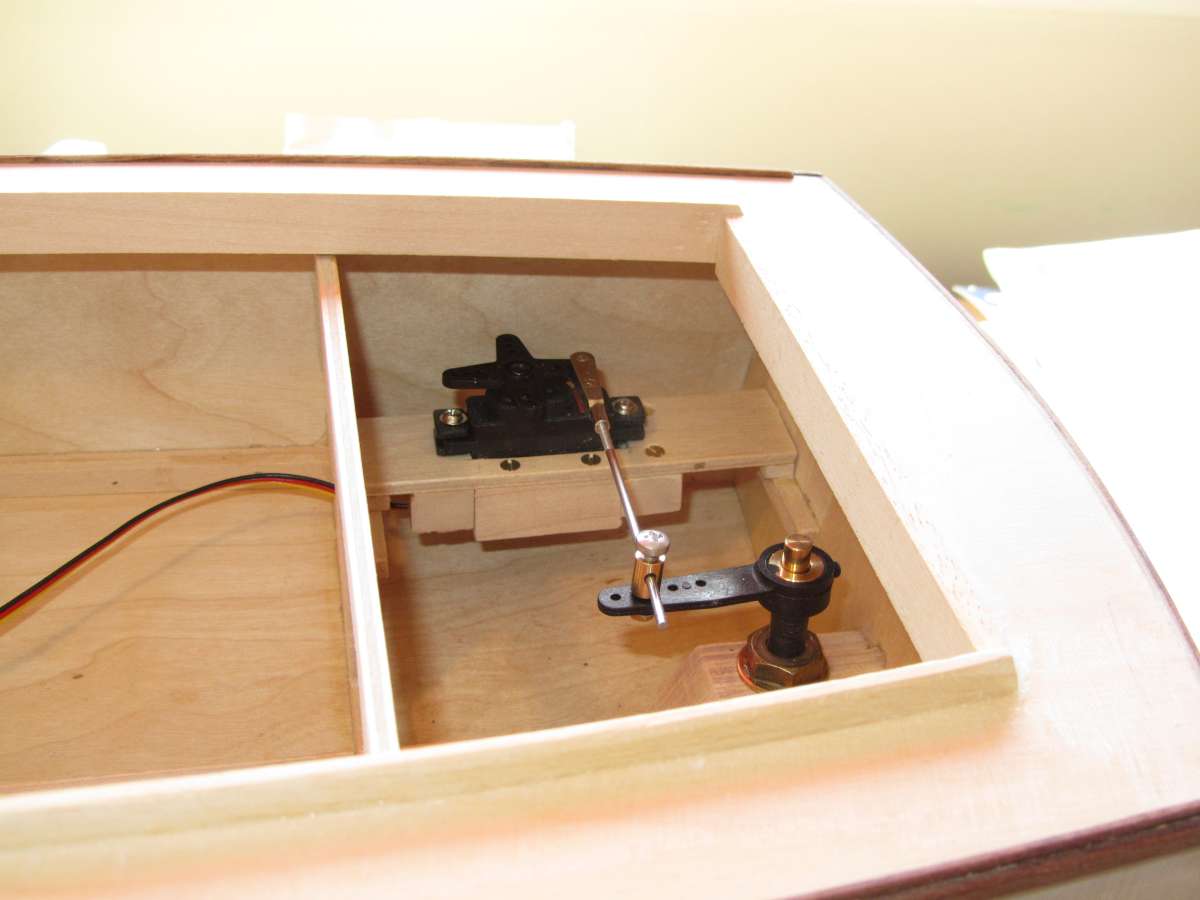
        Here is the tiller arm. Not much room to play with but everything is accessible for adjustment or replacement.

        P1020975

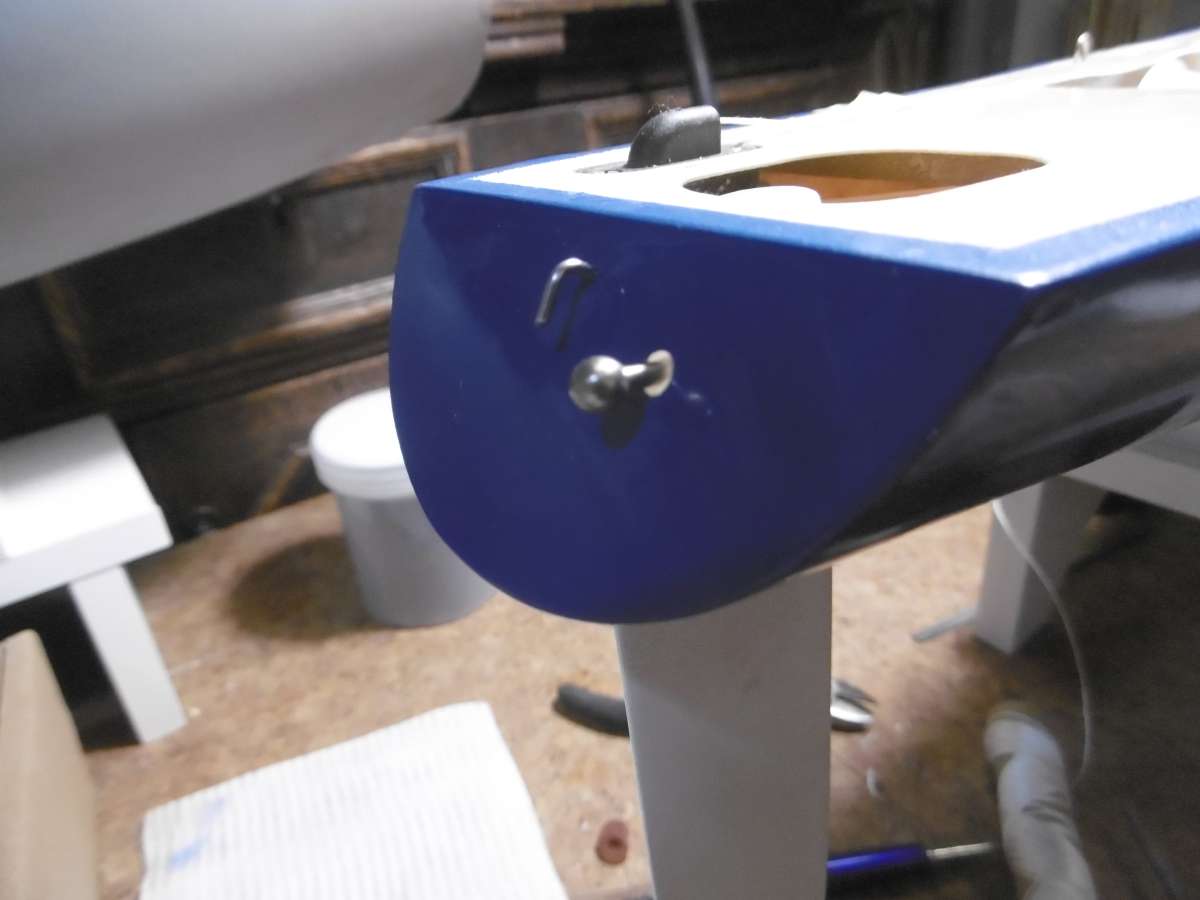
        The transom has a stainless steel hook for the backstay and here is the knob for the push-pull switch operation.  Push is On.

        The snake is a tube within a tube with a very close sliding fit.  Mounting on the transom is the only way of keeping most of the water off.  These boats are low in the water and regularly have water rushing over the deck.

        Tim R

        #127660
        Ray Wood 3
        Participant
          @raywood3

          Hi Tim,

          Your standard of building is superb, I wish I had that level of perfection, sadly it’s all a race for me 🙂 my flying and crashing polystyrene models is making life interesting with repairs !! I have been using budget radio gear for my boats but a decent computer set is now on my shopping list .

          Regards  Ray

          #127662
          Chris Fellows
          Participant
            @chrisfellows72943

            I echo Ray’s comment on your standard of building. You really do take it to another level. You have managed really well to squeeze everything in and so neatly.

            I’ve made a note of the the turning block you have used, just the job for the Fisherman! Did you use a 2 turn servo in the end? I’ve had a look at my DF65 and that’s about 2 turns which amazed me really given the distance that the sheet travels – pity that the servo manufacturers don’t put the travel in the info. or at least give the diameter of the drum so it can be worked out.

            Will be good to see a photo of it on the water.

            Chris

            #127663
            Philip Oxley
            Participant
              @inonowt

              Hello Tim.

              Reading your post, can you please tell me why fitting the rudder servo across the boat is less ideal than along the keel.

              I have also wondered what effect having the battery across the boat makes.

              Regards

              Philip

              #127664
              Philip Oxley
              Participant
                @inonowt

                Btw.   I like your boat.  The finish on the blue paint is amazing.

                Philip

                #127666
                Richard Simpson
                Moderator
                  @richardsimpson88330

                  Absolutely beautiful finish, and superb accessibility.  I particularly like the separate slot for the battery.

                  #127676
                  Tim Rowe
                  Participant
                    @timrowe83142

                    Hi Ray
                    Thank you for your comments.  I am speeding up but I will never reach the Warp Factor 3 that you achieve.

                    Hello Chris
                    Thank you for your comments.
                    The turning block is Part Number 065-SE and costs £18.13.  The cost of bought fitting mounts up but this one would be very tricky to replicate as a home build.  There is a little bit of resistance through the silicone bushing so you will need an elastic cord to keep the tension on the winch.
                    I did use the 2 turn winches and they just gave me enough travel.  The amount you require depends on the distance from the gooseneck to the sheeting point.  The drum diameter is 25mm but the flanges are more. You can preload the drum with a few turns of narrow tape to increase its effective diameter.  There are two grooves in the drum and I needed a small differential between the jib and main sheets on Wild Duck so I put some tape in one of the grooves.  If you have a caliper or vernier to measure the taped diameter it is easy to calculate how much to put on.

                    Hello Philip
                    Thank you for your comments.  I have really enjoyed this build.
                    The servo is much more stable if the servo arm is at right angle to the long axis of the servo.  Especially when the servo is flexibly mounted it can rock with the way I have fitted it.  The lack of room dictated the orientation but the rudder is lightly loaded on this small boat so it doesn’t matter that much.  I wouldn’t do it on a lager yacht but then I wouldn’t need to.  If the servo can’t move, the indexing and repeatability is much better.  Applies very much to large and acrobatic model aircraft.
                    The DF65 has the battery on one side along the keel. This is a moulded boat has has a different keel support arrangement.  My boat is very narrow and there was not enough depth alongside the keel with the support structure in the way.  All the equipment in the boat balances out so putting the battery across the centreline does not affect the balance even if I use a smaller battery from time to time.  I have nearly finished build another design which is much wider and on this one there is plenty of room.  The battery is alongside the keel which also takes it a bit further forward which was helpful for the trim.  Otherwise the battery position does not matter.  I have is separate so I only have to remove a small sticky patch to charge or replace the battery.
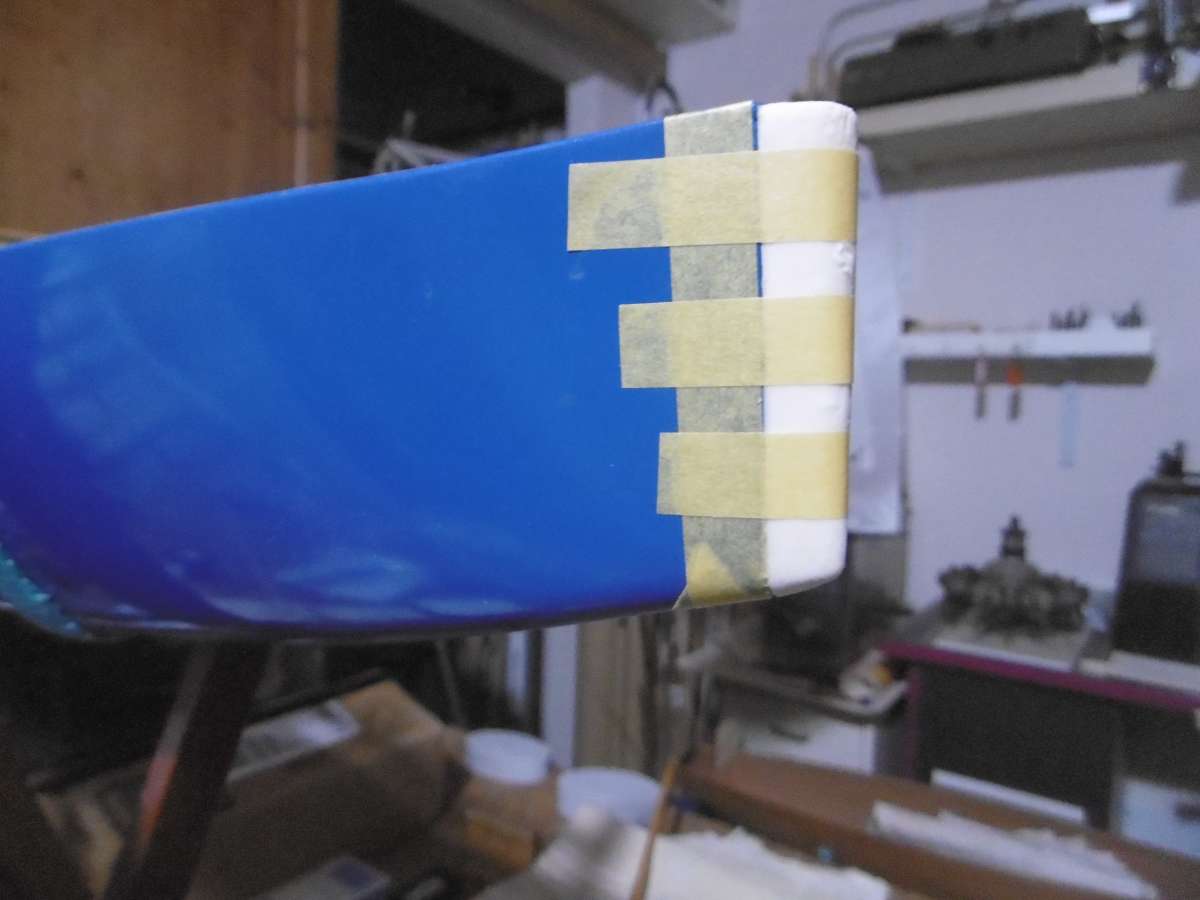
                    The finish is from a rattle can but there is much work in the surface preparation and it wasn’t all plain sailing as I mentioned earlier in the post.  The decks are spray varnished but the blue paint goes over the edge to protect the edge of the very thin plywood. It would have been risky to stop the blue paint exactly on the deck edge.

                    Hello Andrew
                    Thank you for your comments.
                    You know the trouble I had with the paint.  The separate battery compartment makes everything easier to manage.  I can demonstrate why in photos to come.

                    Tim R

                    #127679
                    Chris Fellows
                    Participant
                      @chrisfellows72943

                      Thanks for the info. Tim.

                      Philip – just to add to Tim’s comments. I had to fit a servo like that on one of my builds and was advised that it wasn’t good practice. But I made a snug servo mount/holder so that the servo couldn’t rock from side to side. It tends to be a requirement in smaller builds/where space is limited. In my case it was only a slow moving boat and so as Tim says the loads transmitted from the rudder are low anyway.

                      Chris

                      Servo 8

                      #127698
                      Philip Oxley
                      Participant
                        @inonowt

                        Hi all.IMG_20260506_075102042_MFNR

                        Thanks to Tim and Chris for your replies.

                        I tend to centre everything over the keel with the servo horn and tiller at right angles to it. Ironically, although the servo is fitted along the keel in my MTB the twin rudder linkage in my MTB, means I’m using the horn at the end of the servo. In hindsight, I should have mounted the servo perpendicular to the keel in order to use a horn at right angles.

                        The servo is a low profile Etronix 2035. It gives 8.2kg of torque. I had to build a mount around the servo since the wires exit only 4mm below the mounting tab so I couldn’t ‘slot’ it into a mount. It is solidly mounted so I don’t expect any issues.

                        4 of my boats have batteries across the beam. All I can think is that in doing this, there is a little more weight outboard which could make the boat heel over a little more in the turns. In the MTB I’ve had to do away with the battery box and will use white tack to stop it moving around.

                        Regards

                        Philip

                        #127706
                        Tim Rowe
                        Participant
                          @timrowe83142

                          Hello Philip

                          That’s a nice neat installation.

                          As far as the battery weight is concerned it is only related to the centre of gravity of the battery.  If it is on the centreline there is an equal amount of weight on both sides and therefore no heeling effect.

                          The vertical height of the centre of gravity is more important.  Lowering it will increase the stability and raising it will make the boat more unstable.  I would say that on both our types of boat a low centre of gravity is beneficial but on some type of boats it might make them a bit to “bobby” and less realistic on the water.

                          Tim R

                          #127710
                          Philip Oxley
                          Participant
                            @inonowt

                            Hi Tim.

                            Thanks.

                            I see what you’re saying and you’re right of course.  I hadn’t given any thought to the height of the battery, but it makes sense.

                            Regards

                            Philip

                          Viewing 12 posts - 76 through 87 (of 87 total)
                          • Please log in to reply to this topic. Registering is free and easy using the links on the menu at the top of this page.

                          Code of conduct | Forum Help/FAQs

                          Latest Replies

                          Home Forums Sailing Models Topics

                          Viewing 25 topics - 1 through 25 (of 25 total)
                          Viewing 25 topics - 1 through 25 (of 25 total)

                          View full reply list.