
This is Spooky

This is Spooky

Home Forums Sailing Models This is Spooky

  • This topic has 86 replies, 6 voices, and was last updated 1 month ago by Philip Oxley.
Viewing 25 posts - 1 through 25 (of 87 total)
  • Author
    Posts
  • #127080
    Tim Rowe
    Participant
      @timrowe83142

      Happy New Year to all.

      I saw the RG 65 on the cover of the recent Model Boats magazine and it rekindled my long held intention to build one.  I really like my IOM (1 Meter) but it is quite big to transport. The idea of something much more compact is very appealing.

      My pal Ray kindly sent me a copy of the plan and a bonus plan of a model called Omega by the same designer.

      Another nice thing about the RG 65 is that the class rules are very open.  Maximum length, maximum sail area and maximum rig height is about it. This is in stark contrast to the IOM class rules that are very tightly controlled.

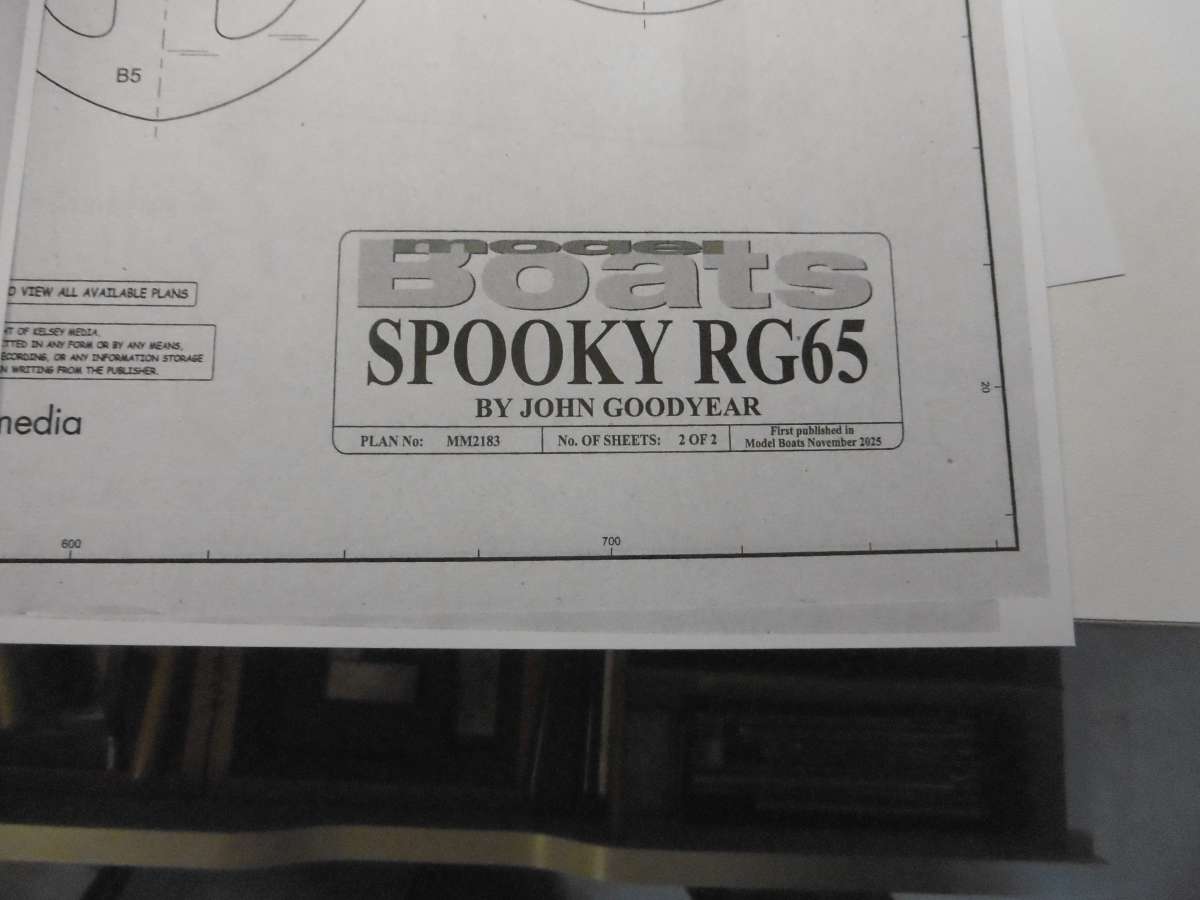
      P1020658

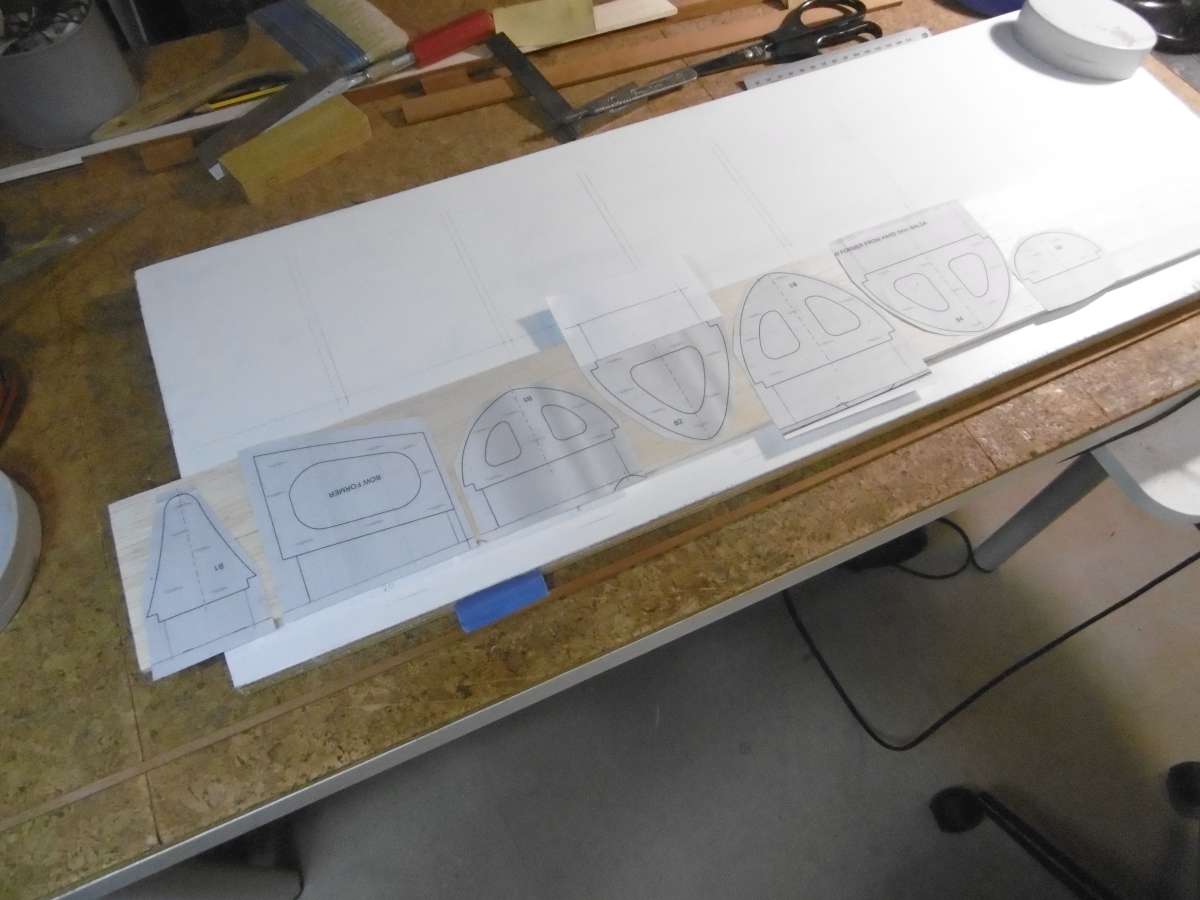
      This is the plan title

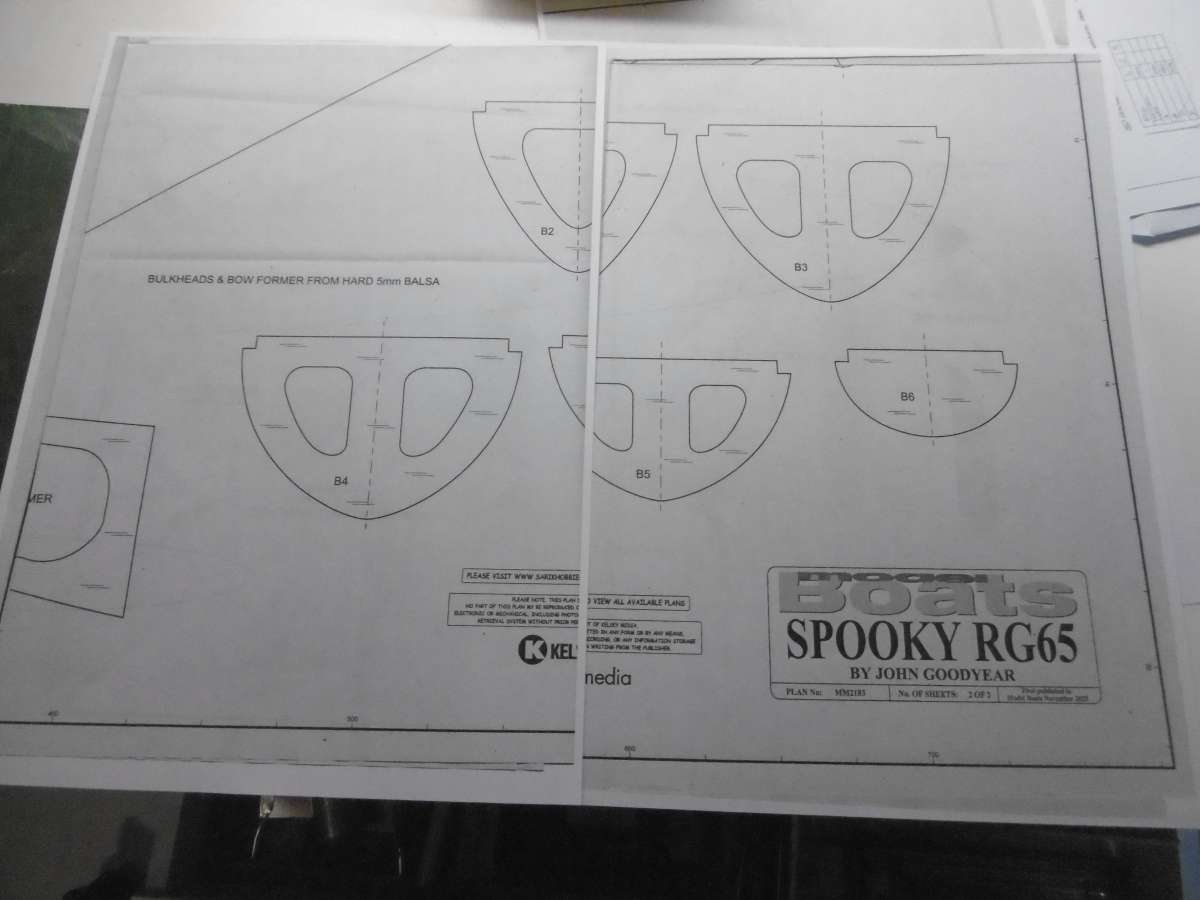
      P1020659

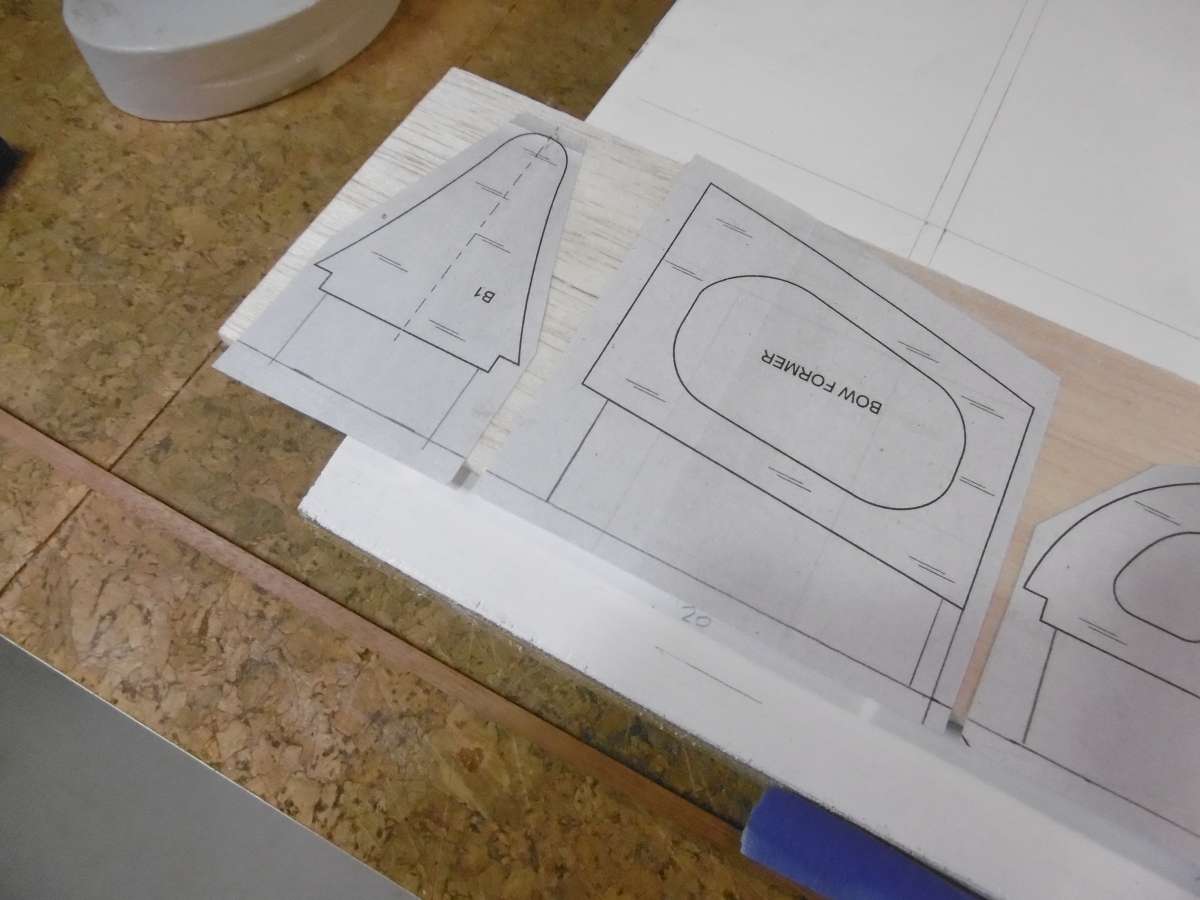
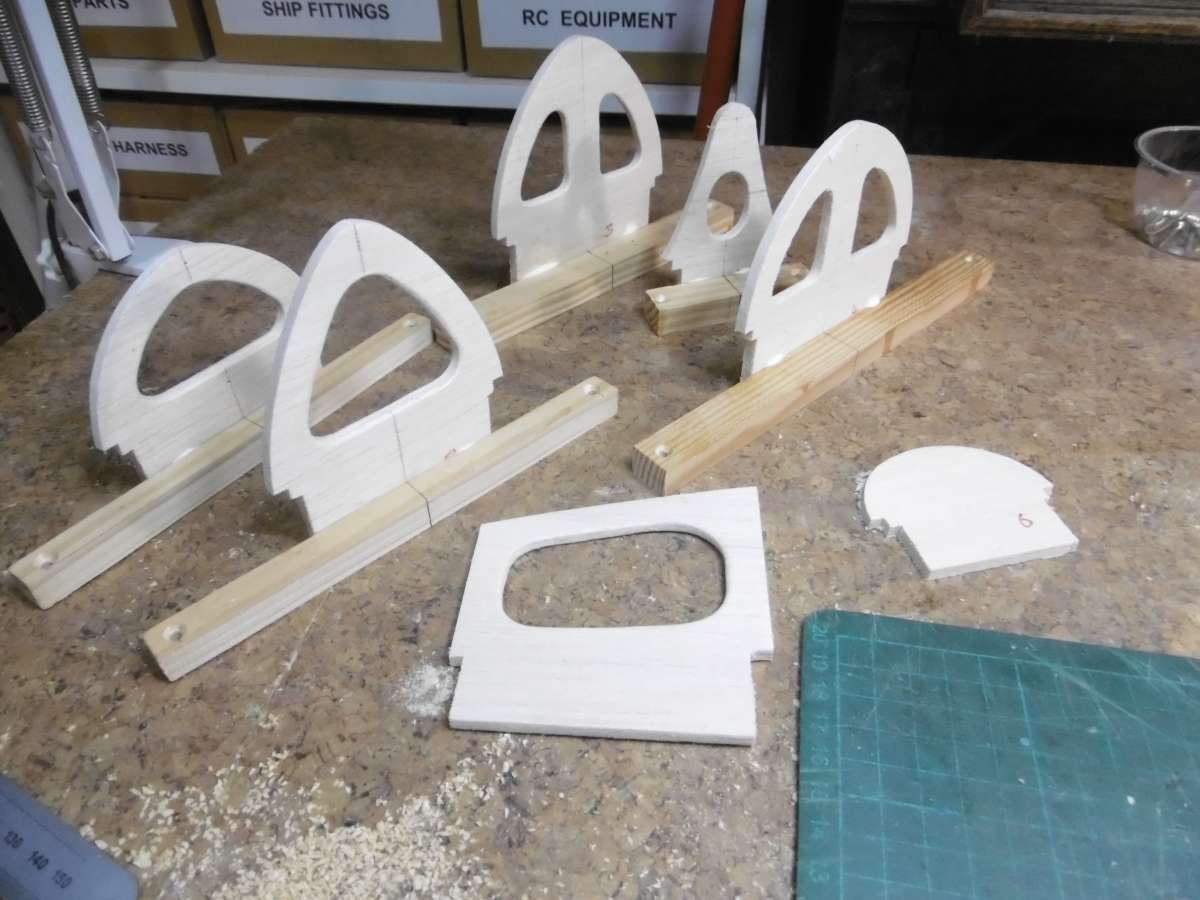
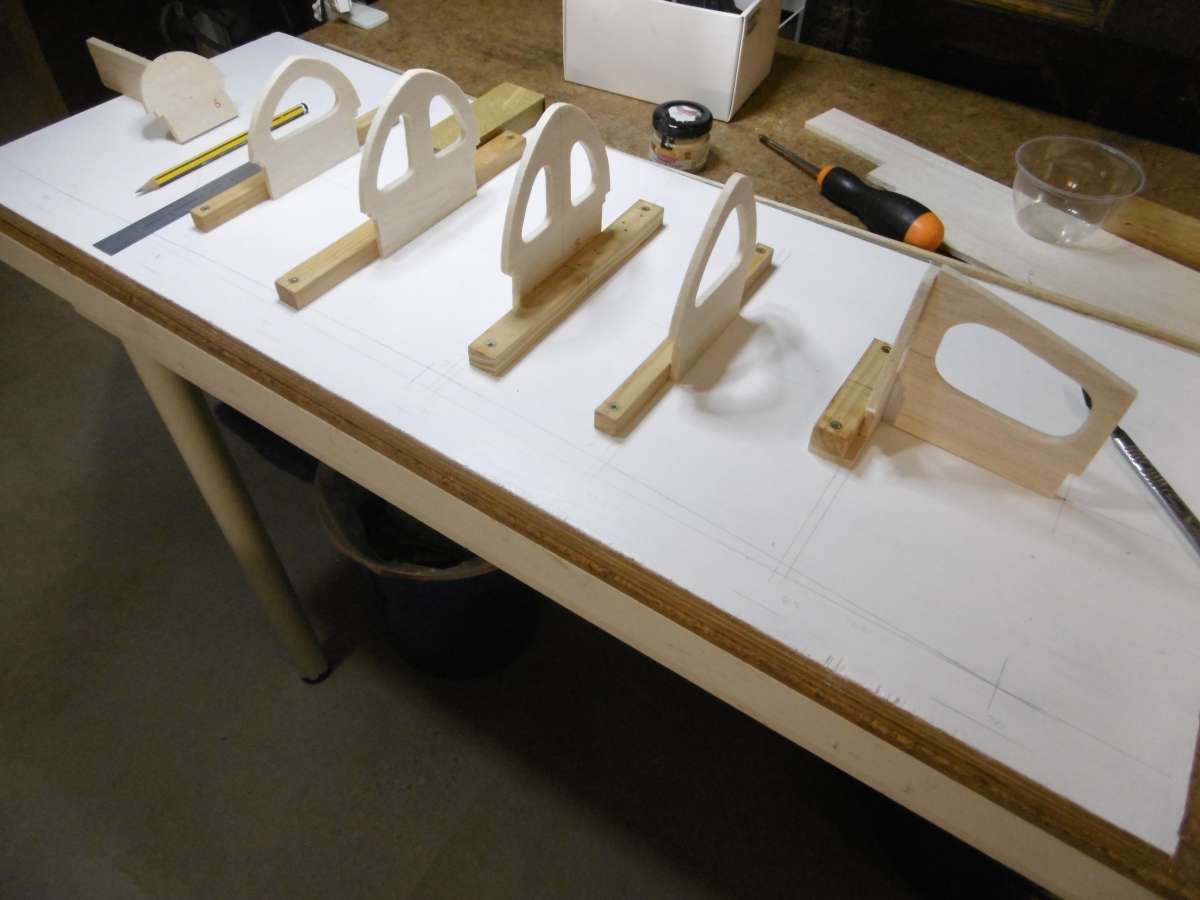
      And here are some of the bulkheads which I have copied ready to use as templates.

      This is an all balsa hull so much easier and quicker to construct than the Nimbus which is planked in mahogany.

      Thank you Ray for sending me the plans.

      Tim R

      #127081
      Ray Wood 3
      Participant
        @raywood3

        Hi Tim,

        Your most welcome as always 🙂

        Thought you may like to cheat a little and buy DF65 bits, rig etc, RC Sailing has changed hands before Christmas and is now owned by Tim Long of Soch sails in Wales, nice guy met him at an open meeting a few years ago he also runs a boatyard there.

        As you know I’m in aeroplane building mode at the moment, but have been in touch with the owner of the Spring of Tarrant the boat used in the TV show, It’s having a complete refit 🙂  watch this space !!

        All the best for the New Year

        Ray

        #127082
        Tim Rowe
        Participant
          @timrowe83142

          John Goodyear has drawn a very nice plan but I wanted to simplify the build method because effectively having two building boards seemed a bit complicated.  Borrowing Rays method of extending the bulkheads down to a datum I drew a curve in the building board to give the 12mm of sheer.  The datum would be zero at the bow and the stern and the height of the deck could be picked up by the amount of sheer at each of the bulkhead stations.  I then added 25mm to each one to get the hull well clear of the main building board and to make space for the temporary cross pieces holding the bulkheads in their correct locations during the rest of the build.  I hope this becomes more clear in the photos later.

          P1020660

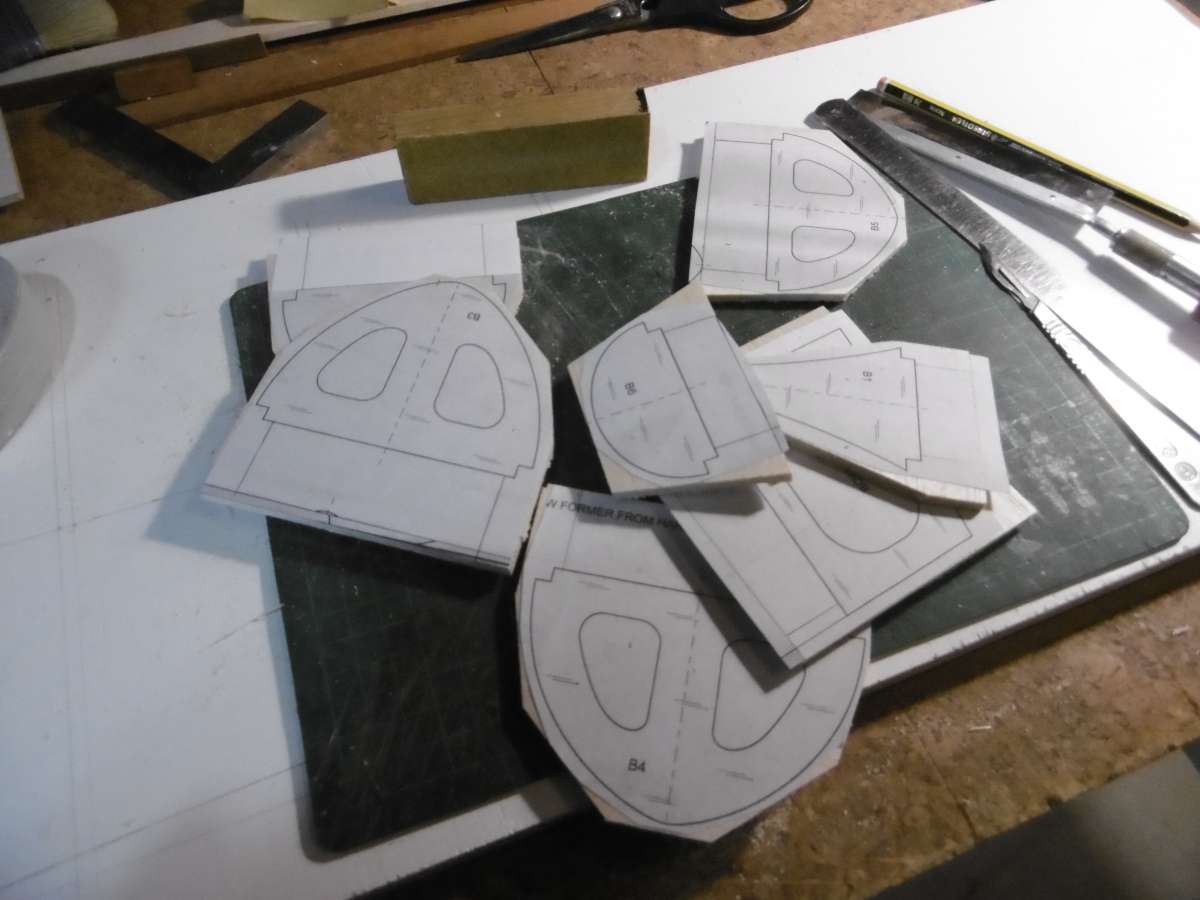
          Here the bulkheads have been photocopied and pasted onto 5mm medium hard balsa and the extensions have been drawn in place.

          P1020661

          Here you can see that the bottom of the extensions are aligned with the edge of the balsa to save material and save some cutting.

          P1020662

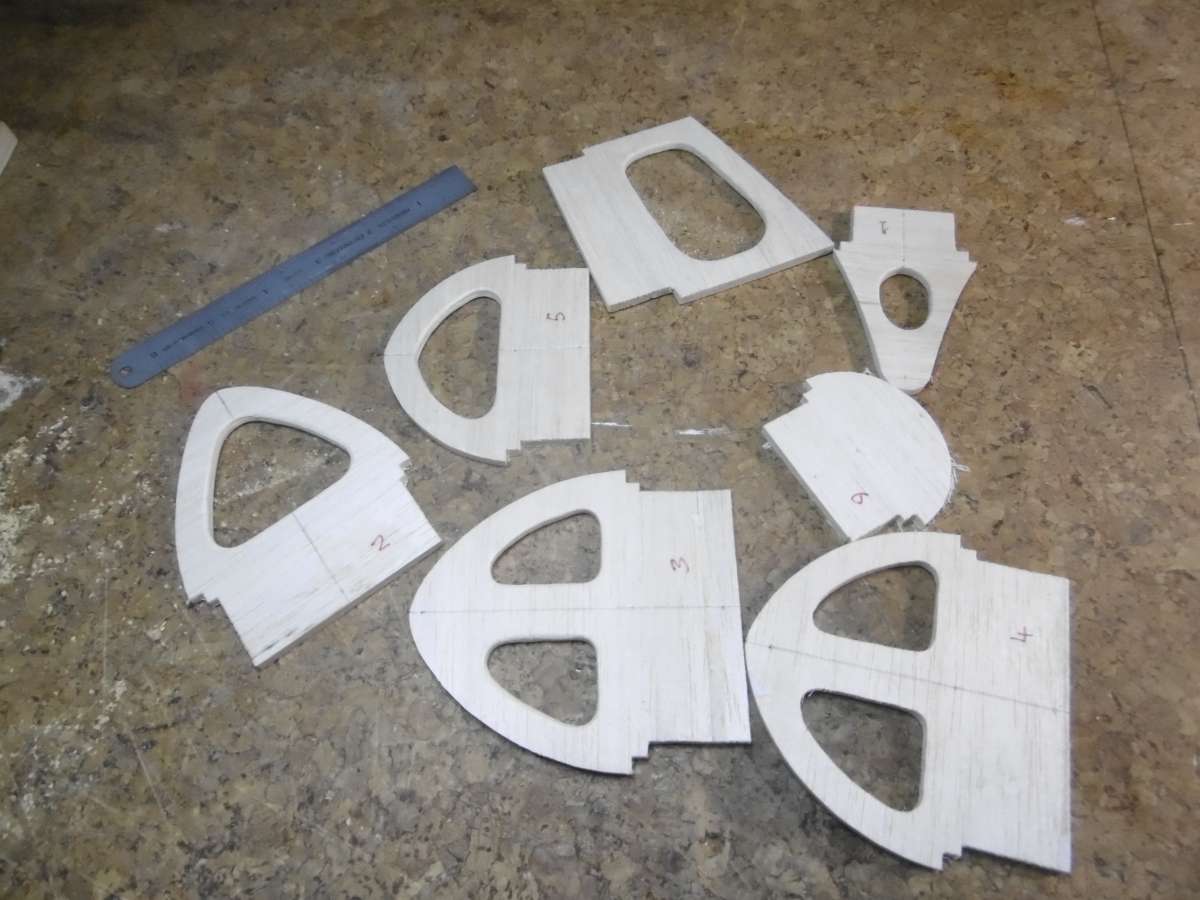
          Now the bulkhead have been roughly cut out ready to be sanded back to the lines and the holes cut out.  The external sanding was done using a Proxxon disc sander (lots of dust and a mask obligatory).  The holes were roughly cut out with a scalpel and finished to the lines using a Dremel with a small drum sander.

          P1020663

          Like this.  Each one numbered according to the plan and the centrelines marked in.  Having centrelines is really important when building any type of boat except perhaps a Gondola!  In case the lines get rubbed out I pushed the sharpened point of a pencil into the balsa at the top of the line as a reference.

          P1020664

          All the bulkheads were tacked to the cross pieces with small dabs of aliphatic glue and the centrelines transferred so they can pick up on the centreline of the main building board.

          Tim R


          #127085
          Richard Simpson
          Moderator
            @richardsimpson88330

            Lovely job Tim.  To my very inexperienced eye when considering things such as this, while you have adjusted the height of the bulkheads off the build board to give you a deck shear won’t that then also affect the shape of the lower hull?  Will that then have any effect on the model’s performance or even the ability to bend the lower planks around what I imagine will be a sharper curve?

            Just trying to get my head around the implications of such a modification.

            #127088
            Tim Rowe
            Participant
              @timrowe83142

              Hello Richard

              The build instructions suggest cutting out a flexible board the same shape and size as the deck plan.  This board is then pinned down at the bow and stern and raised with a 12mm packing piece in the middle to give the sheer.  Putting one piece of packing in the middle does not create a constant curve creates two straightish sections fore and aft with a sharper curve midships under the packer.
              I generated a fair curve with a 12mm rise and plotted how much I would need to raise each of the intermediate bulkheads to bring them to same height as if they were going to be on the curved flexible board, but now mounted directly on the flat building board.  They were referenced and adjusted off a flat surface instead of a curve one and this leaves the hull shape exactly as before but with everything 25mm higher for convenience.  I hope this clarifies the process.

              Tim R

              #127089
              Ray Wood 3
              Participant
                @raywood3

                Hi All,

                I didn’t read the build article before I sent it to Tim 🙁 as I have a DF65, that said a building board with a hump in it to achieve the shear curve is a new one on me 🙂

                Bloomin cold again, I hate the winter !! Tim has the right idea on location 🙂

                Regards  Ray


                #127095
                Tim Rowe
                Participant
                  @timrowe83142

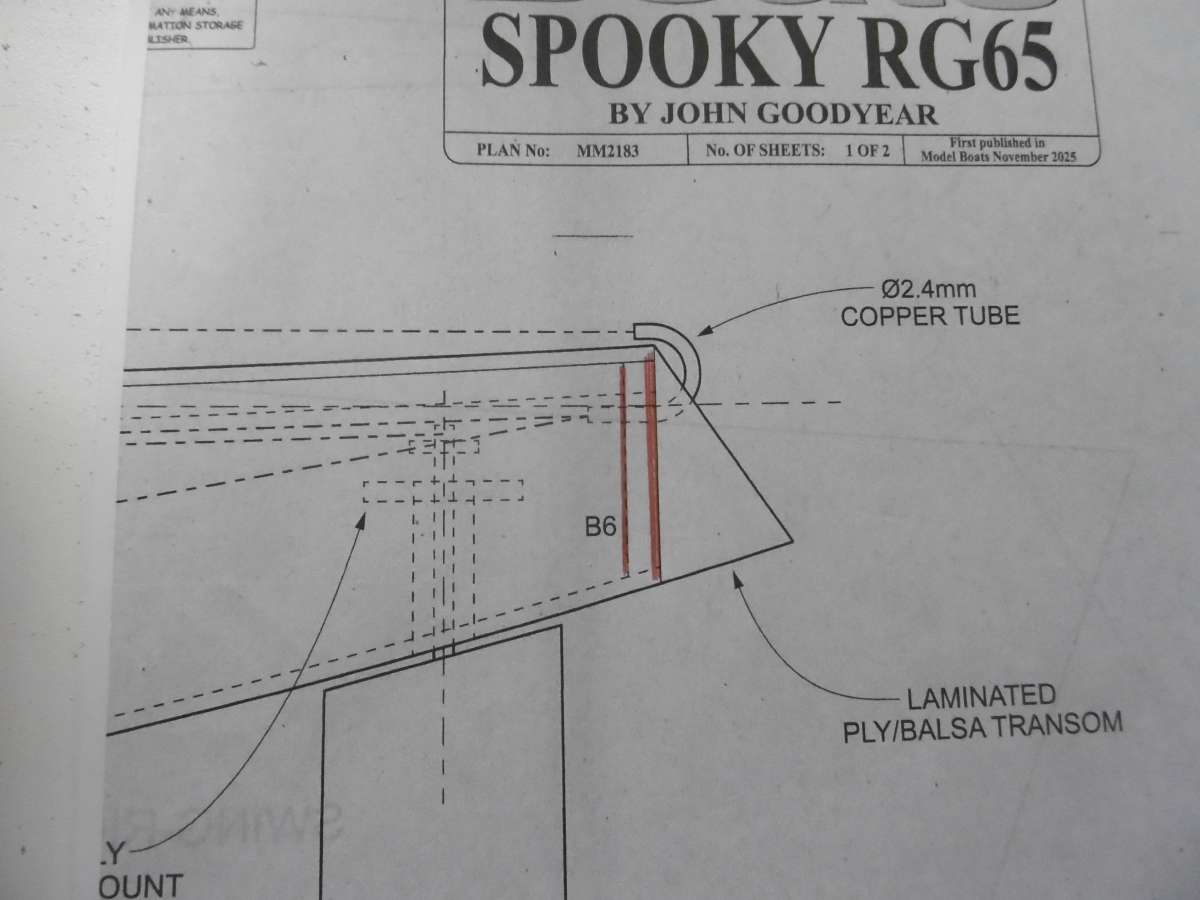
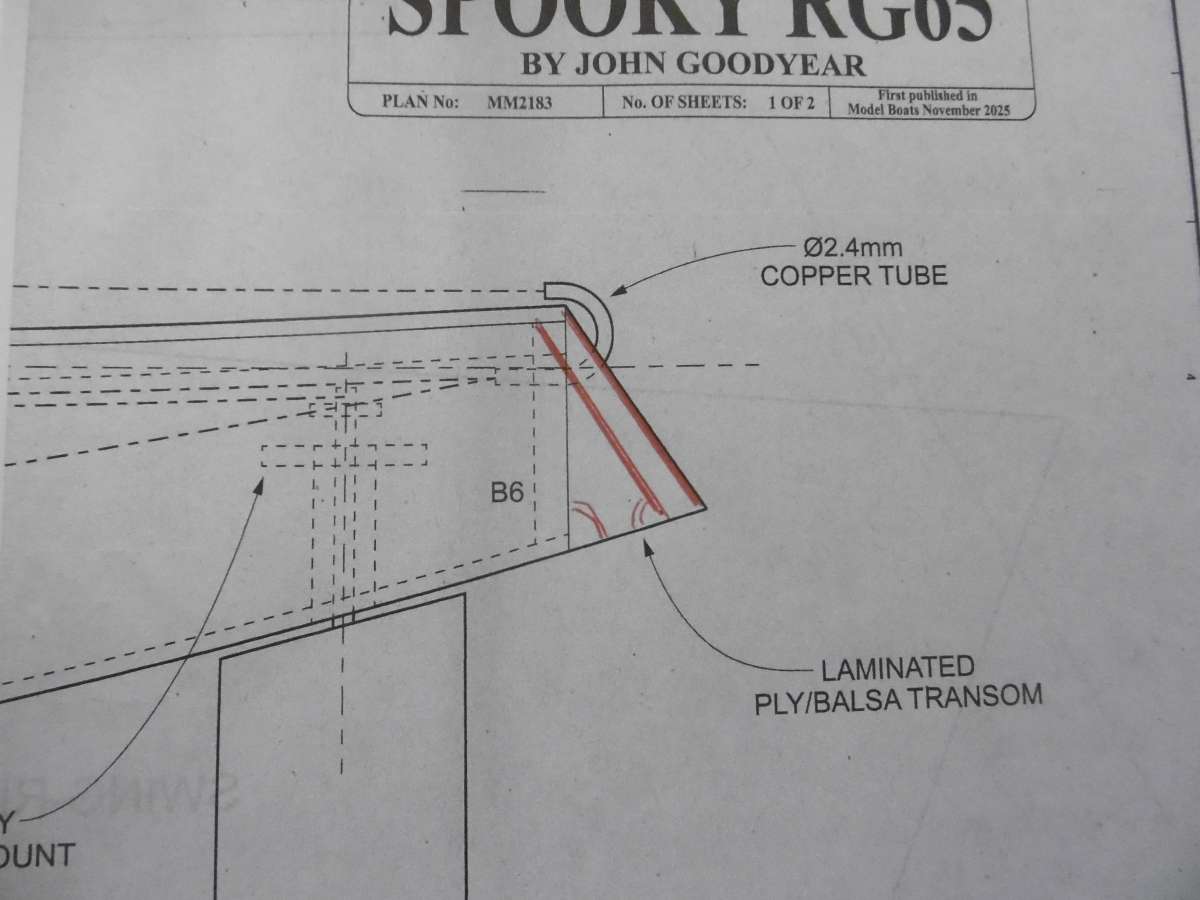
                  Another modification along the way was to simplify the transom.  The plan shows a bulkhead just a little way forward of the transom.  The instructions suggest leaving the planks long to extend past the bulkhead and fit the transom afterwards.  To my mind this would be fiddly and would also leave a void which if ever got water in, would be impossible to drain.

                  P1020696

                  This shows bulkhead 6 and the suggested transom.  I don’t know if the intention was to cut off the extended planks at the right angel and then stick the transom on?  This would mean sticking the planking onto the end grain of the planks and this would be a week spot.  If the intention was to fit the transom inside the planks it would be tricky to get a good fit.

                  I teased Ray about one of his plans not showing the transom detail and it is very easy to project if you paid attention during the geometry classes.  In this case however it was not necessary.

                  P1020697

                  I saw that if you swing bulkhead 6 into the position of the transom it intersects the planking at almost exactly the same angle.  OK the geometry would not be 100% perfect but very close and seeing that bulkhead 5 was some distance away, the slight discrepancy would not be noticeable.

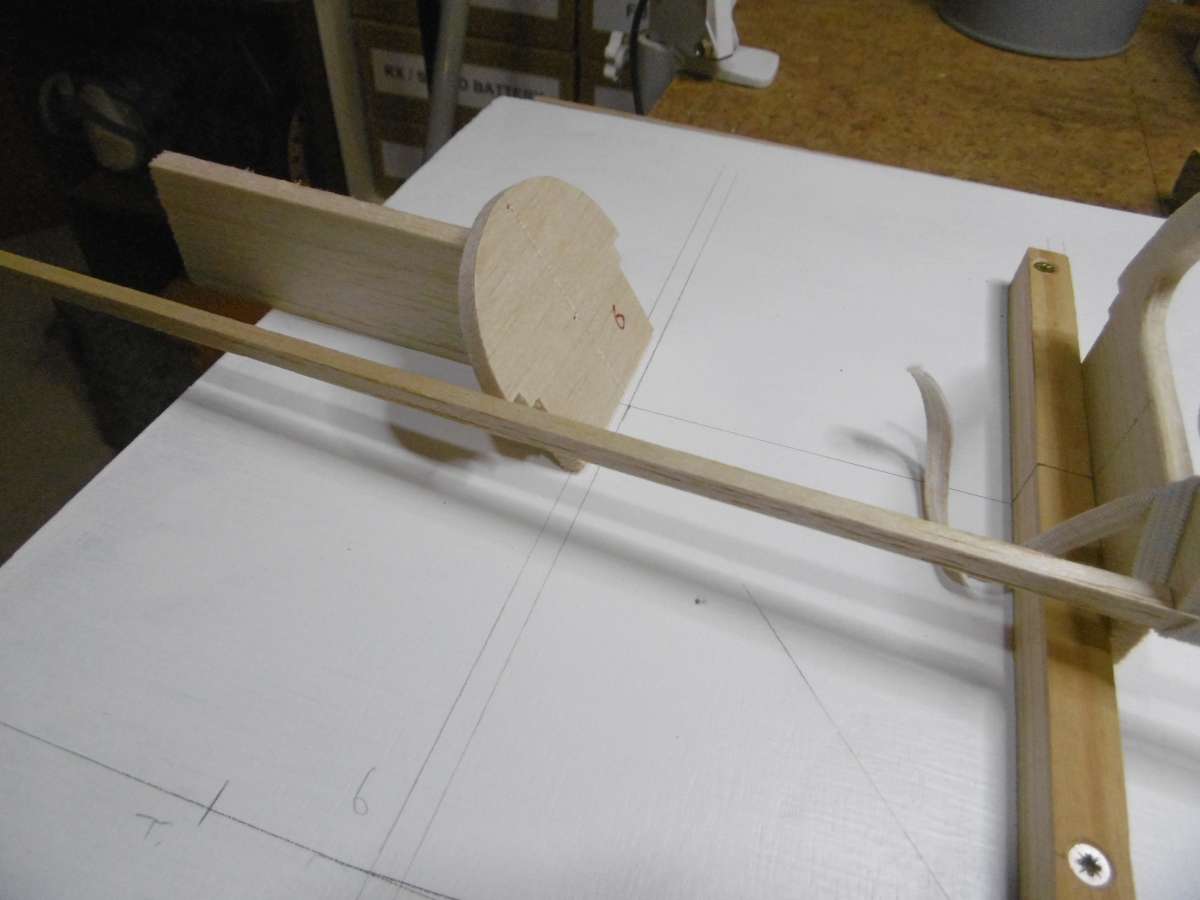
                  P1020667

                  Bulkhead six now becomes the transom and is jigged at the correct angle taken off the plan with a scrap piece of balsa.  On check the height of the notch for the deck edge stringer it worked perfectly to continue the correct sheer.  It was only necessary to remove some material to account for the angle.

                  Now the planks can run past the transom to be trimmed off later.  There will be some gluing on the end grain but it will now be on 5mm wide balsa as supposed to the 2.5mm planking.

                  Tim R

                  #127096
                  Ray Wood 3
                  Participant
                    @raywood3

                    Looking Good Tim,

                    The transom on this was much easier 🙂

                    Regards  RayS17

                    #127097
                    Tim Rowe
                    Participant
                      @timrowe83142

                      Can’t wait to see the Slipper slipping along Ray.

                      Next Spooky step was to set up the bulkheads on the building board.  Just faintly at the bottom of the board you can see the sheer curve that I generated as a true arc.  Where the bulkhead stations intersected this arc gave me the heights required to get the bulkheads into the plan position.

                      P1020665

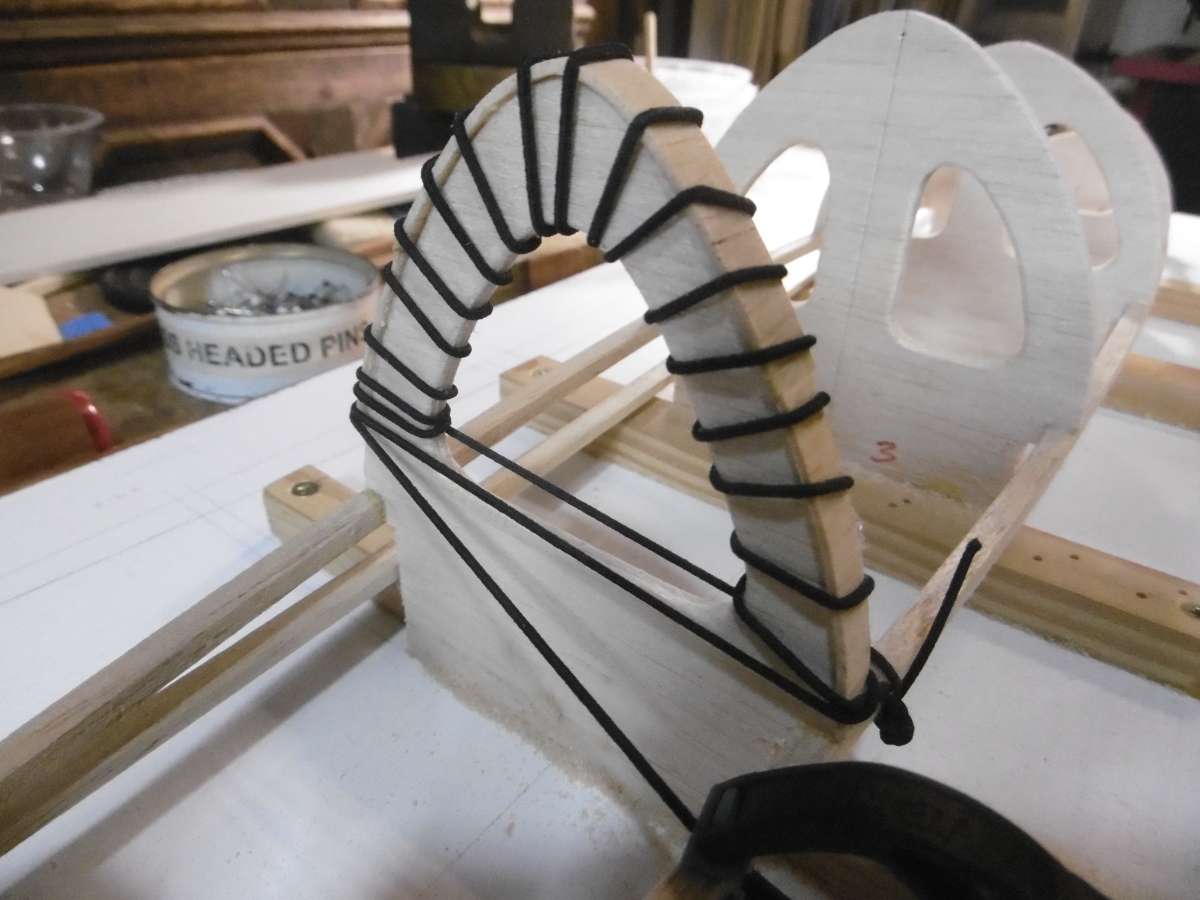
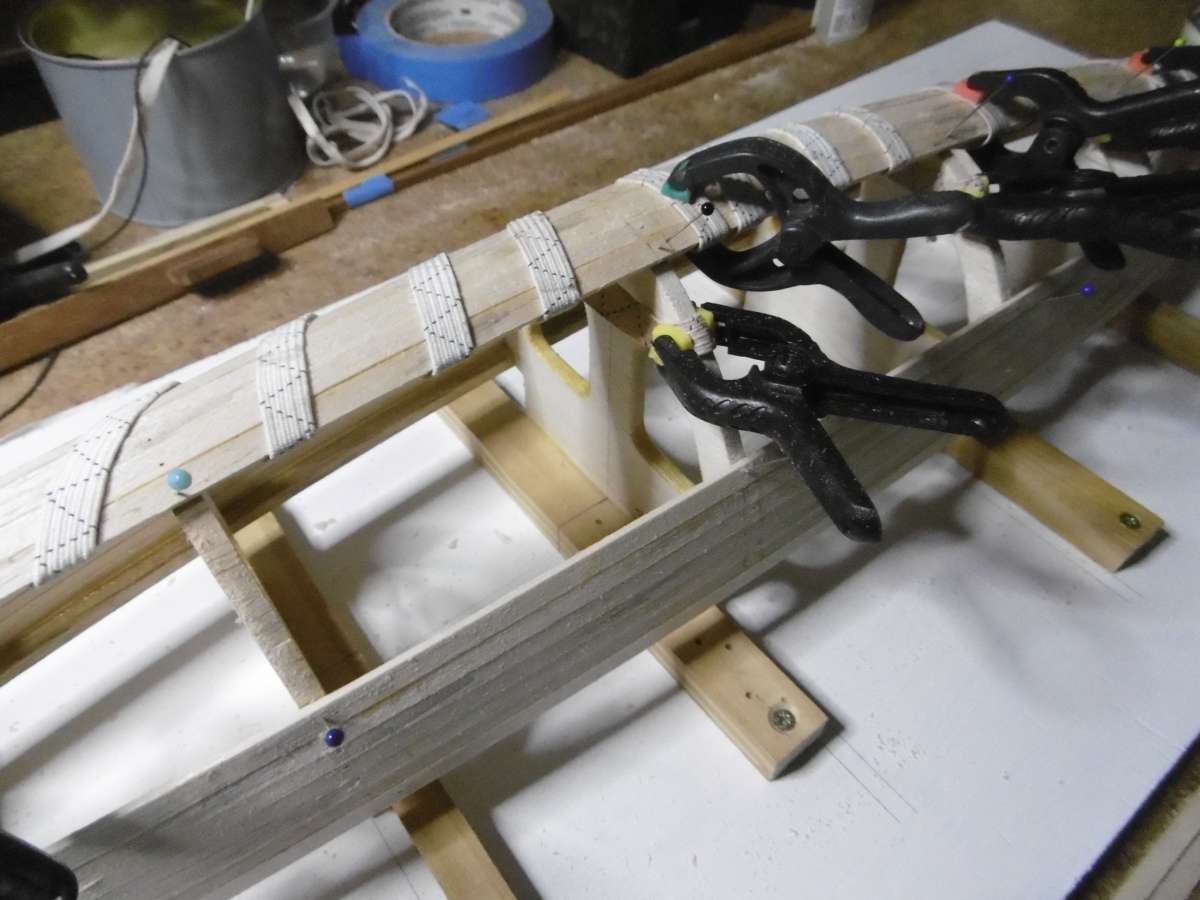
                      Elastic makes a great clamping tool and doesn’t bruise the balsa.  Here the first deck edge stringer is being glued into place with the bow former being held in place with shirring elastic.

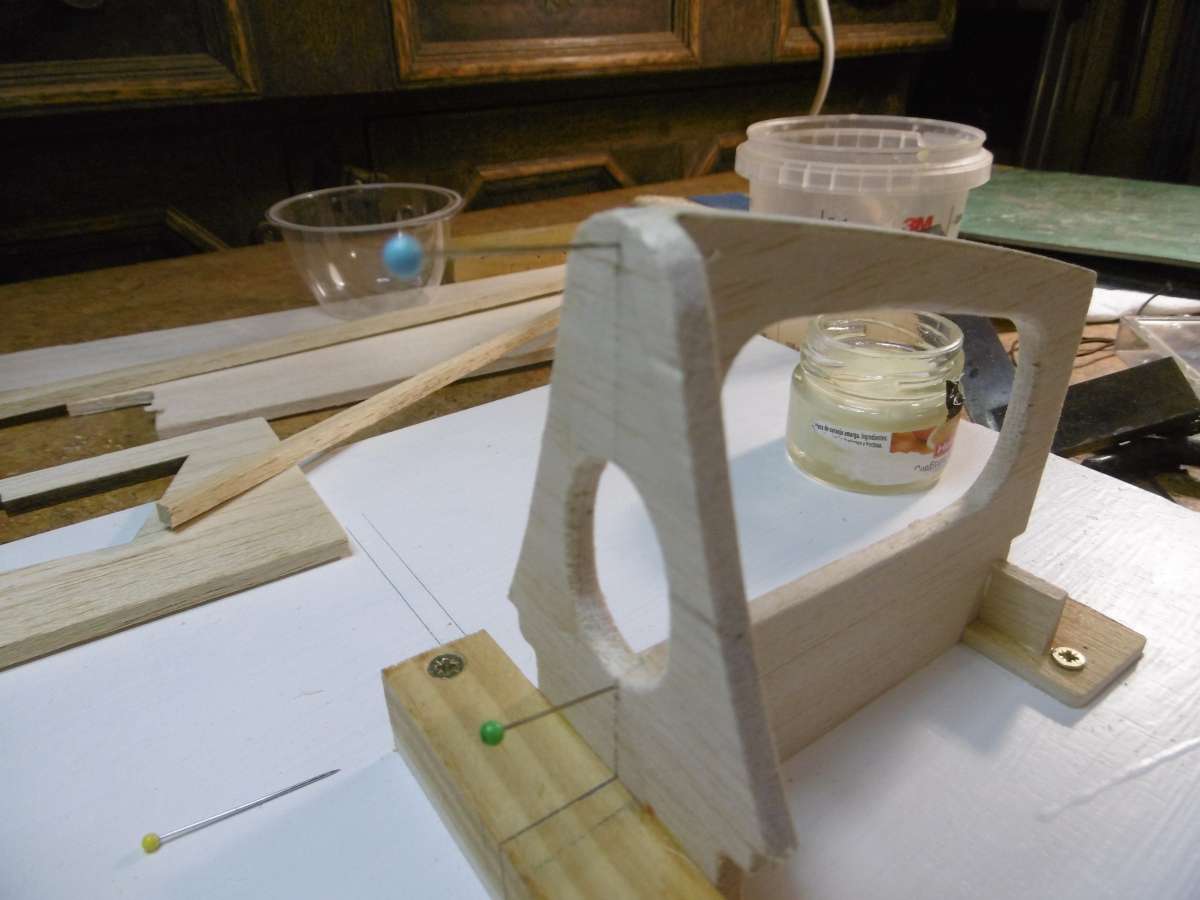
                      Next job was to make a jig to hold the extreme bow in place during the build.

                      P1020670

                      P1020672

                      With some little side brackets to keep the bow former vertical.

                      Tim R

                      #127103
                      Chris Fellows
                      Participant
                        @chrisfellows72943

                        Meticulous work as usual Tim. I’m not sure I could produce formers from balsa. I only use it for bow and stern blocks and similar situations.

                        Chris

                        #127108
                        Tim Rowe
                        Participant
                          @timrowe83142

                          Hi Chris
                          I was toying with the idea to put non-stick tape on the bulkheads and use them as moulds only.  My IOMs have no bulkheads.  In the end they re so light I decided to leave them in.  They are a bit fragile at first but after a few planks they stiffen up a lot.  I still might take them out (for drainage purposes) and just leaves the ones in place forward and aft of the keel.

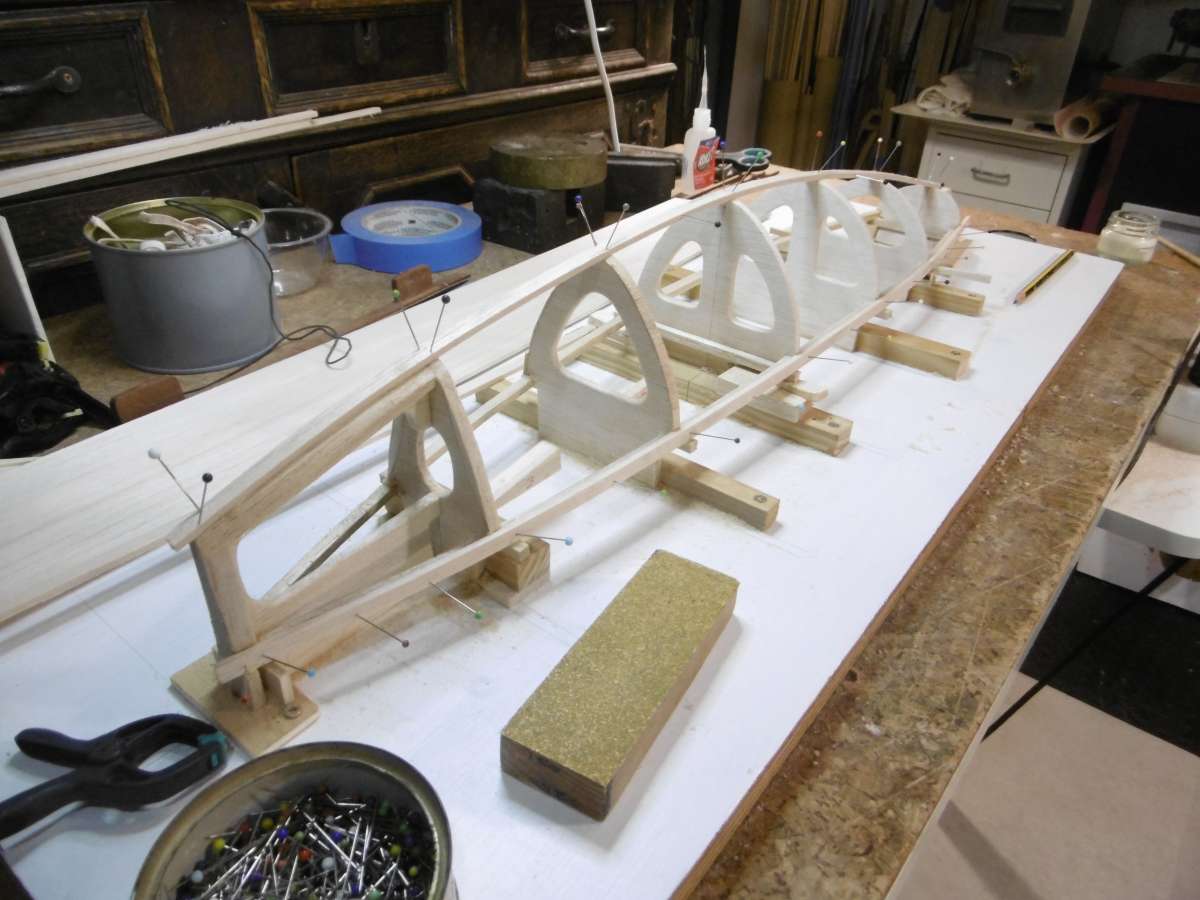
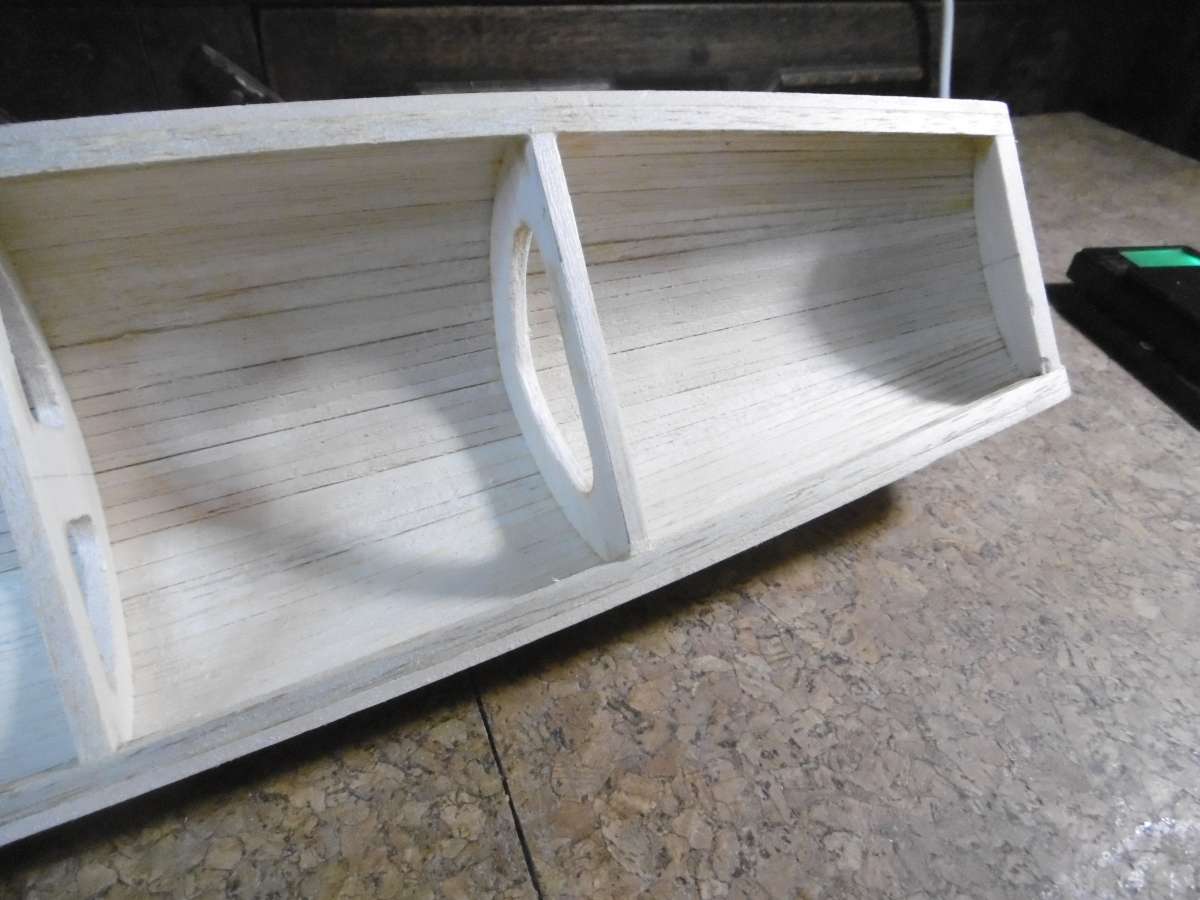
                          Once I had got the bulkheads and bow former in place it was time to check the fairness.  This was done with a thin pine batten and I found that bulkhead 2 was undersized pretty much all round except near the deck edge.  There is an easy solution.

                          P1020684

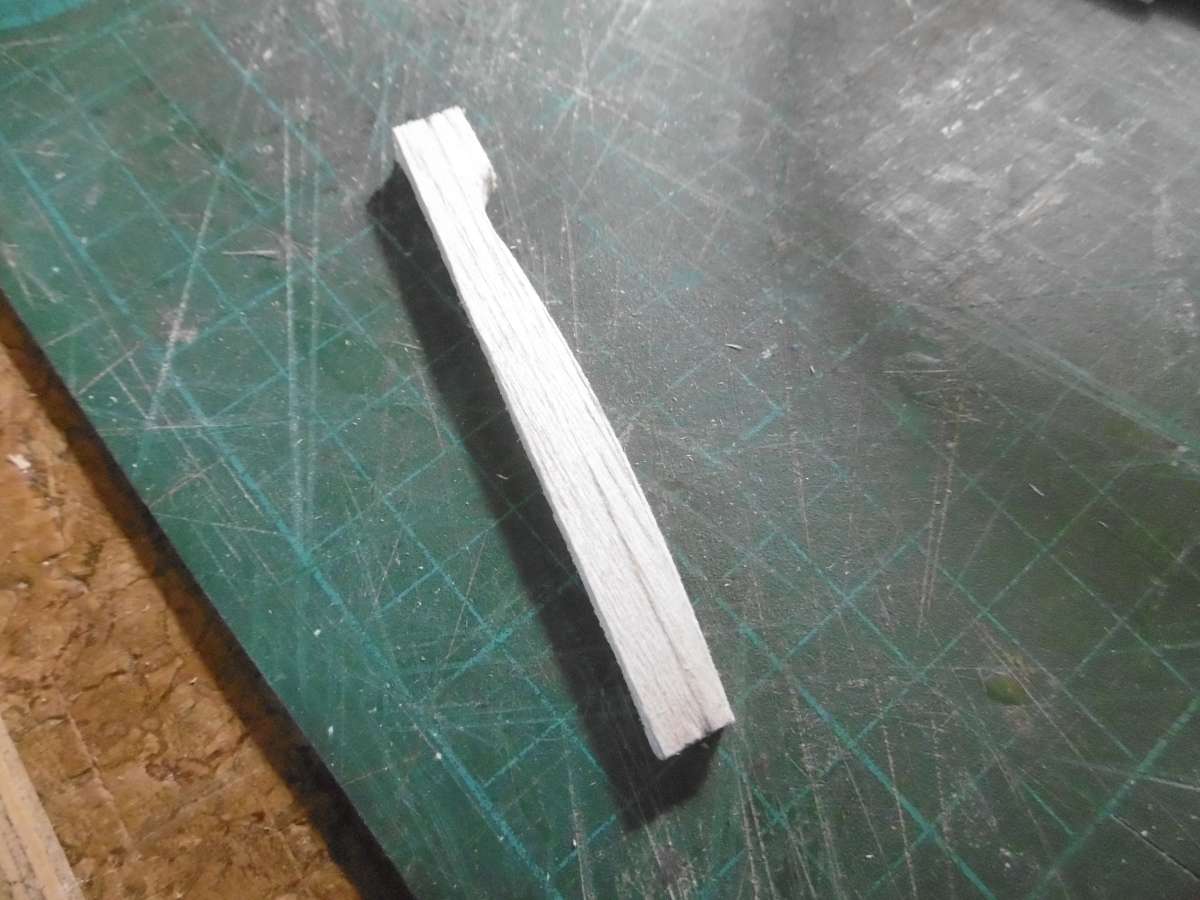
                          A thin strip of 1.5mm balsa cut across the grain bends around the bulkhead very easily with cracking especially when moistened by the glue.  I didn’t need all of the 1.5mm but it was very easy to sand down until the bulkhead was fair to its sisters.

                          Reading the build article the designer John said he introduced some flare at the bow to help prevent nose-diving when running before the wind in a blow.  All model yachts have this tendency.  Thinking about what he actually did was to hollow out the section of frame 1 which created the effect of flare but in fact had reduced the reserve buoyancy in the topsides.  So apologies John but I think this would increase the tendency to nose-dive.  If it was truly flared, the bow would look much more like the bows of the Fairey range of boats.  This is not a sailing boat type of bow.

                          I decided to fill in the hollow with an insert.

                          P1020681

                          Which was left much larger than needed so I could fair it into bulkhead 2 and the bow former.

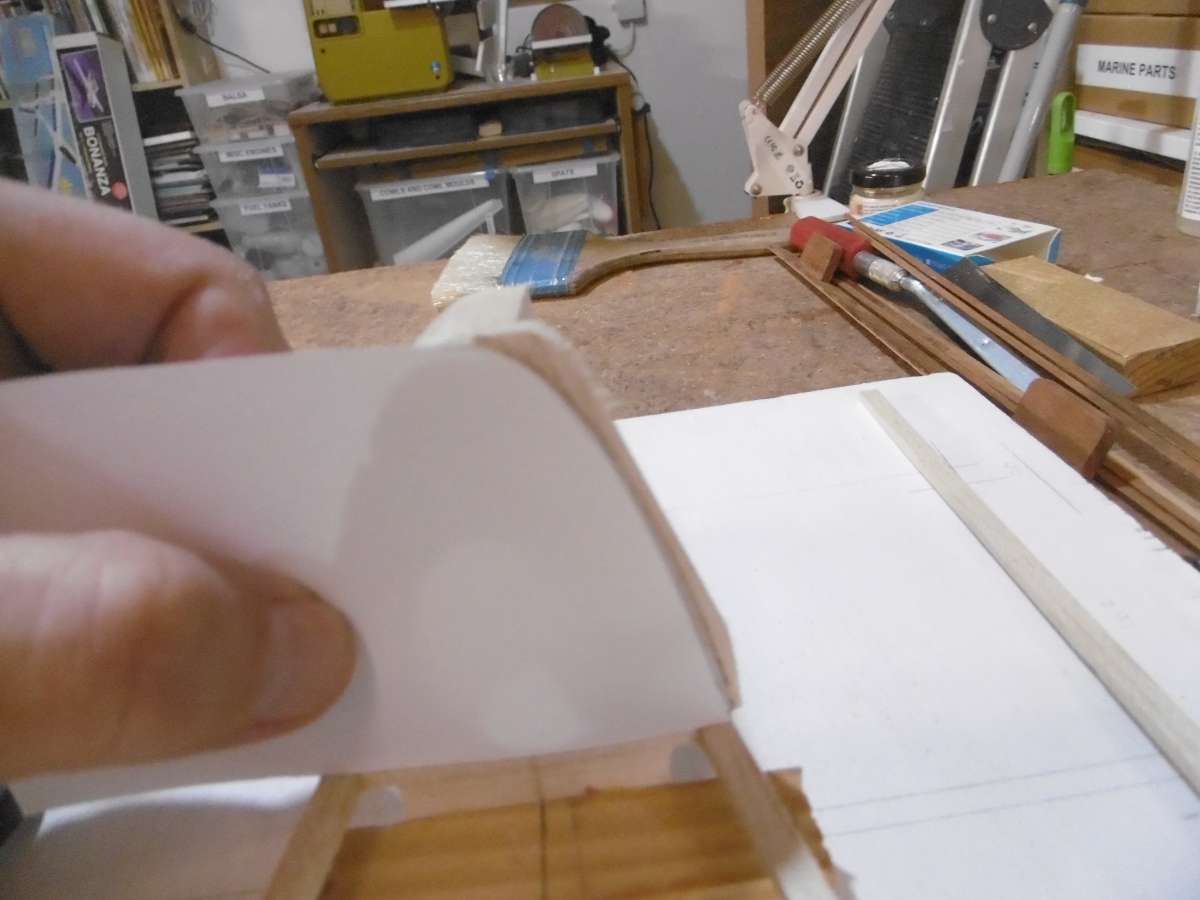
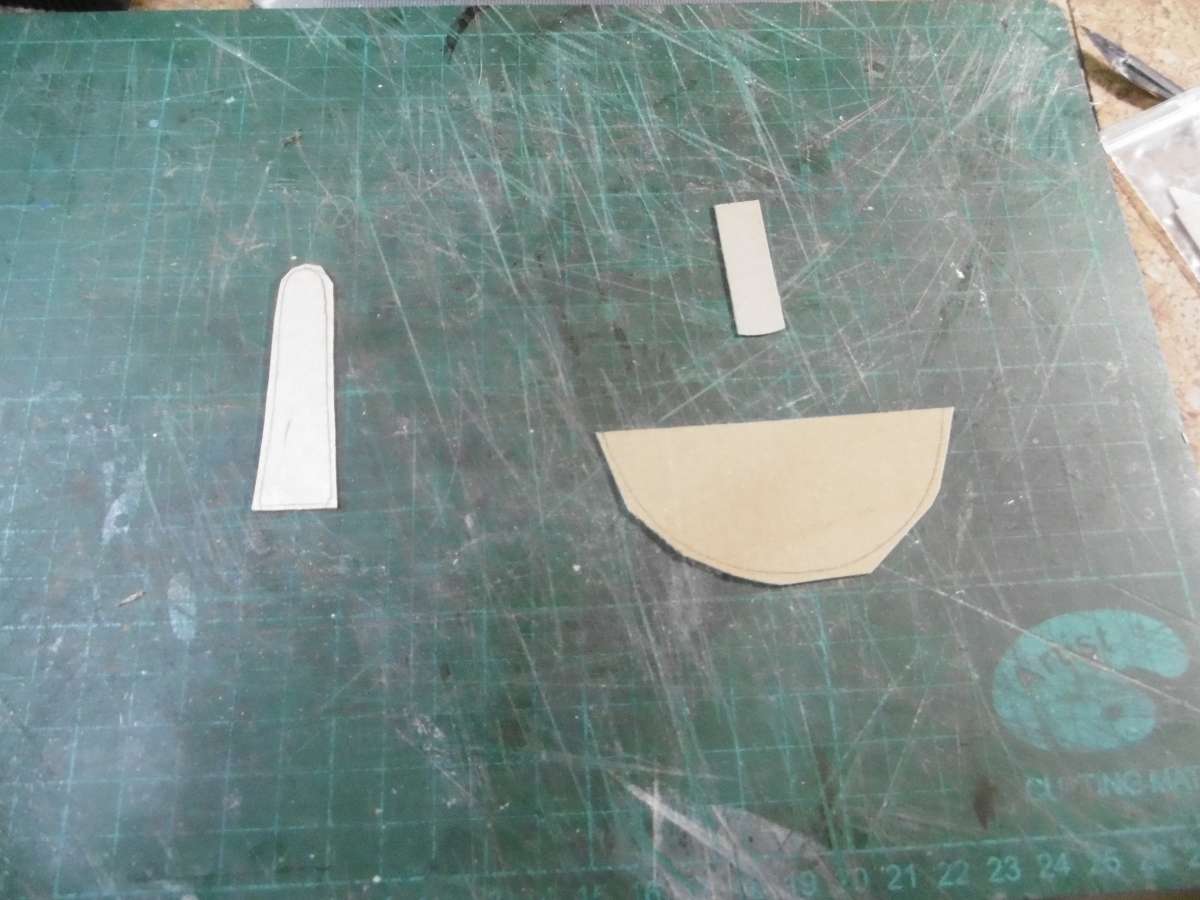
                          Having faired in one side I made a paper template so I could transfer the resulting shape to the opposite side.

                          P1020686

                          Apologies for the fuzzy photo.

                          There are no more modifications in the pipeline for the hull so it was time to get on with the planking (also in balsa)

                          Tim R

                          #127118
                          Tim Rowe
                          Participant
                            @timrowe83142

                            Planking starts.  The drawing calls for 2.4mm balsa and our local model shop stock 2.5mm which is probably the metric version of something.   For the first few planks around the keel I used 3mm balsa to give me a fraction more sanding allowance because there is a rapid change of section at the bow.  Instead of starting with one plank on the centreline as suggested I placed two with the centreline in the middle.  This gives me a more accurate reference when I come to cut the slot for the fin keel.

                            P1020692

                            Planking progresses

                            P1020698

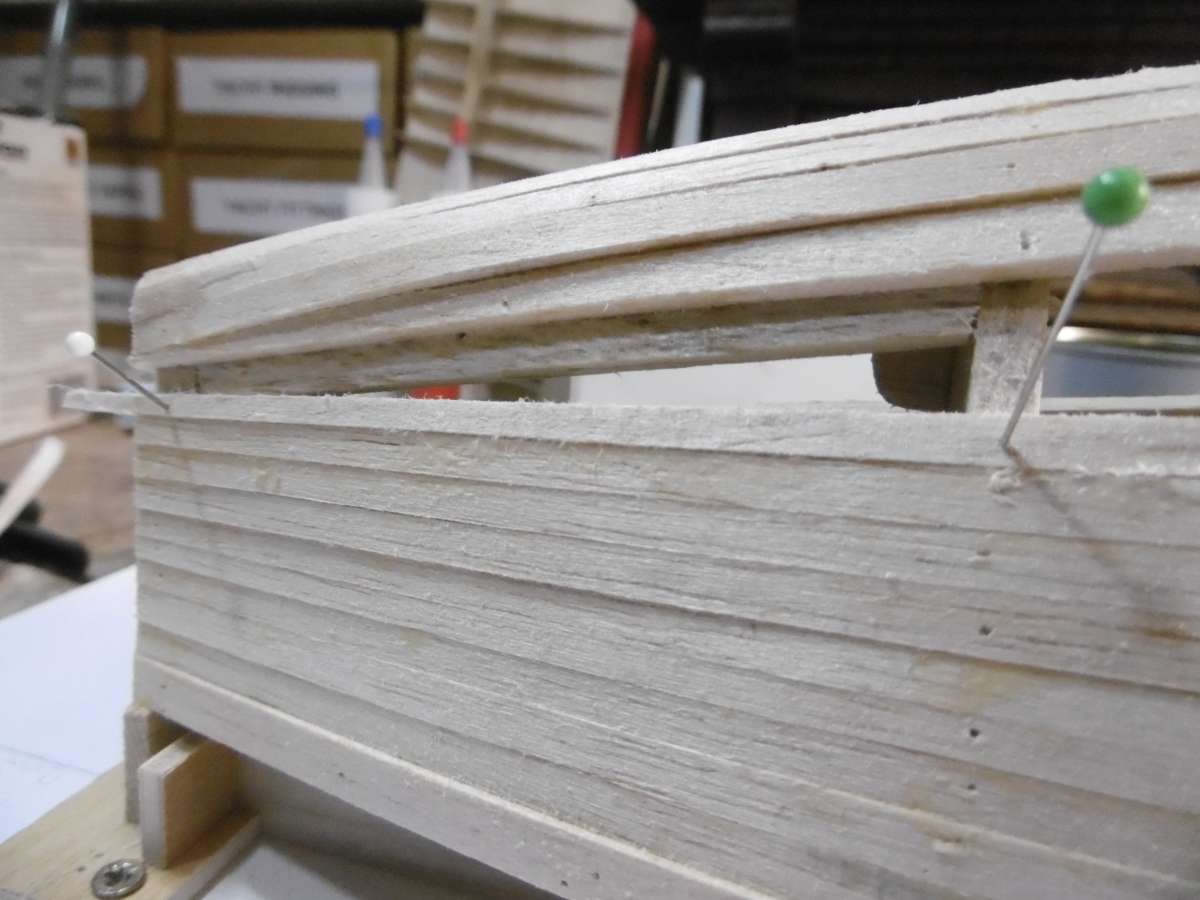
                            Using elastic straps and pins to hold the joints nice and tight.  Each plank is bevelled and tapered and glued in place with aliphatic glue which has a nice fast grab.

                            P1020699

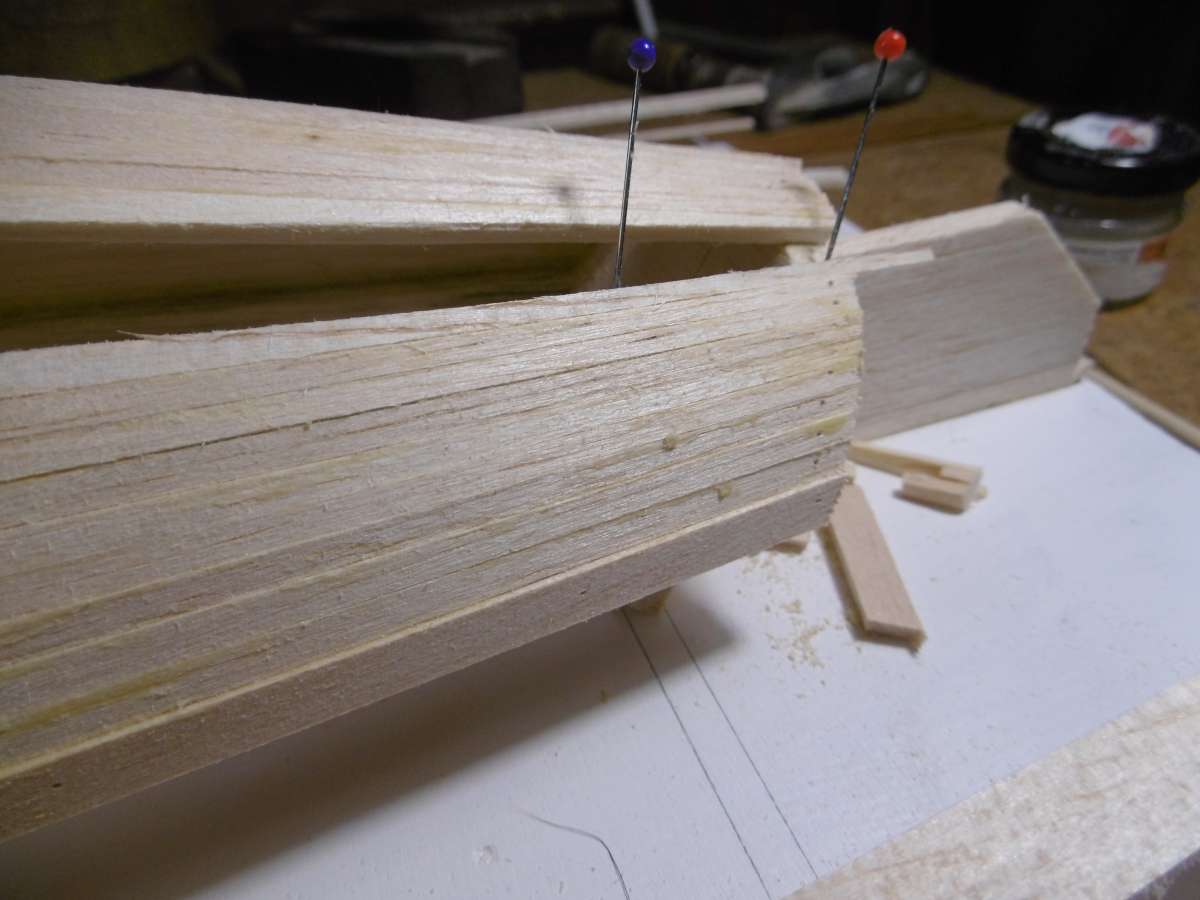
                            Here is the planking at the bow showing the tapers and the thicker planks near the keel.  The shape of the bow is not precisely defined on the plan and even allowing some extra thickness by the time I had got the twist in the planks I was very concerned that when sanding to get a fair curve I would go right through.  You can seen in the picture I have fitted a backing plank to give some more meat.  In the end I didn’t get to the backing plank but the balsa would have been paper thin.

                            P1020700

                            At the stern everything is much easier because there is no sharp transition.  As the gap starts to close it is easy to judge how narrow the planks have to end up.  In this photo there is about 10mm gap at the transom and I need 4 planks to fill the gap midships.  The planks remaining planks have to be tapered down to 2.5mm width at the transom.

                            P1020702

                            Finally you end up with a gap that you have to fill with a closing plank.  The wedges were a convenient way of getting a good close seam on the second to last plank.

                            Because I had been doing the tapers by eye, the closing plank had a bit of a wave and the taper was not quite uniform.  This means that the last plank has to be spiled.

                            P1020705

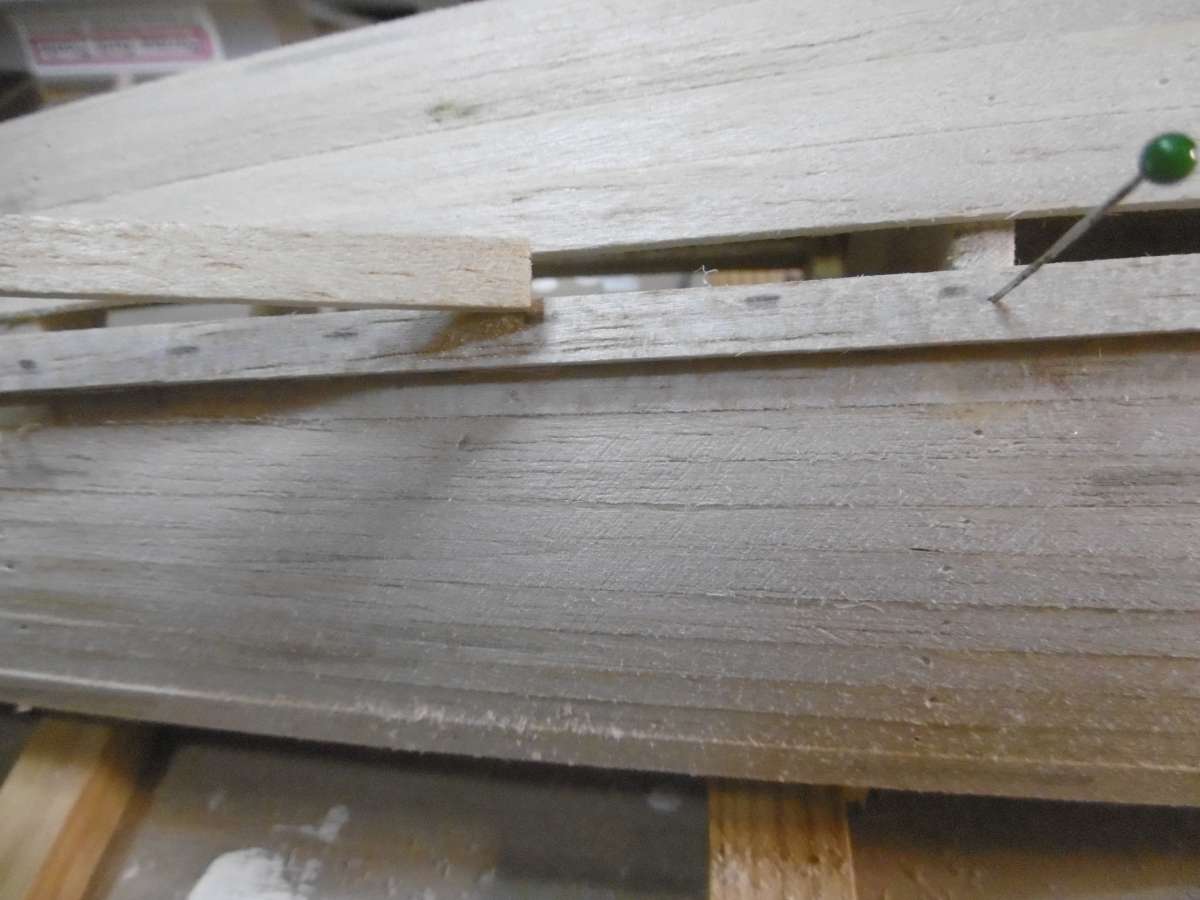
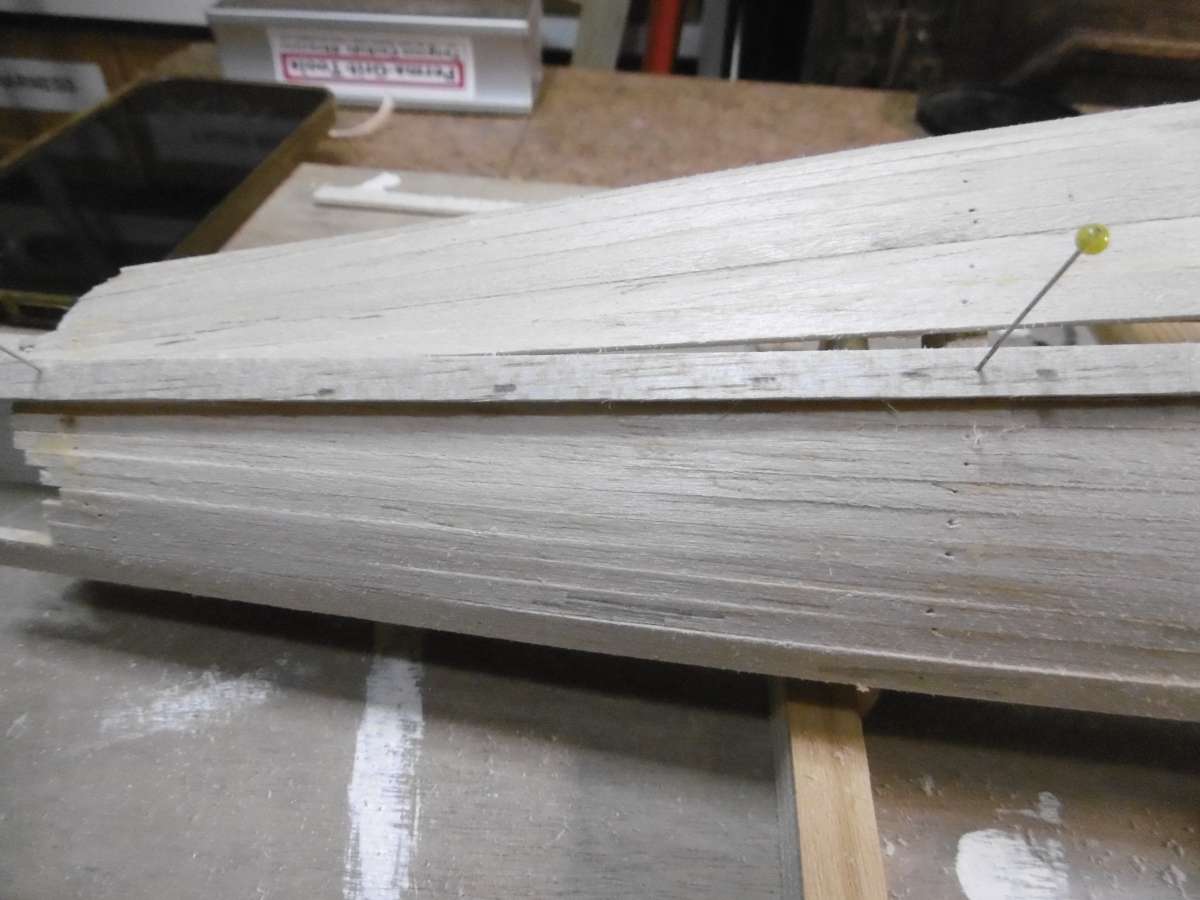
                            This entails preparing a plank that is wide enough to fill the maximum gap a pin it to the hull with the top edge (remembering we are upside down) perfectly aligned with the top edge of the last plank.   The closing plank is then marked at intervals using a piece of plank that is the same width as the gap.  The photo has a bad parallax error!

                            P1020704

                            We then have a series of reference marks showing the approximate width required over the length of the hull.  The plank was planed and sanded close to the marks and then trial fitted starting at the stern.  Gradually the plank was eased in stages until it closed the gap neatly over the whole length of the hull.

                            It is now necessary to take a precaution. When you apply the glue which is water based, the plank will swell.  What was previously a nice easy fit will now be a problem because the closing plank will now need a lot of force to get into place which is certain to damage it and if the glue grabs before the planking is fully in place you will have to cut is out and start al over again.  The cure is to lightly sand the edges of the closing plank so that there is a bit of clearance (maybe paper width) to allow for the swelling.

                            P1020709

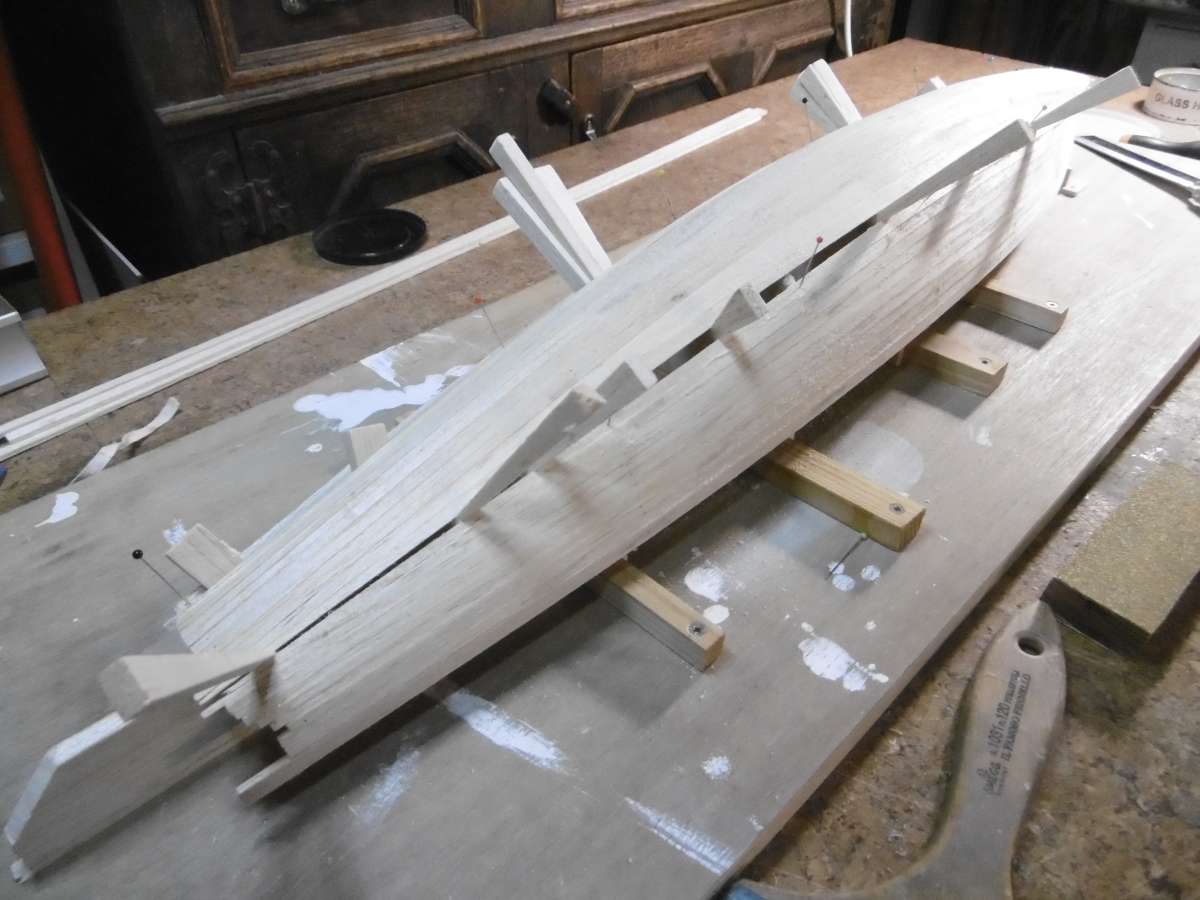
                            In this way, Spooky was planked with all the planks running the full length of the hull with no stealers or short sections.  Apart from the satisfaction it pays dividends when it comes to fairing up the hull because most of the fairness is already built-in and minimal material needs to be removed.  Fairing is quicker and more precise which is important on a sailing yacht designed for racing.

                            Tim R

                            #127122
                            Chris Fellows
                            Participant
                              @chrisfellows72943

                              Hi Tim. I’m always amazed at your ability to raise construction to another level! I think most of us would be happy to just use full width planks as much as we can and then fill in with shorter shaped planks. If varnishing, then that is a different matter. Makes me feel like a right bodger in comparison!

                              Chris

                              #127130
                              Richard Simpson
                              Moderator
                                @richardsimpson88330

                                Absolutely superb Tim.  When I first thought of this going together I thought initially it was just going to be a quick balsa planking with a block at either end and all the gaps filled up with car body filler!  This is a masterclass in proper carvel planking and a superb example of exactly how it should be done.  I would enjoy seeing you do the same process with wood that can be varnished or epoxied so the real beauty of the workmanship and the wood can be enjoyed.

                                #127132
                                Tim Rowe
                                Participant
                                  @timrowe83142

                                  Thank you Chris and Richard.

                                  I have always enjoyed your evolving Fairey’s Chris.  There is a connection for me as I used to live in Hamble and have worked in one of Fairey’s old sheds.  My grandad had a Fairey Duckling which was the most horribly unstable boat I have ever been in.  In fact he also had the double version which clipped together if you were brave enough.
                                  Thinking about it I amazed he did not put me off boats for life!  He also had a sailing clinker dinghy that was son flexible you could hear and see it twisting and an alloy speedboat that squirted water out of missing rivet holes.

                                  I am an occasional reader of Model Boats and I am in awe of the detail and especially the weathering you manage to achieve.  I don’t think I have the patience but I am certainly going to have a go when I get back onto my Billing Boats Nordkap.

                                  As for varnishing, that is my intended finish for the IOM that I am building in mahogany.  It is a lot hard to plank because the wood is not very forgiving.  The topsides will be varnished and below the waterline it will be white.  I haven’t yet decided how I am going to do the deck.

                                  Your interest and comments are much appreciated.

                                  Tim R

                                  #127136
                                  Ray Wood 3
                                  Participant
                                    @raywood3

                                    Hi Tim,

                                    Balsa planking is brilliant, with such a easy material to work with 🙂 so much easier than the hardwood.

                                    The way the weather is here, wet but just turned mild, I could be in the workshop till Easter 🙂

                                    I have just finished the Slipper Launch article for the March MB’s issue, the next one is the Spring 25 I can’t wait to get on it, but 2 aeroplanes and a tug to finish !!

                                    Regards  Ray

                                    #127153
                                    Tim Rowe
                                    Participant
                                      @timrowe83142

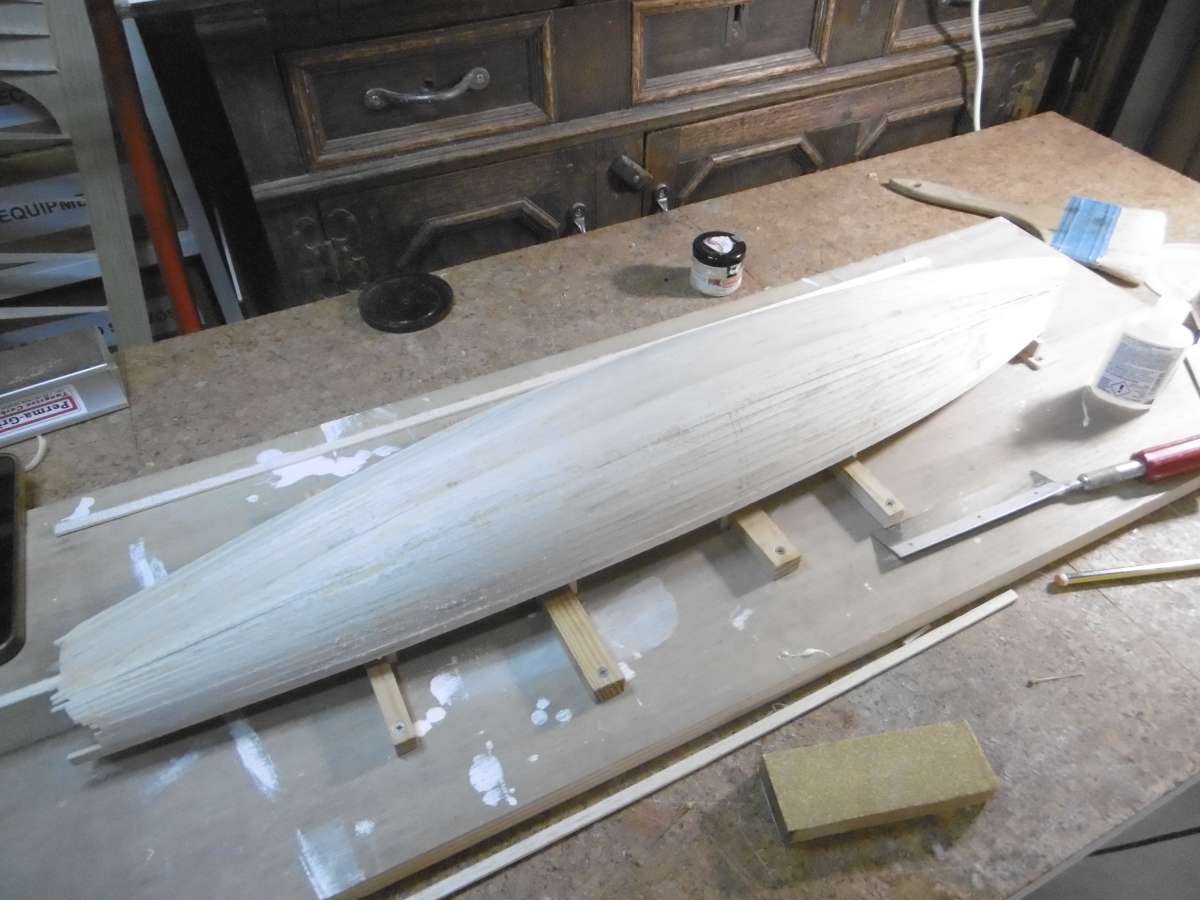
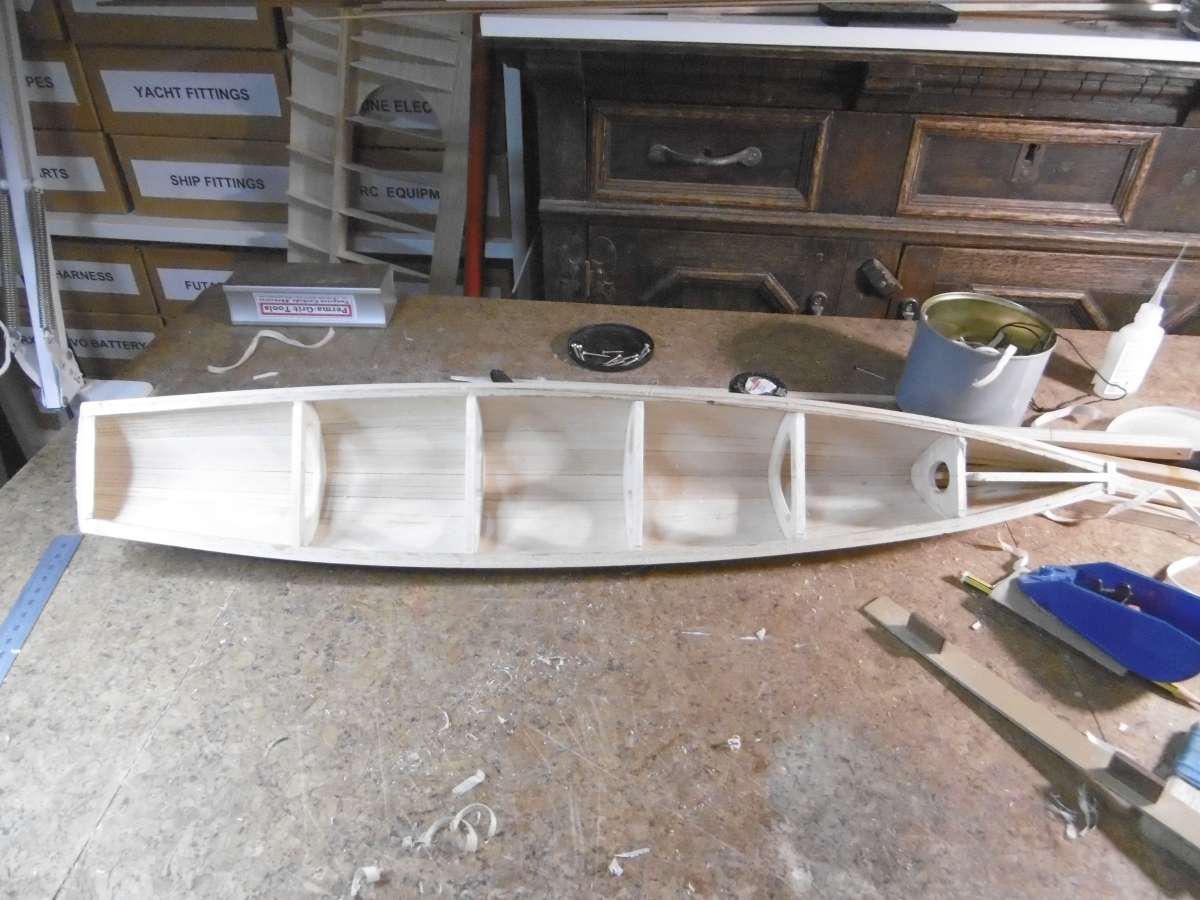
                                      Spooky is now off the board.

                                      P1020712

                                      Here you can see the centreline between the two planks very clearly.  This will be very useful for getting the rudder and keel in the right place and the keel accurately aligned for and aft.

                                      P1020714

                                      This picture shows the tapering of the planks more clearly.
                                      P1020715

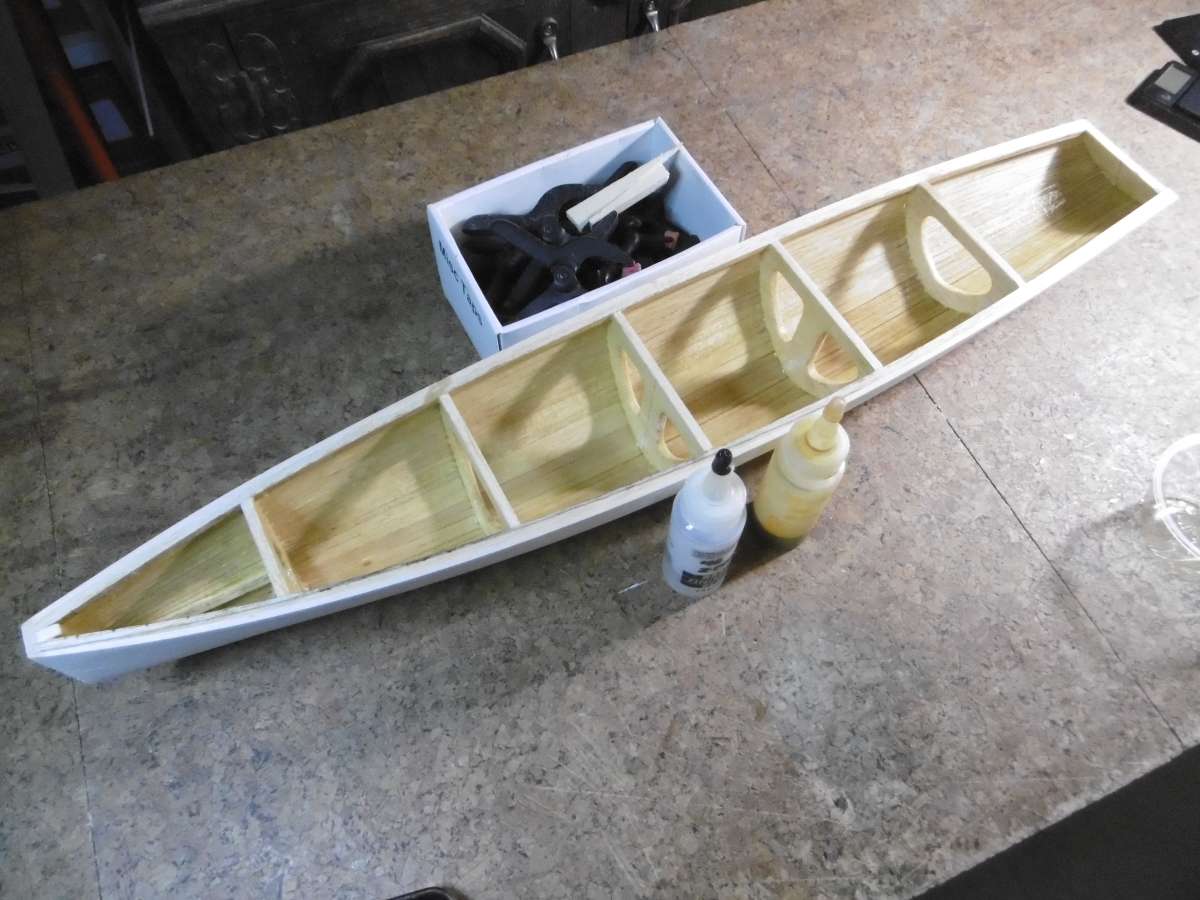
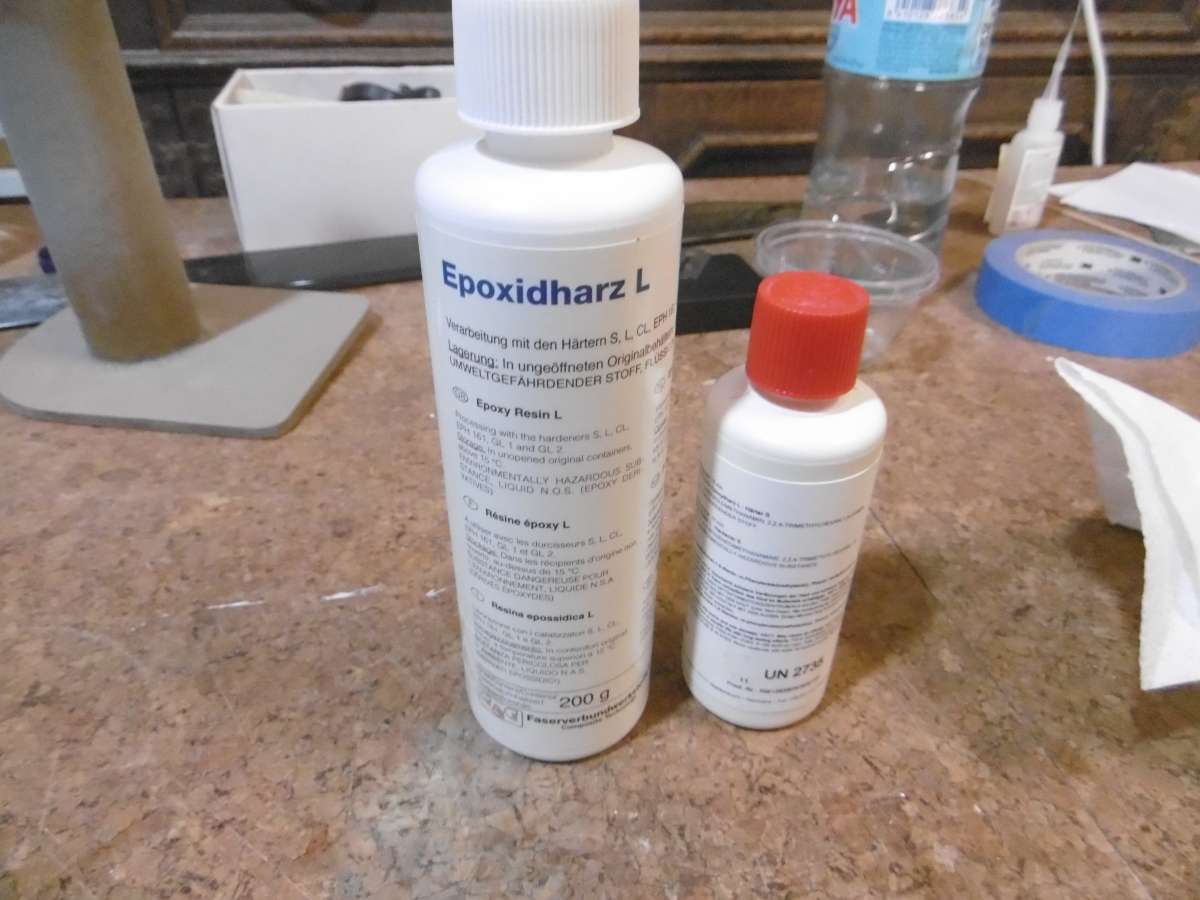
                                      Next stage was to seal the inside with epoxy.  I use a finishing resin from Germany which is relatively thin and develops a nice hard cure.

                                      P1020729

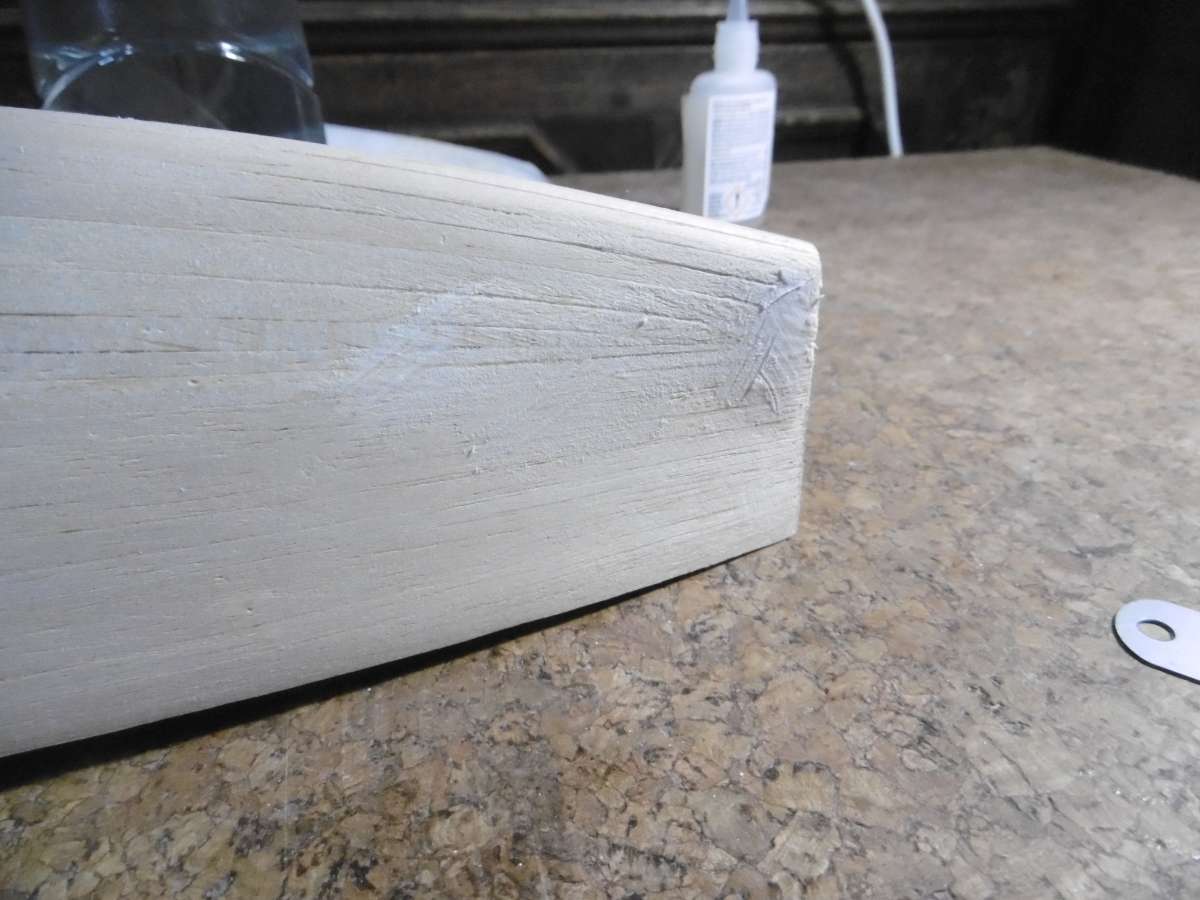
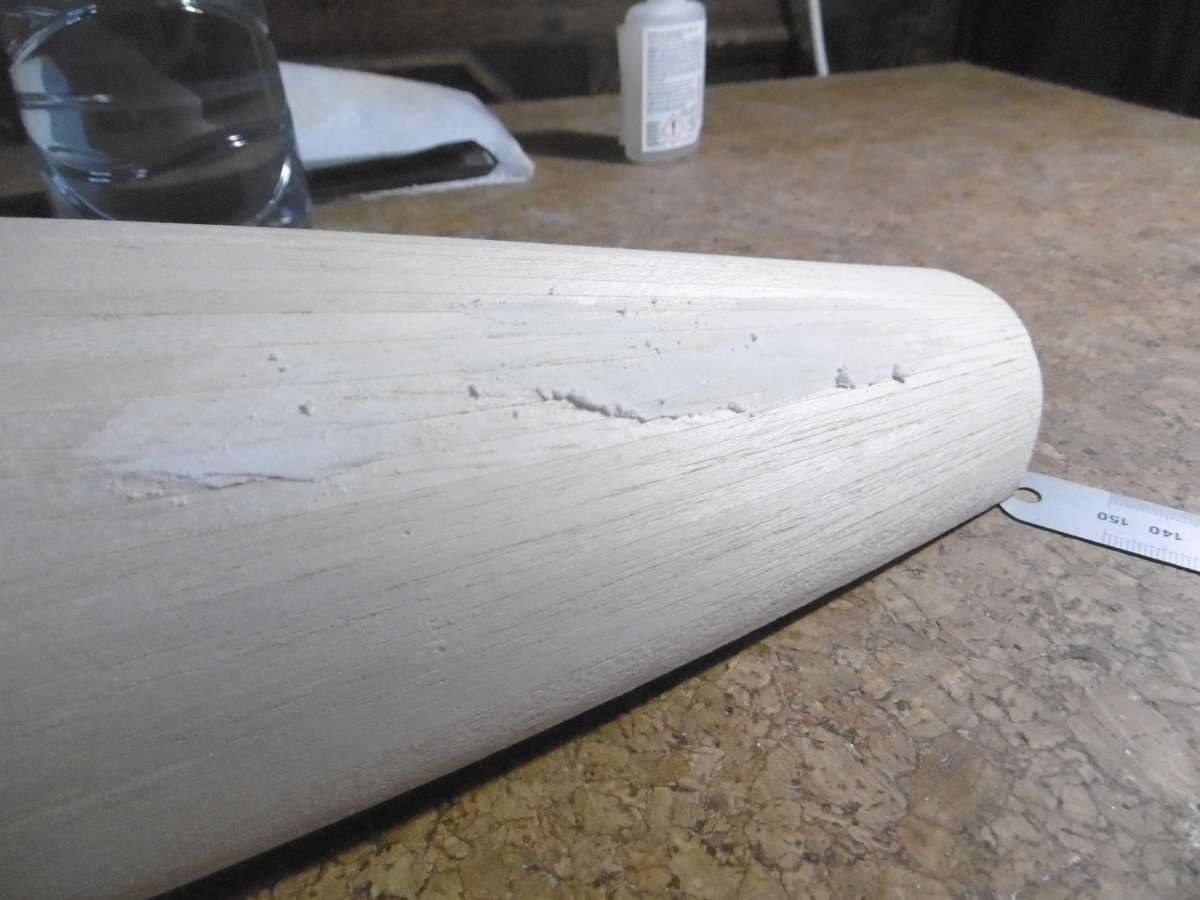
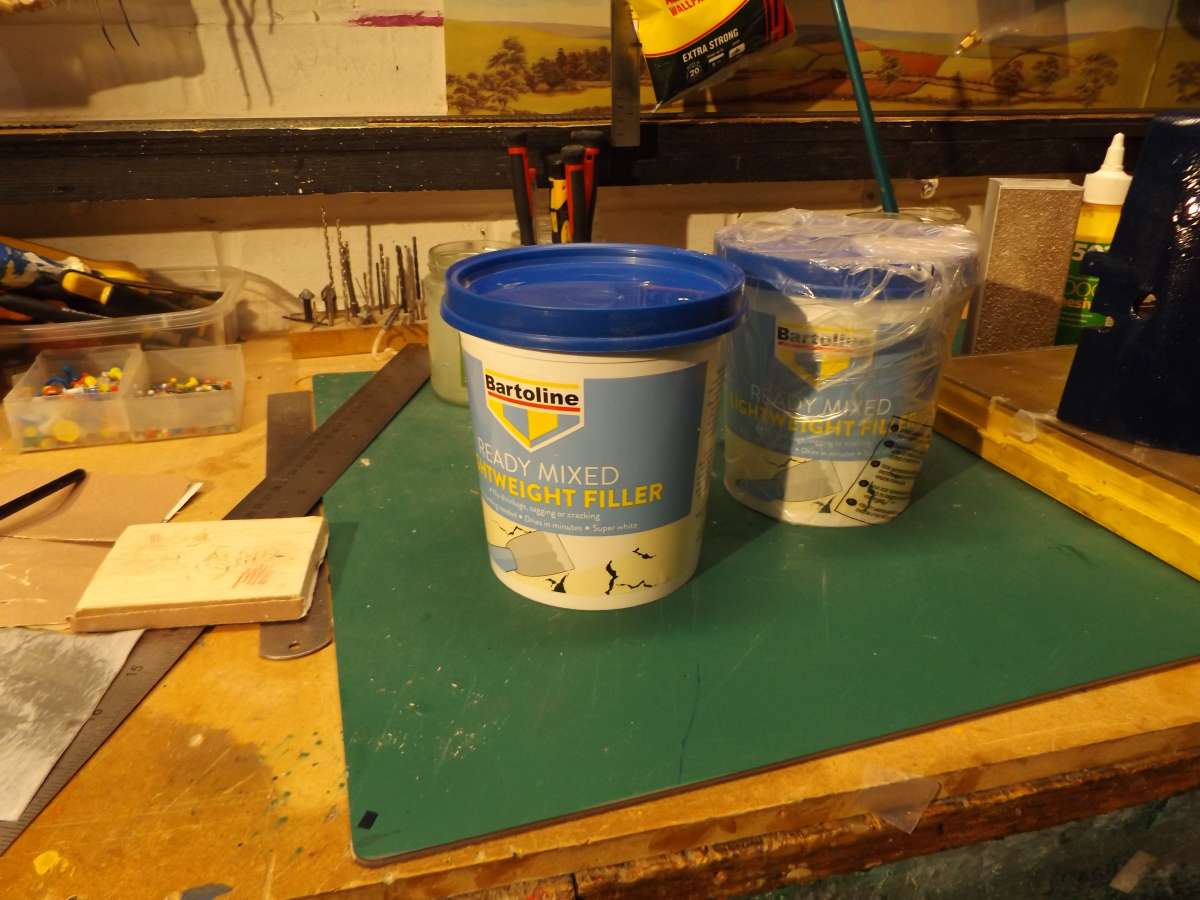
                                      The hull had a couple hollos that were too deep to fair out so I did end up using some lightweight filler.  Normally I have a modelling specific filler but that had gone hard.  The local hardware store had an alternative. it was 20% off and I found out why when I tried to squeeze it.  The bottom seam split through age so I had to transfer most of the contents into pot.

                                      P1020719

                                      P1020720

                                      Luckily it is not much harder than the balsa so sands very easily.  This can be tricky when using car body filler which is much harder.

                                      Tim R


                                      #127154
                                      Ray Wood 3
                                      Participant
                                        @raywood3

                                        Hi Tim,

                                        Spooky is coming on well 🙂 finished for Easter !!

                                        I gave up buying modellers lite weight filler years ago seem very expensive , I use this stuff which is brilliant from Amazon 4 years ago, when the first tub dries out a bit just added water to freshen it up a bit.

                                        Regards  RayDSCF3064

                                        #127155
                                        Tim Rowe
                                        Participant
                                          @timrowe83142

                                          Hi Ray

                                          I think the stuff I got from the hardware was similar.  If it goes hard I will try the water trick.

                                          The keel bulb arrived from SailsEtc today.  DF 65 A and B rigs with Soch Sails on their way.  I need the rigs before I can do that much more to the hull to do the mast socket and sheeting positions.

                                          One problem with our move is that we no longer have test tank.  I am sure some of Ashley’s creations could be float tested in a shower but alas, none of mine except to see if the decks leaks!!  Maybe a dog paddling pool will have to do.  No problem with the dogs as they both hate water.

                                          Definitely decided to fix the keel. Saves a lot of bother.

                                          Distinct possibility for Easter which would make this one of my quicker builds.

                                          How’s yer TID comin’ along?

                                          Tim R

                                          #127159
                                          Ray Wood 3
                                          Participant
                                            @raywood3

                                            Hi Tim,

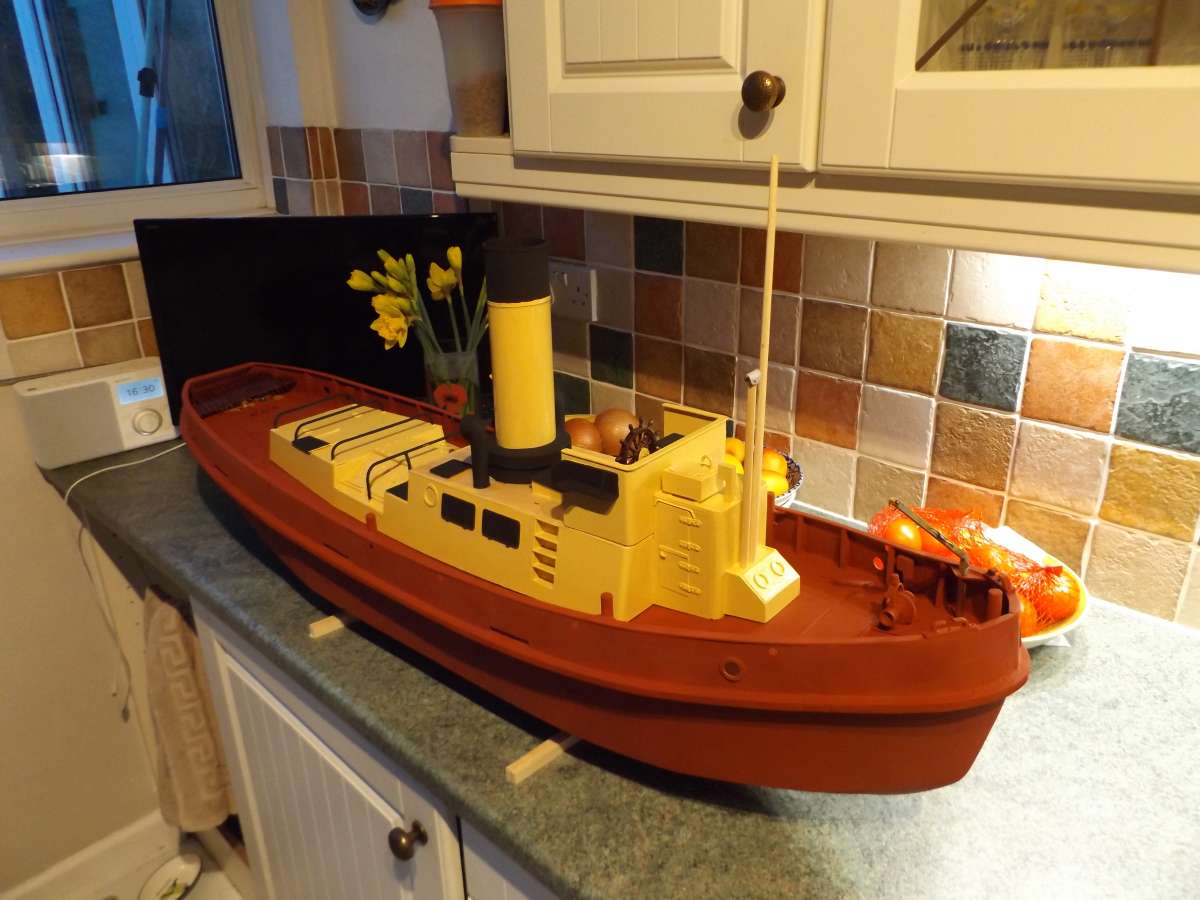
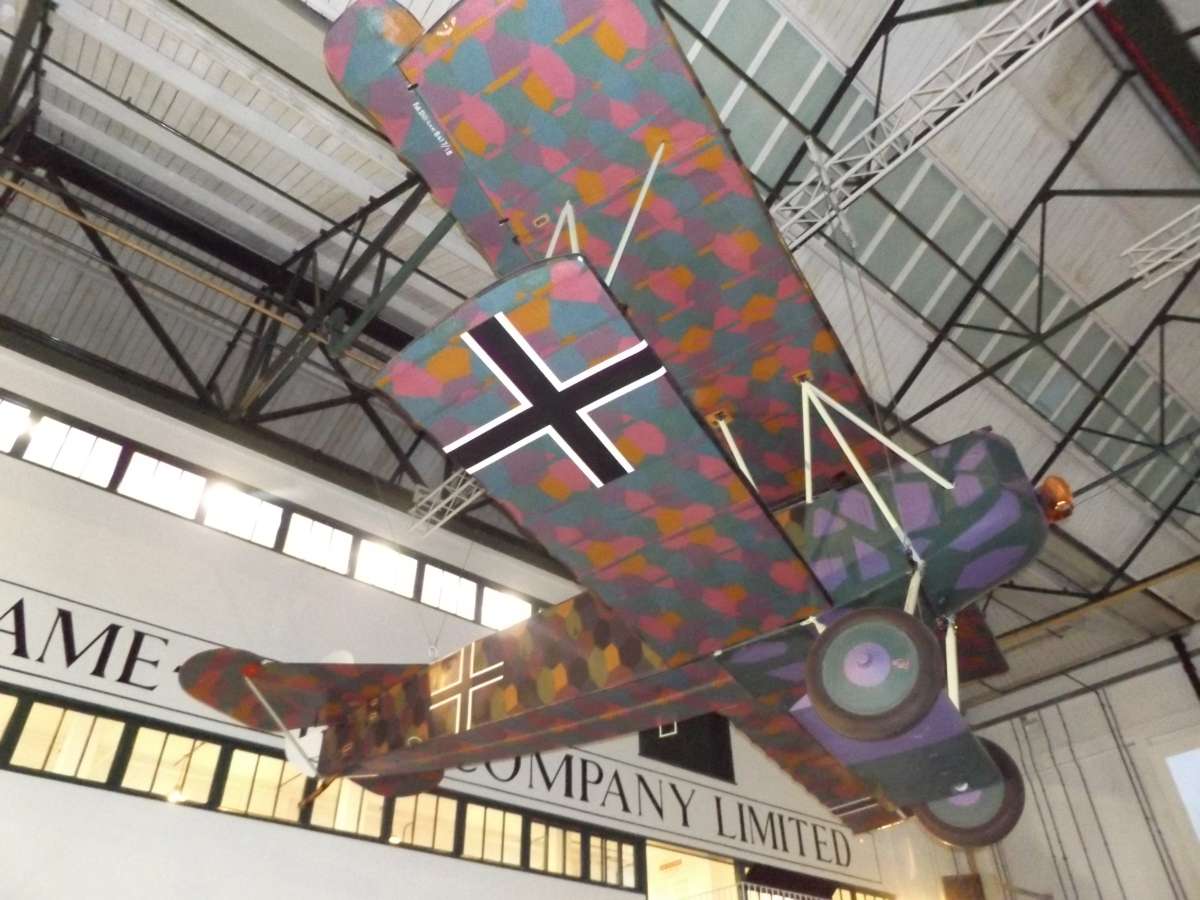
                                            The TID is coming along slowly, but as today was relatively mild I sprayed the hull and deck with red oxide primer, as the whole tug already has 2 coats of varnish that is fine for the bottom, I will brush paint the topsides black . Lots of aeroplane stuff going on atm . The Maidstone flying club seems keen on First World War stuff so I have dug out a plan for a Fokker DVII 69″ spanDSCF3065DSCF3031 🙂 that will be a paint job !! the girls and I were at RAF Museum Hendon a couple weeks ago.
                                            Regards  Ray

                                            #127169
                                            Tim Rowe
                                            Participant
                                              @timrowe83142

                                              Spooky’s hull is strong and light but needs sheathing to give the outside some impact resistance and to provide a stable base for painting.

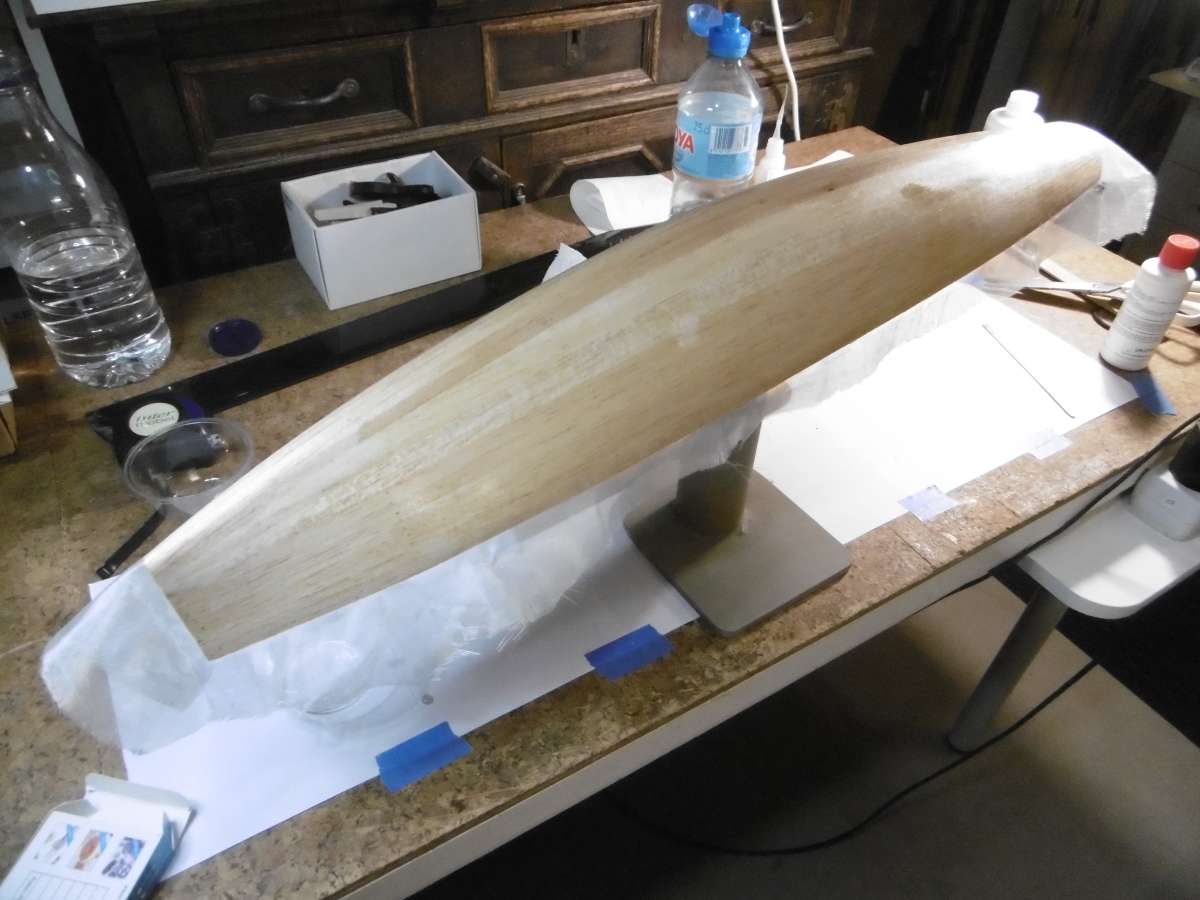
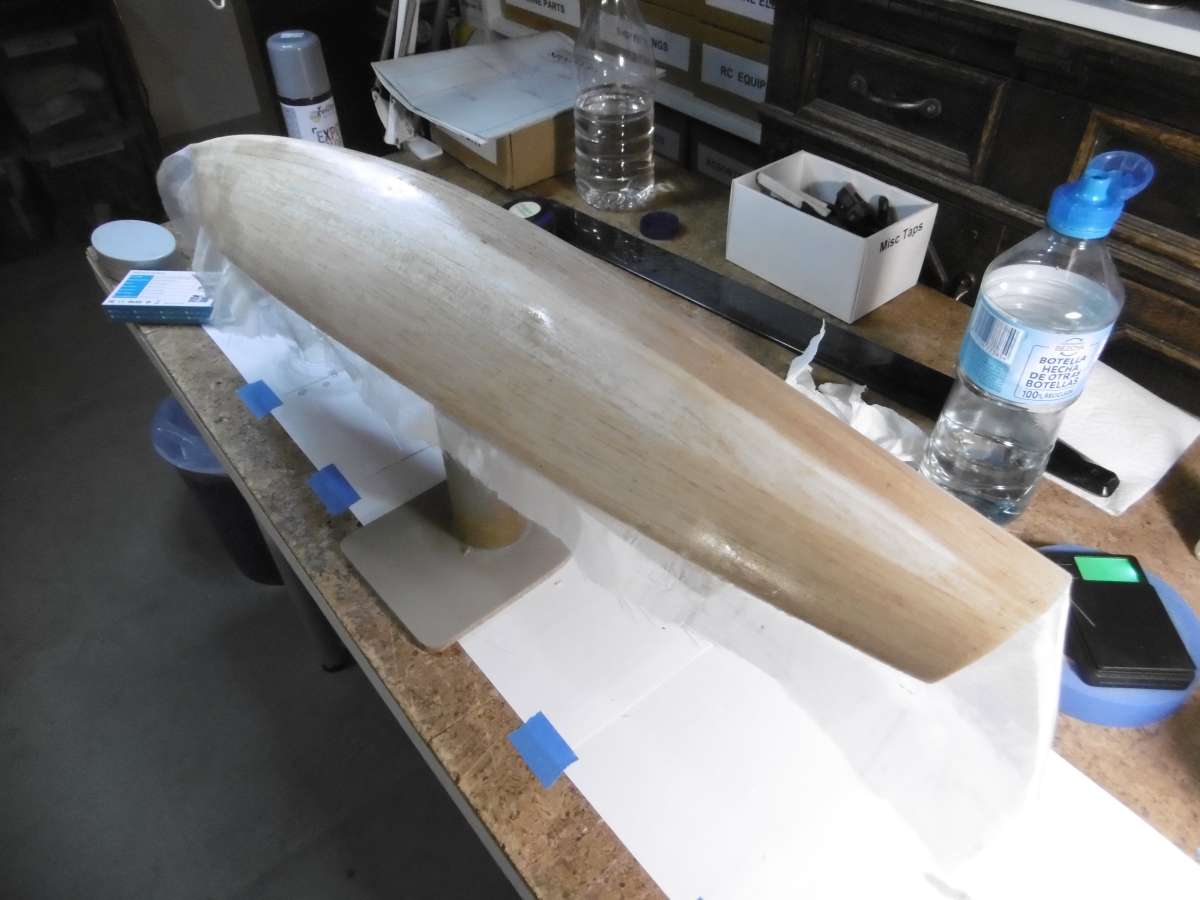
                                              P1020724

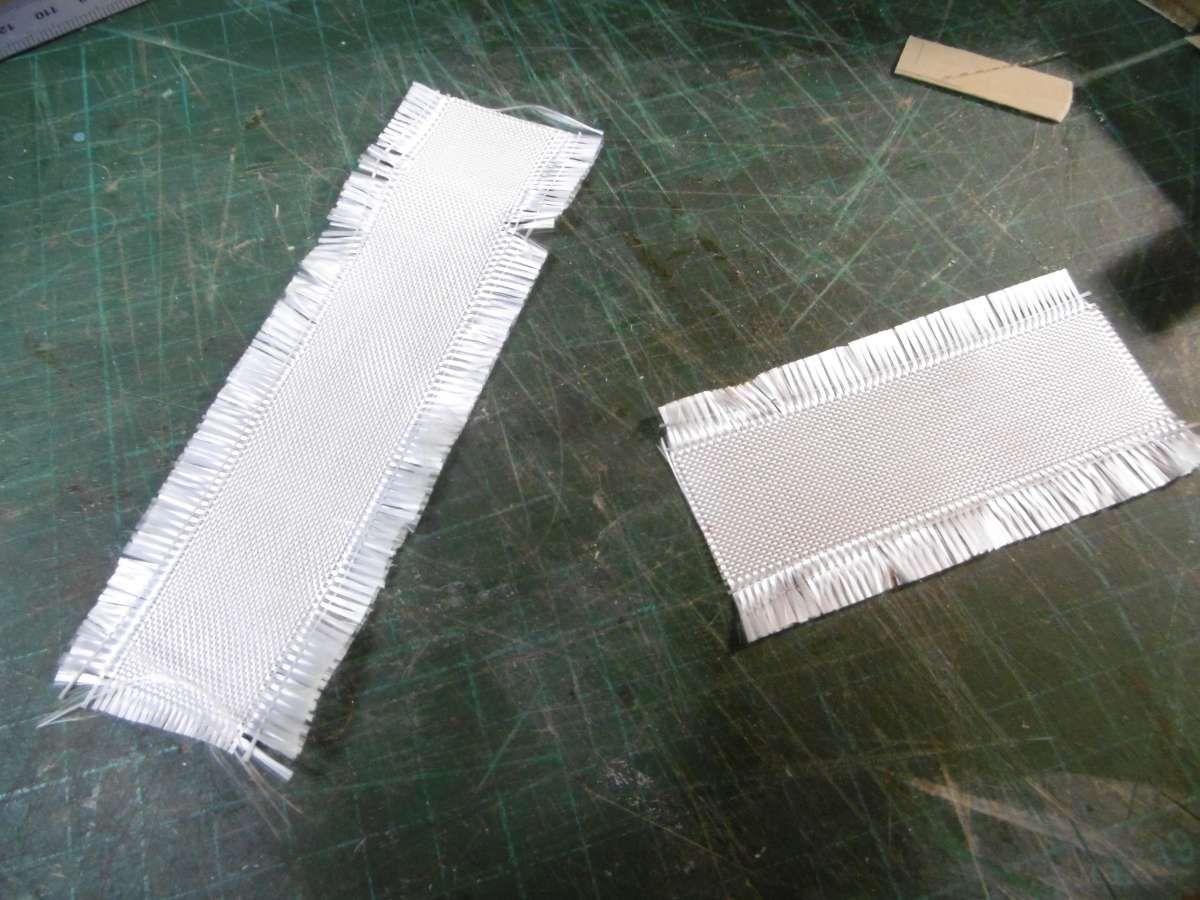
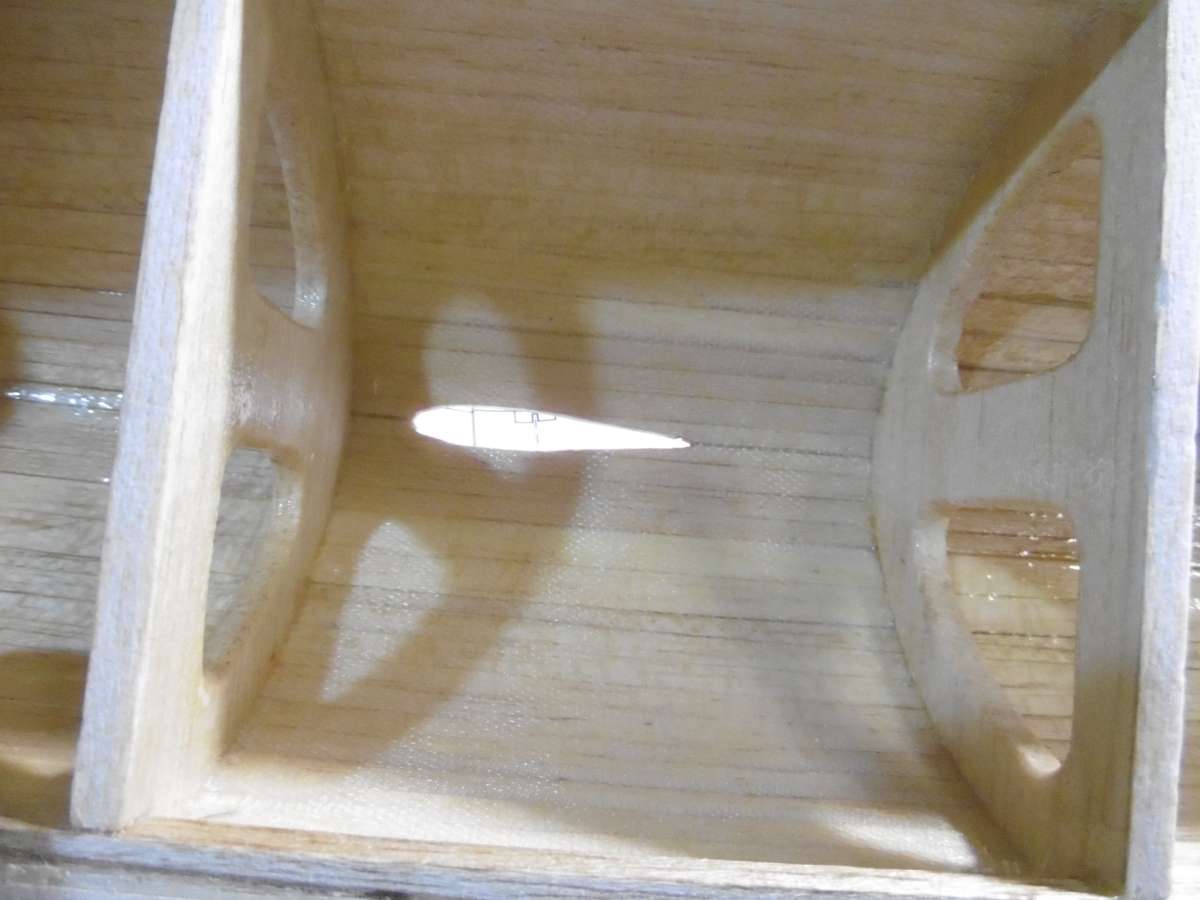
                                              This is one layer of 78g / m2 glass cloth laid in epoxy resin. Being a very light fabric very little epoxy is required. I mixed 12 grams which was sufficient to coat the hull and provide compete wetting out of the fabric.  The fabric is very delicate and I find the best way to smooth it out is by hand with latex gloves.  There is no need to trim the cloth while the epoxy is green because a few strokes of fine sandpaper removes the excess quickly and accurately.

                                              Here is another view.

                                              P1020725

                                              It is better not to overdo the epoxy and only use just enough to make sure the cloth is fully adhered.

                                              P1020733

                                              This is some slightly heavier cloth that was used at the stern where the rudder tube passes through the hull.  It is really just a precaution against the rudder taking a knock.  I would prefer the rudder to be damaged rather than the hull.

                                              P1020758

                                              I also laid up some even heavier (still light) cloth right across the hull in way of the keel.  This section also carries the mast loads.   The hole was traced around the carbon fibre helicopter blade that will be the fin.  The plan shows the keel as removable but seeing as I hardly ever take any keel off I may decide to fix it.  This is not a big boat.

                                              Tim R

                                              #127180
                                              Tim Rowe
                                              Participant
                                                @timrowe83142

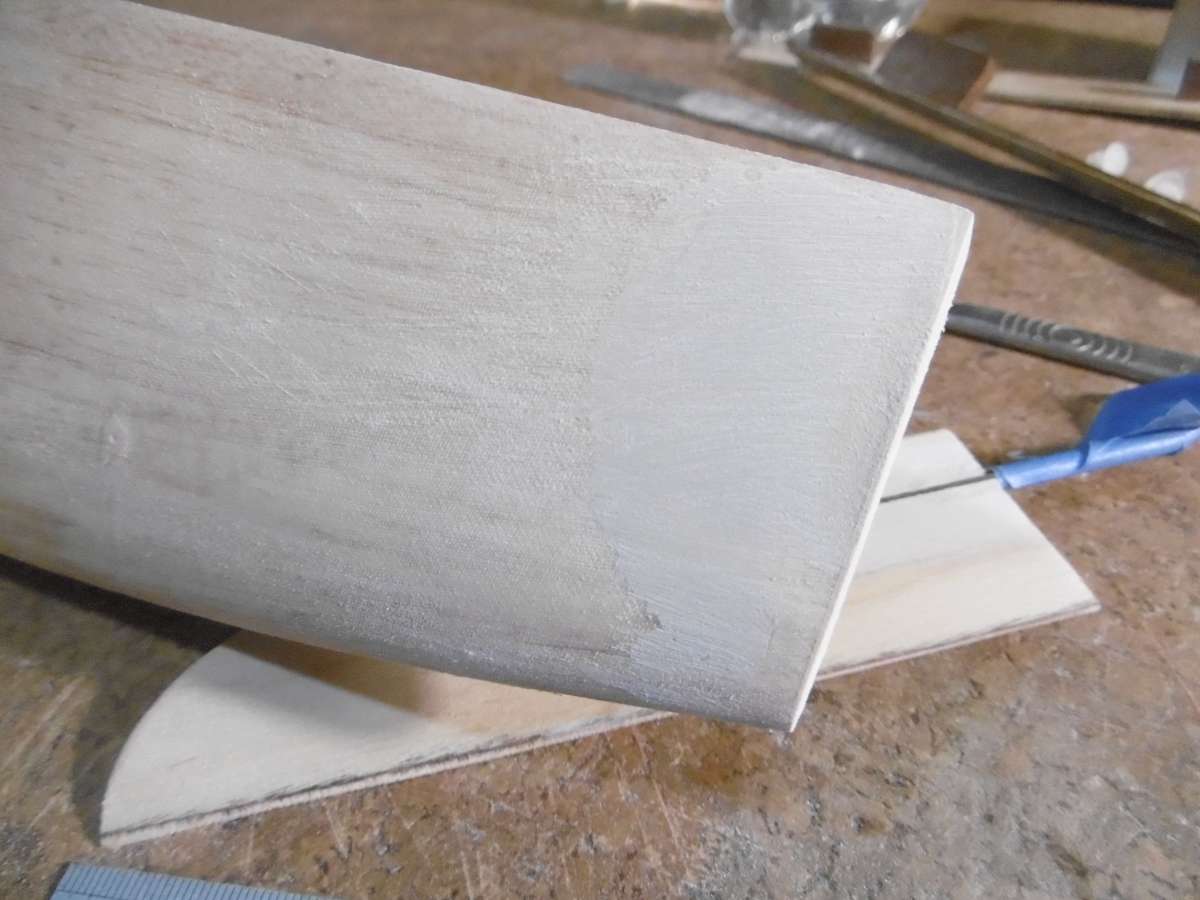
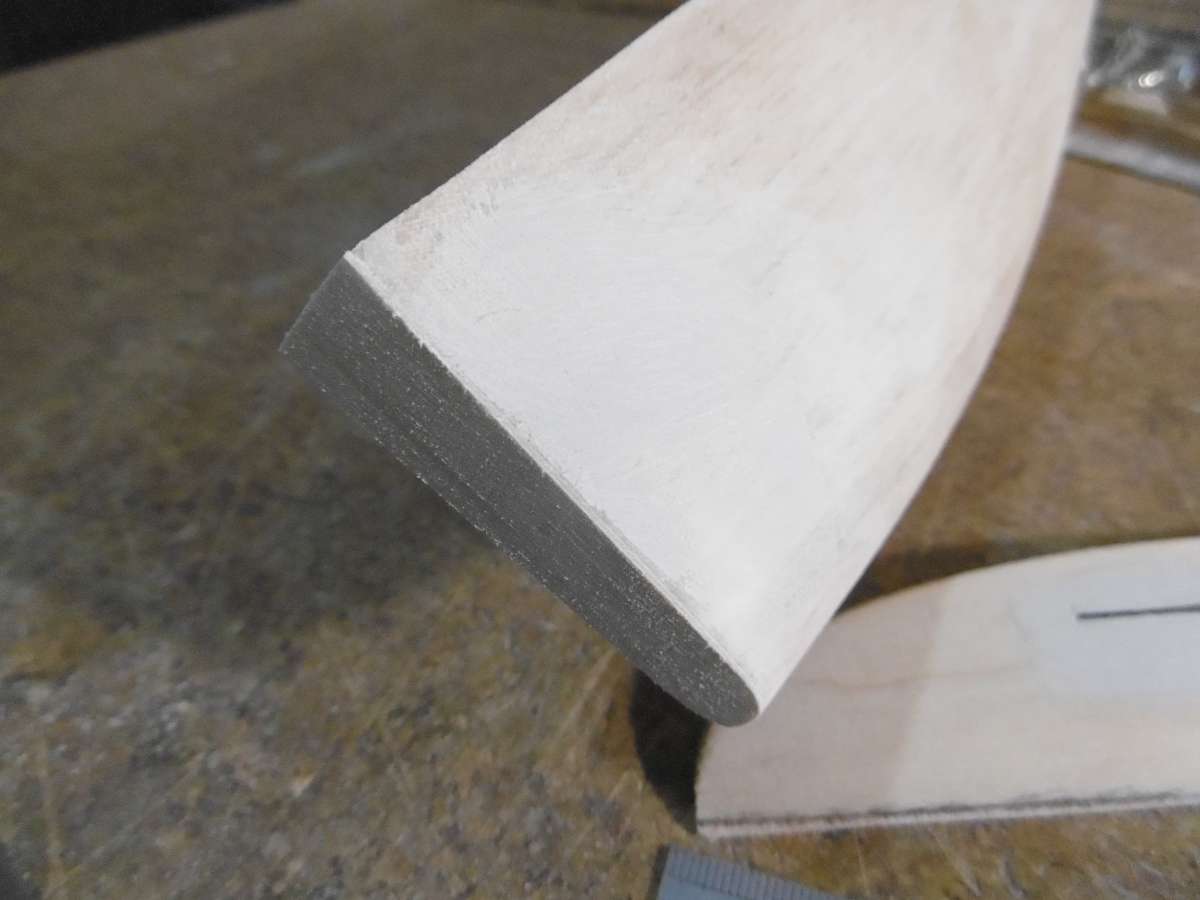
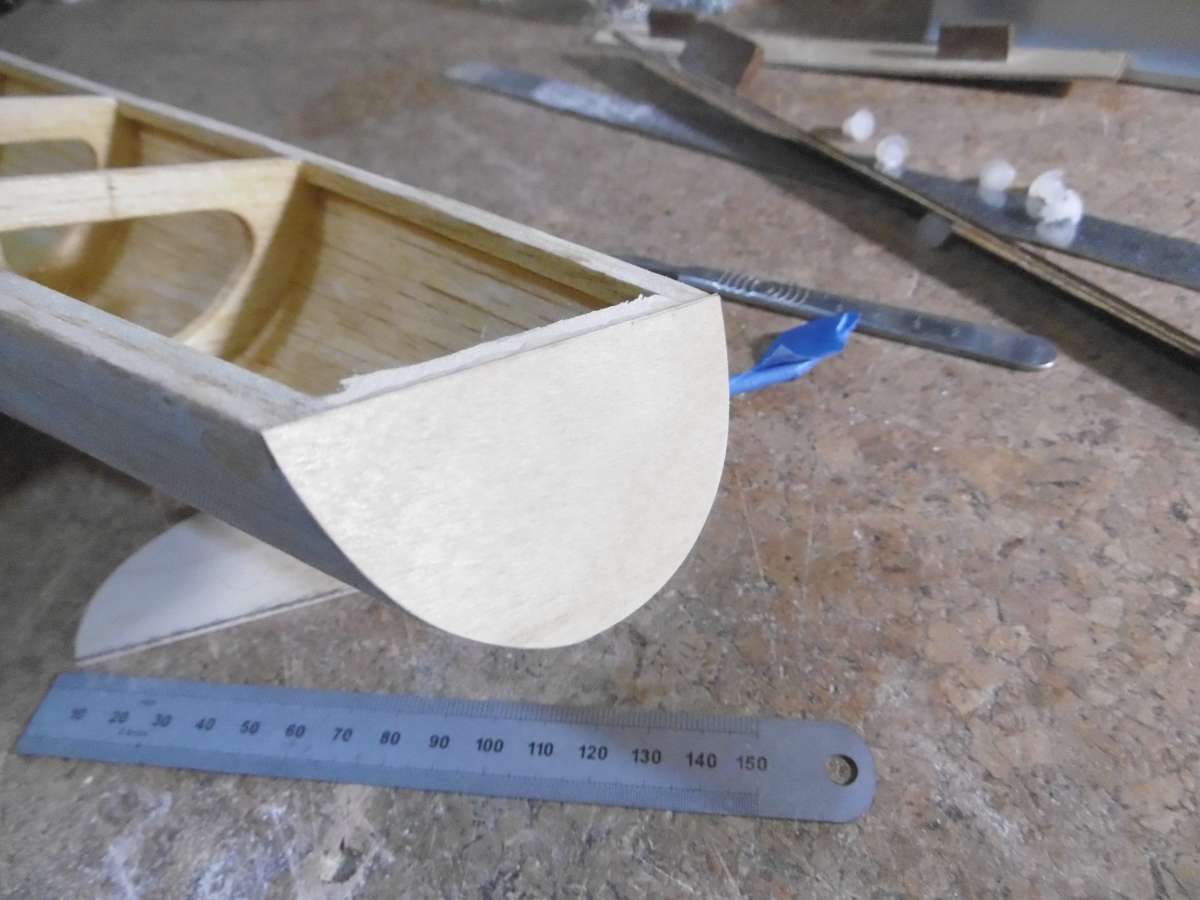
                                                Eventually the bow will have a silicone bumper which is mandatory for the Class Rules.  I want a flat surface for this to be stuck to. There was also a very slight discrepancy in shape from one side to the other at the stem. This was solved by fixing a piece of 0.8mm ply with the form carefully made symmetrical.

                                                Likewise the transom needed a hard surface to take the backstay tang and its fastenings.  These are the pieces I stuck on waiting to be trimmed to the line.

                                                P1020730

                                                This involved needing a little more filler at the bow.

                                                P1020737

                                                and the other side.

                                                P1020738

                                                And this is the result on the transom.

                                                P1020739

                                                The hull now needs to be fully faired with multiple coats of high build primer from a spray can.  This is ongoing while I get onto other things because at least two full days are required between coats to avoid the risk of puckering and to make sure the solvents have fully dispersed.  This is important to get a nice hard finish.

                                                Tim R

                                                #127181
                                                Tim Rowe
                                                Participant
                                                  @timrowe83142

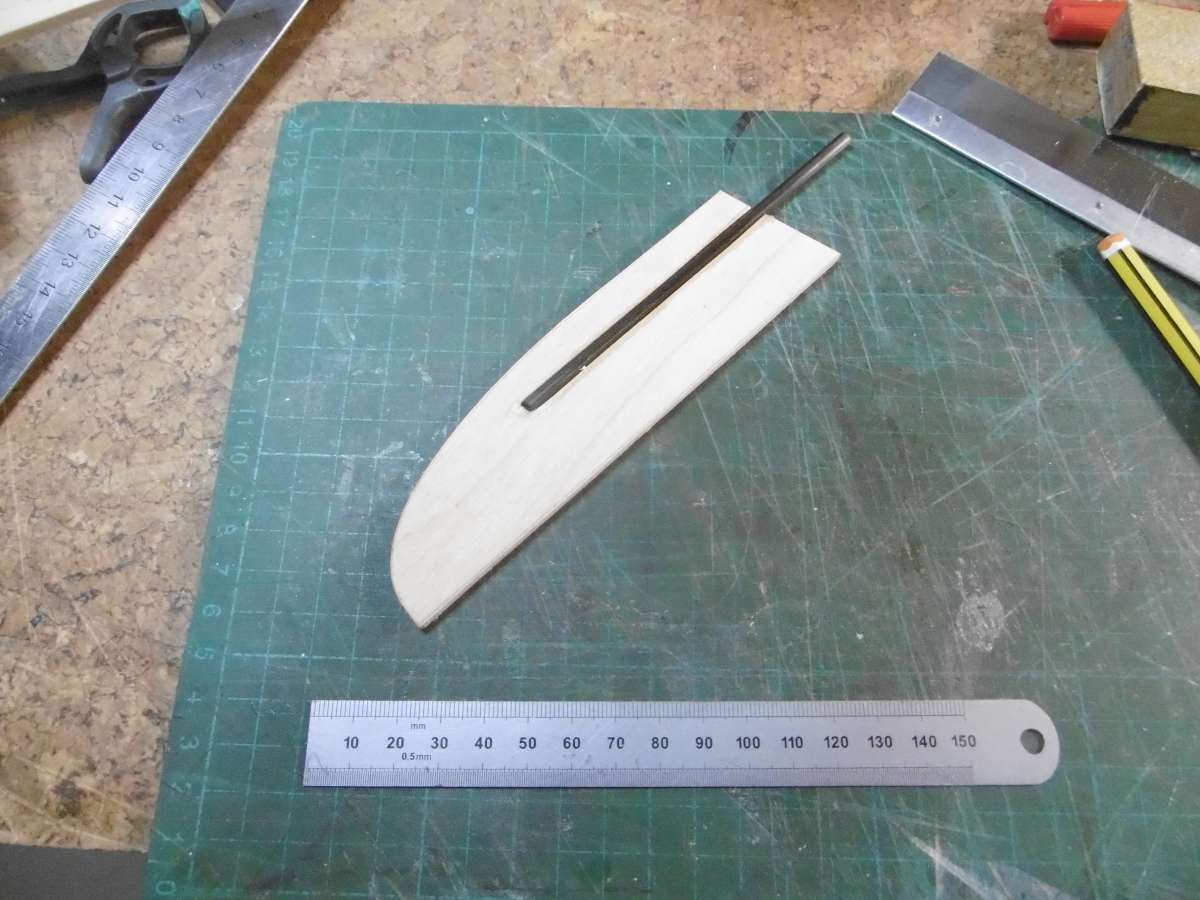
                                                  The rudder on the drawing is rectangular.  I have never seen a rectangular rudder on a full-sized racing yacht so maybe it is a RG65 thing?

                                                  Mine is going to be a little different like this

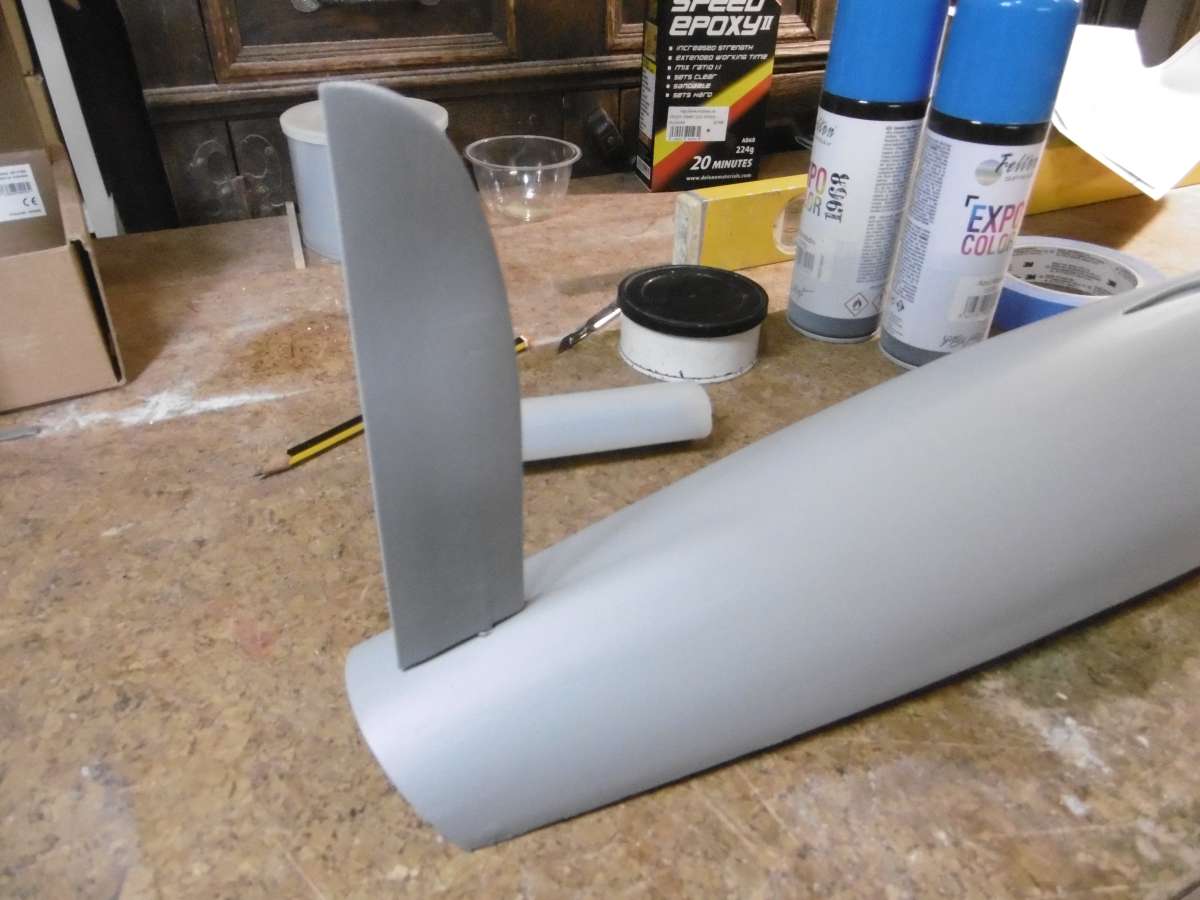
                                                  P1020734

                                                  It is made from a single piece of plywood that fortunately was flat.  The carbon stock is a fraction wider than the plywood so to get it in the middle while gluing, I stuck layers of tape either side of the slot where the thickness of the tapes came to half the difference in the stock diameter and the ply.  That meant I could assemble onto a flat surface and get the stock accurately centred.

                                                  The play was rounded off on the leading edge and tapered along the aft edge.  The difference between the stock and the blade was blended out with polyester filler so that you end up with a nice aerofoil.

                                                  The carbon fibre stock was a close sliding fit in a piece of anodised aluminium tube (no brass on this boat)

                                                  Tim R

                                                  #127189
                                                  Tim Rowe
                                                  Participant
                                                    @timrowe83142

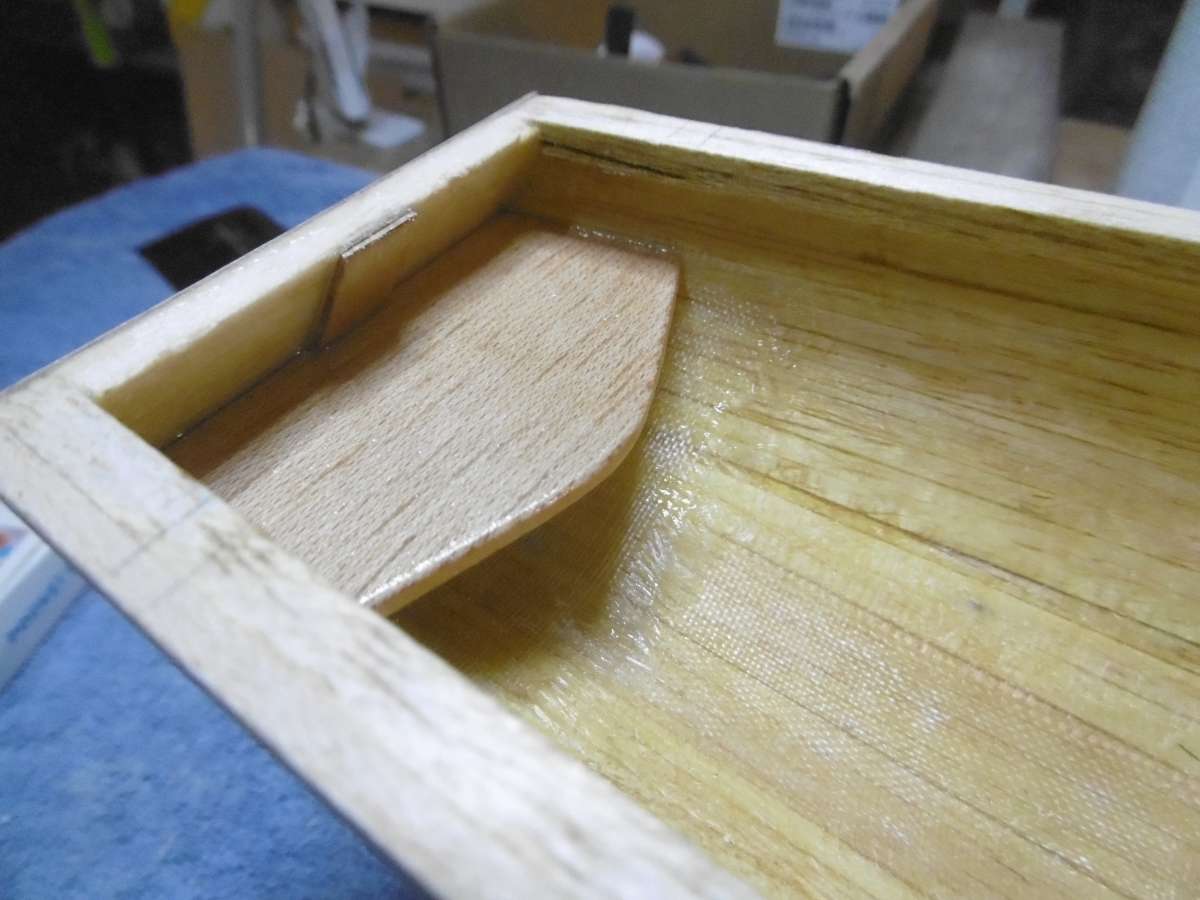
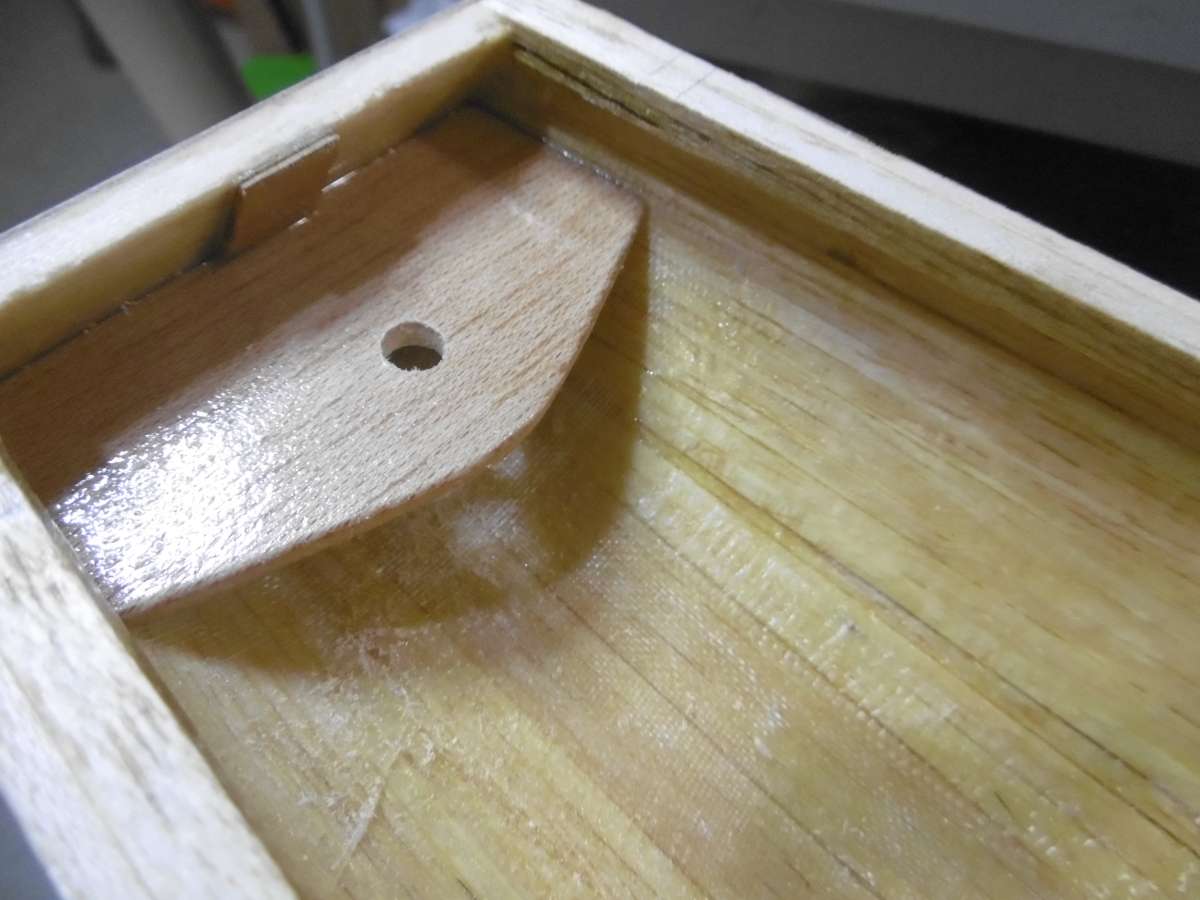
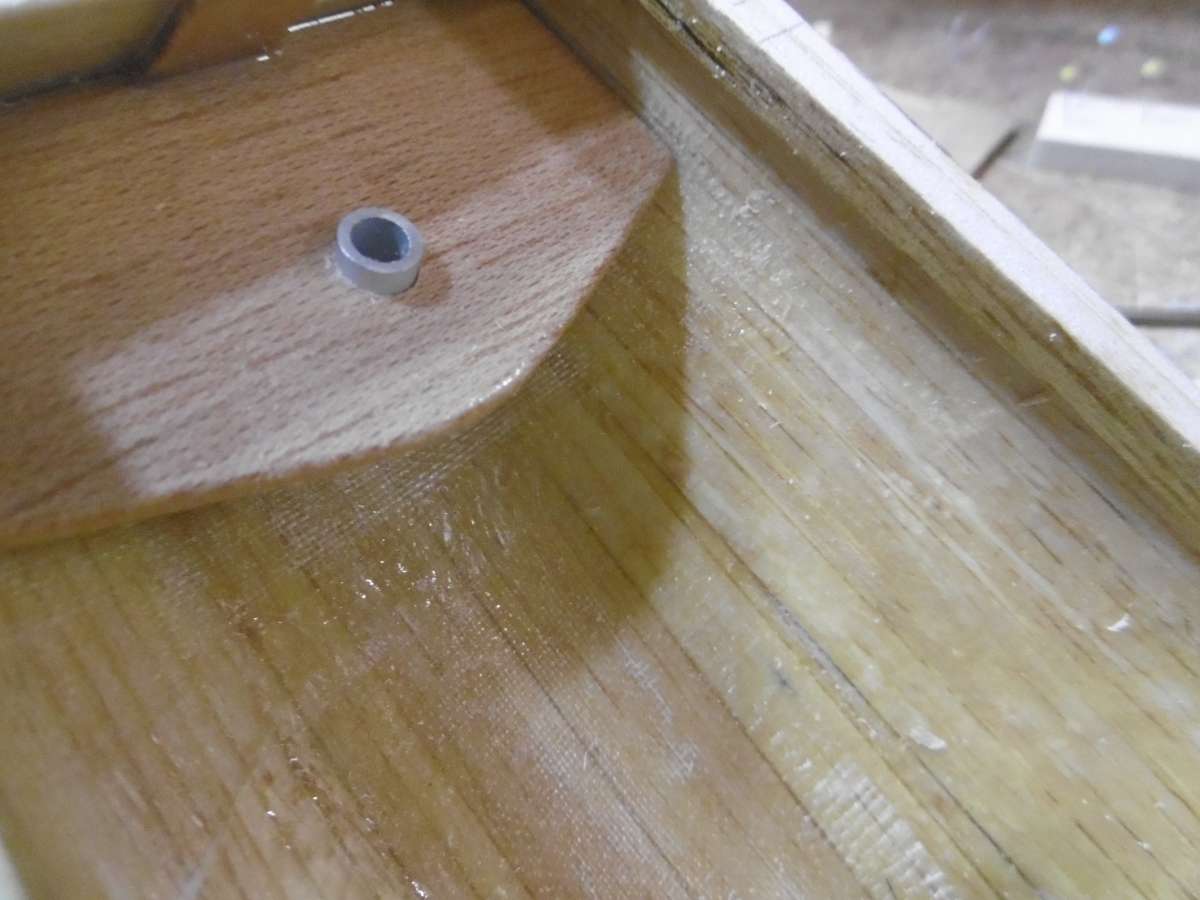
                                                    Continuing the rudder theme, here is the support platform just in front of the transom. The underside of the platform was coated with epoxy before fitting as it would be difficult to fully seal later. You can also see the 0.8mm backing plate for the backstay attachment.

                                                    P1020766

                                                    The rudder is slightly further aft than the position on the plan but leaves enough room for the tiller arm when the rudder is fully over to starboard.
                                                    Here you can see the glass fabric reinforcement.

                                                    Going back a while I mentioned putting one plank each side of the centreline.  This makes it very easy to locate the hole for the rudder tube.  Working from the inside I “drilled” a hole with a rat tailed file on the centreline.  Actually the hole ended up being sightly one side of the centreline because of the relatively hard epoxy glue in the seam. It was easy enough to file the hole a bit bigger but exactly on the centreline.

                                                    P1020771

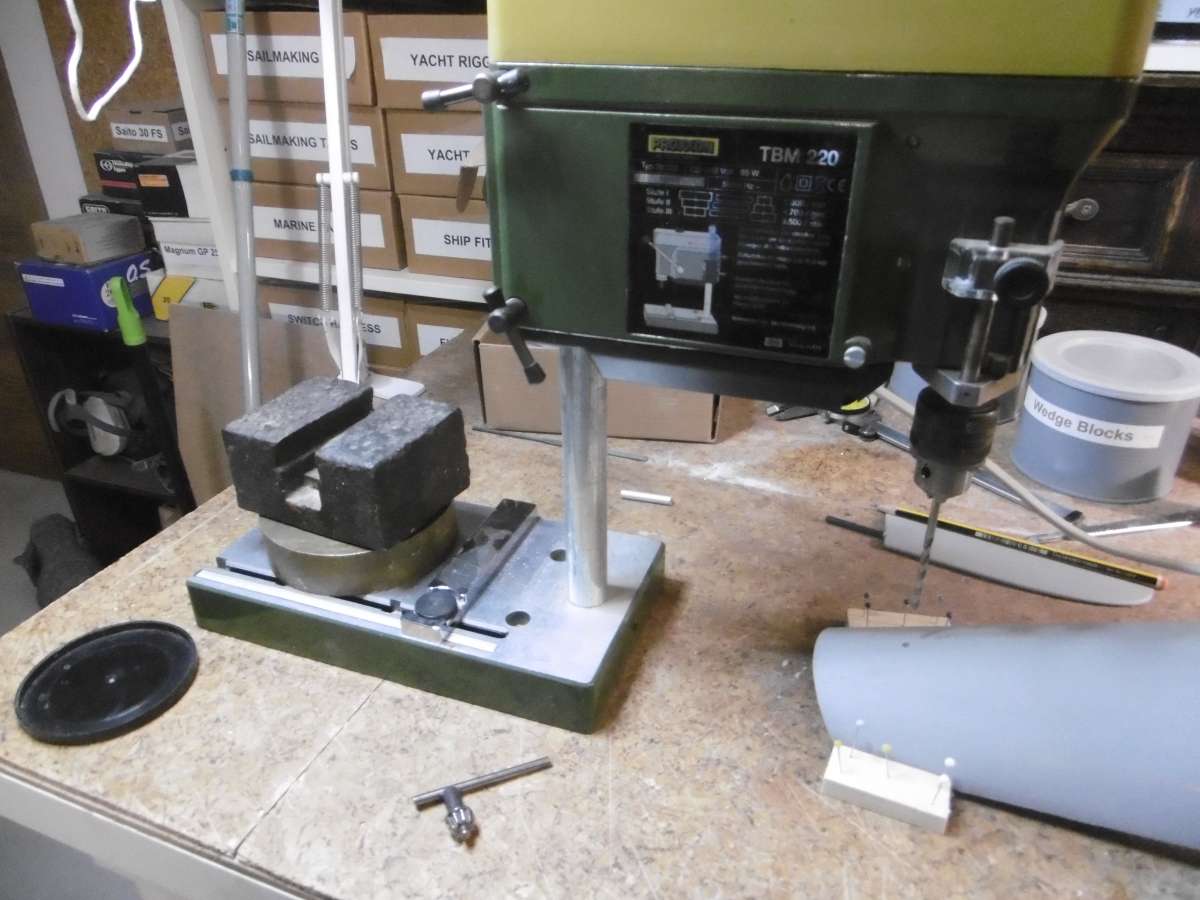
                                                    The next job was to get the hole in the support platform in the right place. Here the hull was jigged into a fixed position on the building table using balsa blocks and the bow was jacked up to give the correct relationship to the hull in a fore and aft direction.

                                                    P1020769

                                                    The vintage spirit level turned out to be the perfect height.

                                                    P1020767

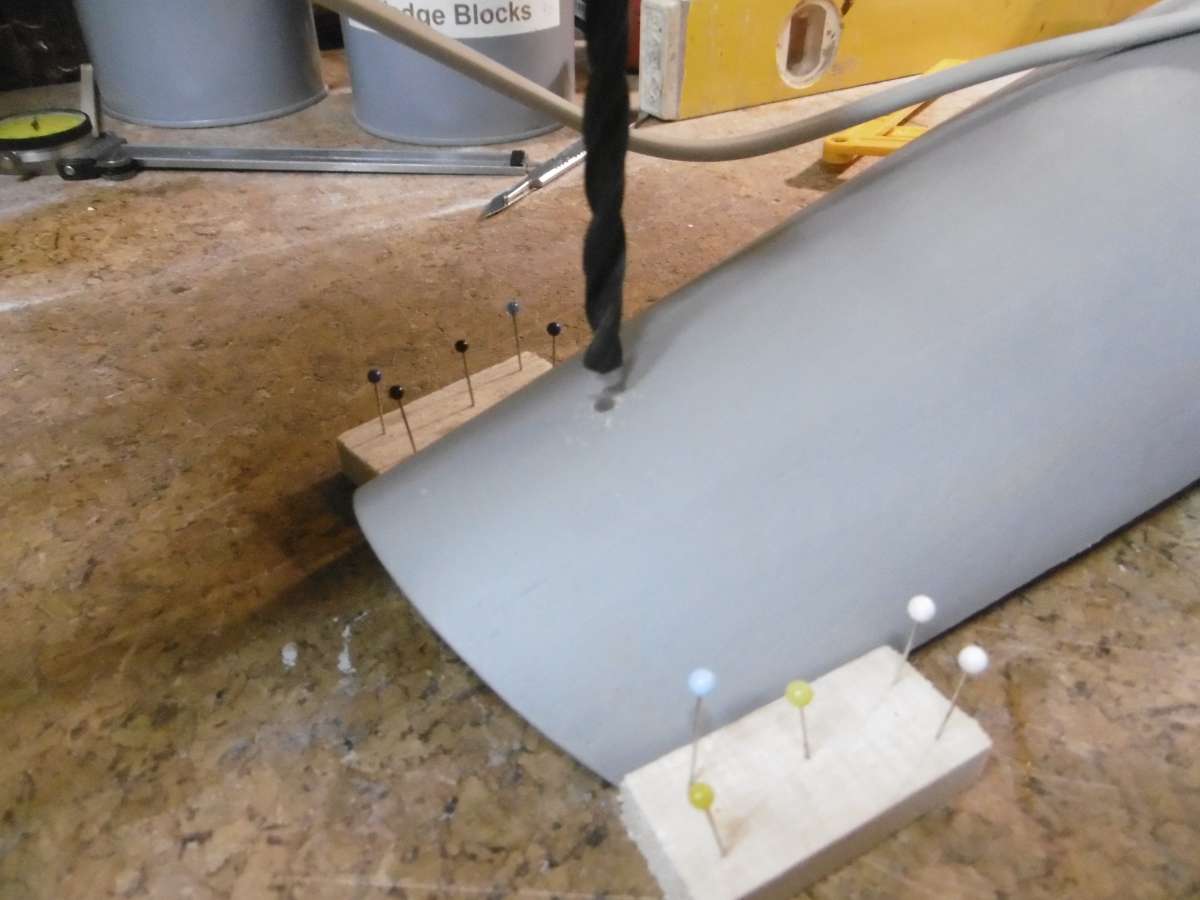
                                                    Next, the Proxxon drill was turned around from its normal position and the base counter-weighted to make it stable.  The first stage was to chuck a rod the same diameter as the filed hole and position the drill base so that the rod entered the hole exactly.  I now know that when the rod is replaced with the 6mm drill the hole in the support platform will be where I want it.

                                                    P1020770

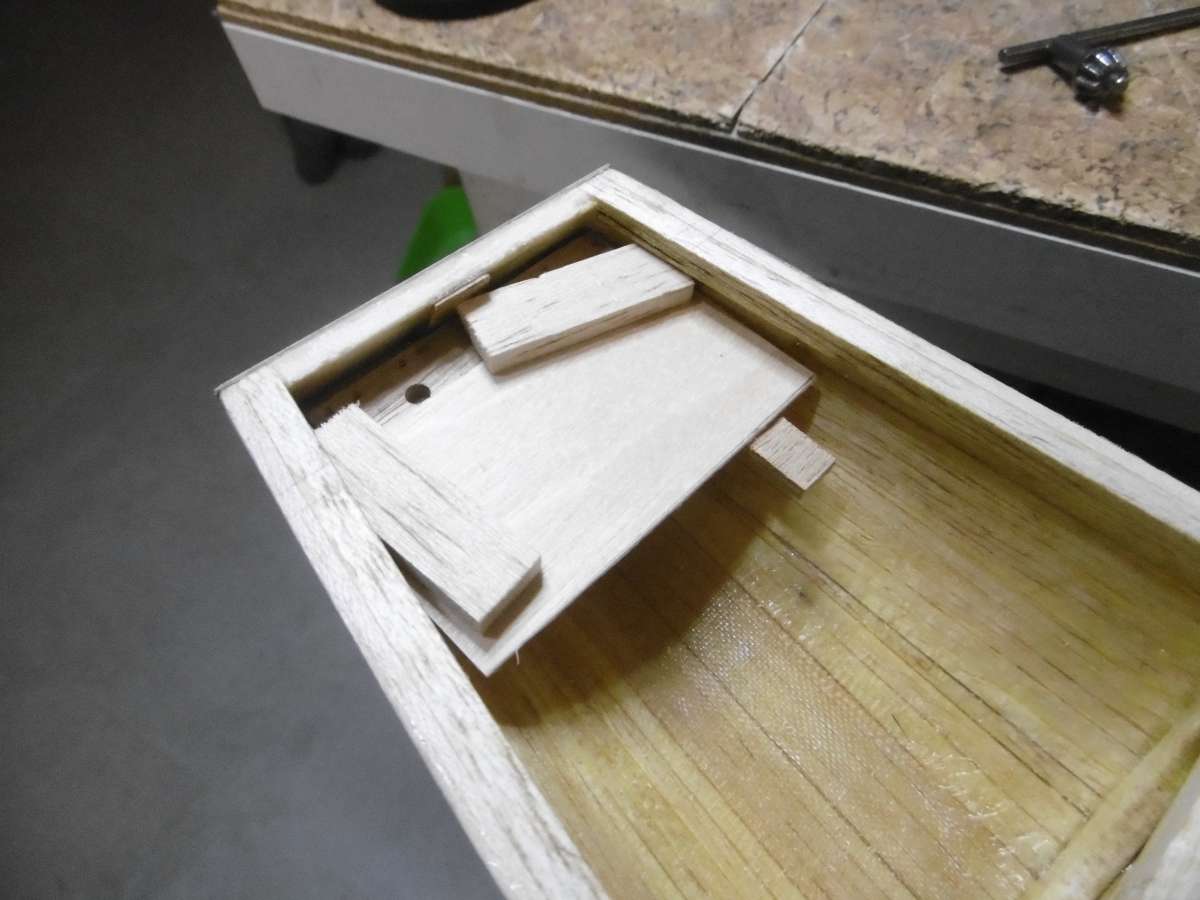
                                                    Drilling balsa with a tradition drill bit is usually a messy affair but in the case of the hull, the drill is going through the external hull epoxy sheathing and then through the internal glass cloth reinforcement with the balsa making the sandwich.  The Lite Ply platform however would be unprotected when drilled through so I wedged a backing pieces under the deck edge longitudinals to stop the back of the hole breaking out.

                                                    P1020772

                                                    The two holes are where they need to be.

                                                    P1020773

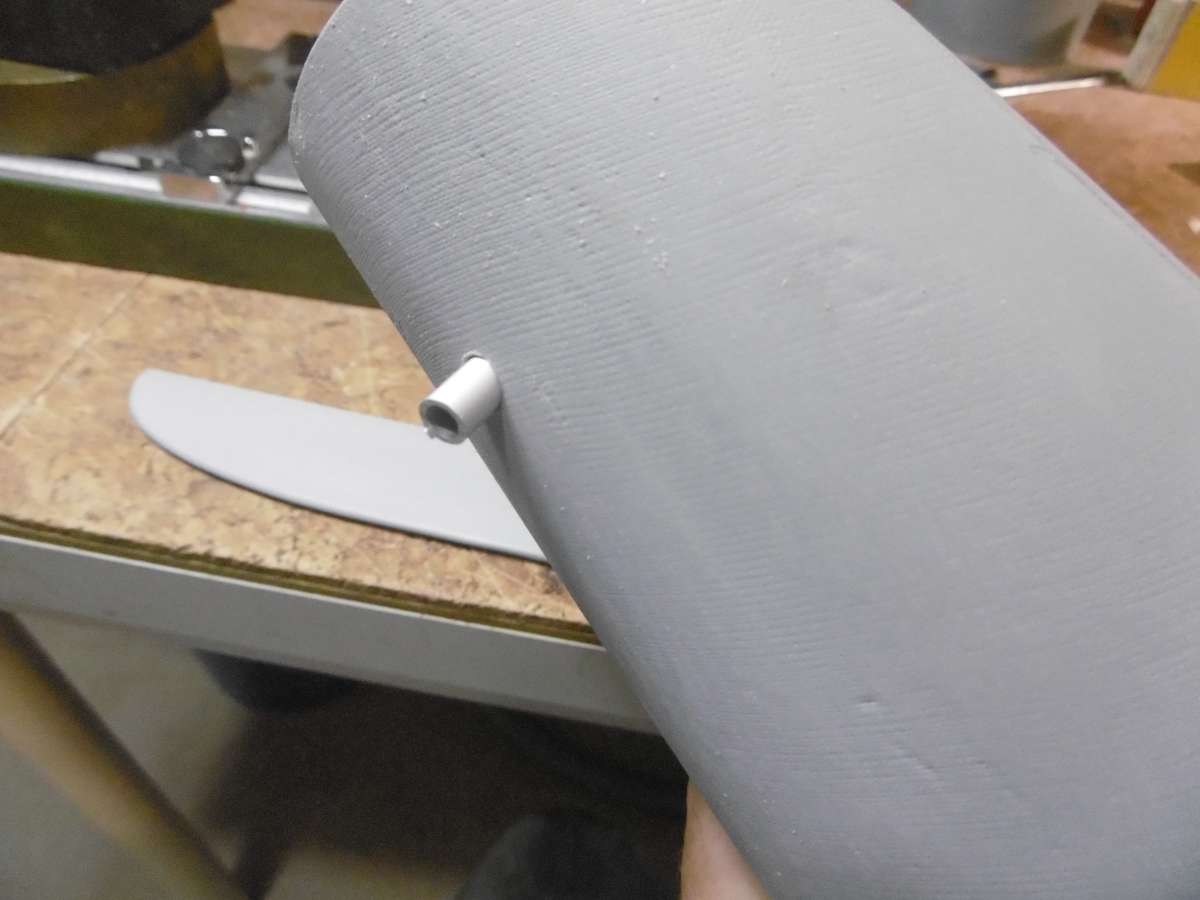
                                                    The aluminium tube was cut slightly over length and slid into place so I could mark the angle of the hull.  This was then cut, filed smooth and the burrs removed and glued in place with epoxy.  On the outside, the end of the tube was positioned just below the hull surface.  The reason was that the cut end is not anodised and is at risk of corrosion. The difference will be made up with epoxy and micro-balloons, faired flush with the hull and then opened up by hand with a suitable drill bit.  This may seem over the top but I sail in a harbour and the sea water is always on the attack.  The brass fittings on my other boats have to be coated with lacquer or they go green the same day and easily become pitted.  Where I have to use bolts, I try to use stainless steel but servo screws have to be lacquered as well or the plating does not last 5 minutes.

                                                    P1020774

                                                    Tube in place.

                                                    P1020775

                                                    Rudder position test.

                                                    Tim R


                                                    #127190
                                                    Richard Simpson
                                                    Moderator
                                                      @richardsimpson88330

                                                      Beautifully neat job Tim.  That hull looks superb and I can only imagine how light it must be.

                                                    Viewing 25 posts - 1 through 25 (of 87 total)
                                                    • Please log in to reply to this topic. Registering is free and easy using the links on the menu at the top of this page.

                                                    Code of conduct | Forum Help/FAQs

                                                    Latest Replies

                                                    Home Forums Sailing Models Topics

                                                    Viewing 25 topics - 1 through 25 (of 25 total)
                                                    Viewing 25 topics - 1 through 25 (of 25 total)

                                                    View full reply list.