
Pond identification, if possible!

Pond identification, if possible!

Home Forums All things floating Pond identification, if possible!

  • This topic is empty.
Viewing 9 posts - 1 through 9 (of 9 total)
  • Author
    Posts
  • #55785
    Matthew Kerry
    Participant
      @matthewkerry97541


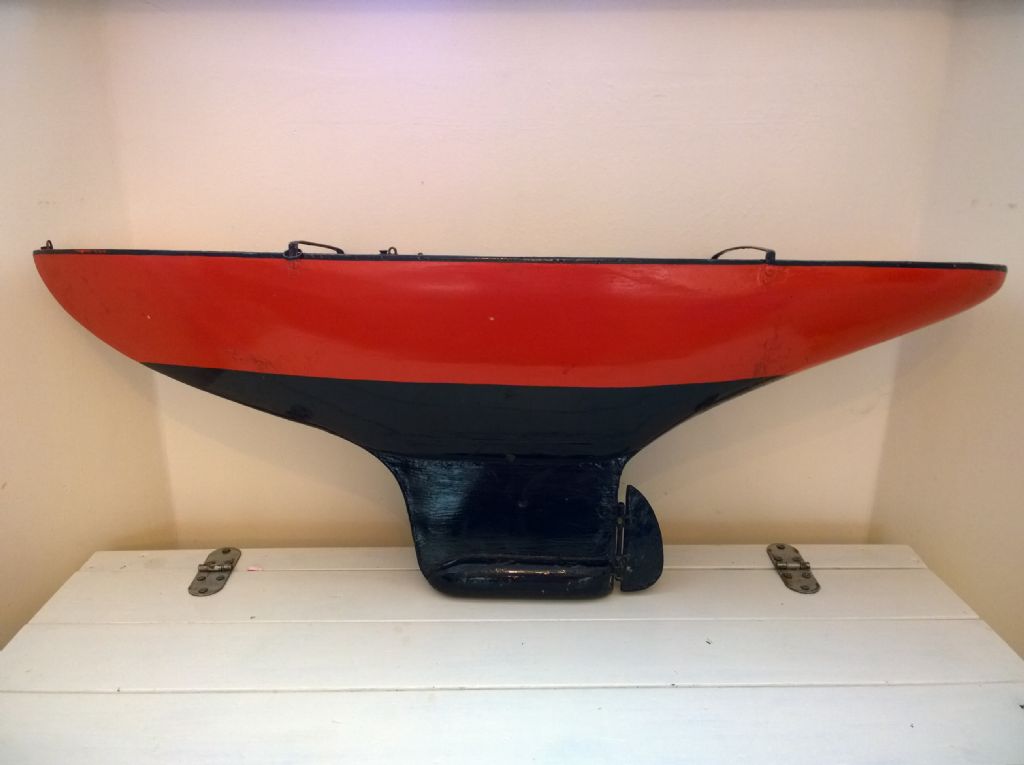
      Pond yacht 1

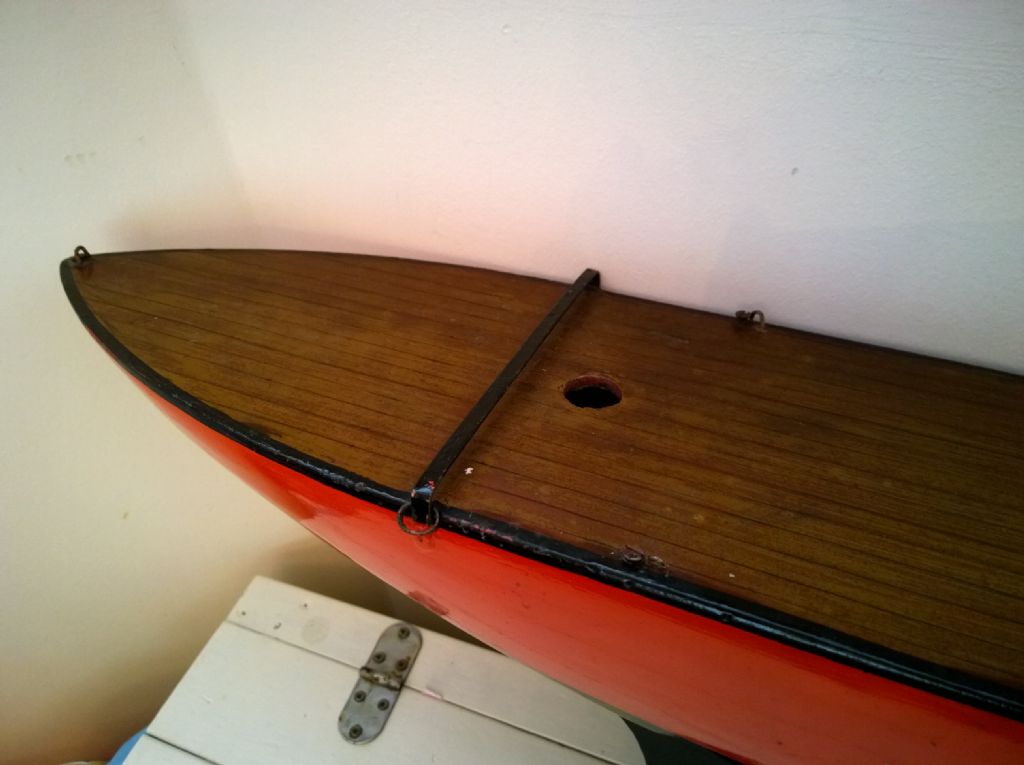
      Pond yacht2

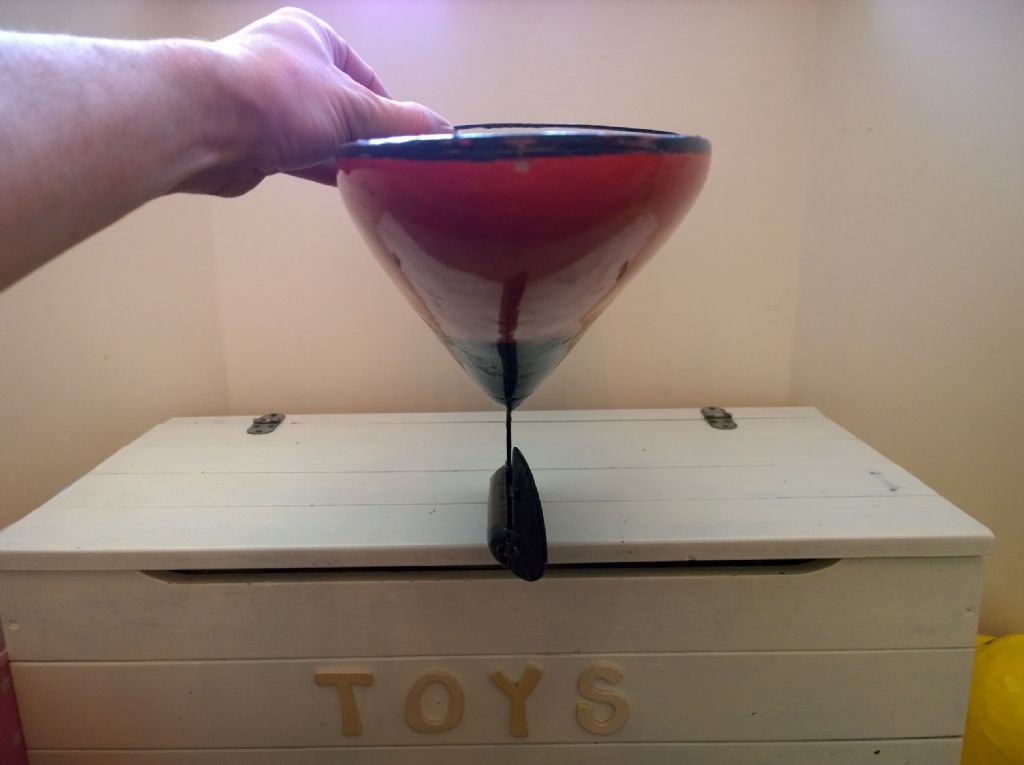
      Pond yacht 3Hi, I bought this the other day and intend to build it back up into a working yacht. I want to strip of all the paint and hopefully the varnish some one has slapped over the deck. Is there a paint/stripping product anyone could recommend or is it just a case of getting busy with sand paper?
      If anyone could identify too that would be great as I would love to know what the original mast & rigging looked like. She is 32" (813)mm 70mm wide & 12" (305)mm high.
      Thanks Matt Will add pics in a moment!

      Edited By Matthew Kerry on 07/02/2015 11:17:17

      Edited By Matthew Kerry on 07/02/2015 11:25:47

      #4187
      Matthew Kerry
      Participant
        @matthewkerry97541

        And suggestions on have to remove the paint.

        #55786
        Malcolm Frary
        Participant
          @malcolmfrary95515

          I've no idea of its origins, but I suspect that the builder "made it from wood, out of my own head, and theres enough for another". Should be a fun project, and hopefully lots of pleasure for the future.

          For stripper, a while back I had cause to remove some acrylic from a plastic model, and was anxious to find something that would remove the paint but not harm the detail. On a trip through a B&M decorating department I spotted some stuff called "Bartoline TX10". It had safety warnings, but not many, so I thought it shouldn't harm the plastic, but might do for the paint. I risked a few quid on a bottle and it worked, paint loosened and softened, surfaces undamaged. A wooden boat does not have the worry of the paint remover dissolving the boat, but equally there is likely some unknown glue with seam edges.

          Just a guess for rig height – try about LOA plus 50%. That should look right, and quite often, if it looks right, it will work.

          #55790
          Matthew Kerry
          Participant
            @matthewkerry97541

            Thanks, it might be a while before I make a start on it as Im doing my 50s cabin cruiser first but thought id best make a start on a bit of research. So a 48" main mast it is! Anyone elts have any idea if this could be a branded model or if it was just knocked up in a shed? Also if anyone know what sort of sail set up this might have had with twin rails on the deck?

            Thanks guys.

            #55802
            Kimosubby Shipyards
            Participant
              @kimosubbyshipyards

              Hello Matthew,

              mast height should be about 1.3 – 1.5 x the boat length. The deck lay out suggests a standard bermuda style rig, a foresail and a main sail, both triangular in shape, though you could fit a sloop rig (on a sloop the fore sail fits to the top of mast). The clews will hook to the rings on the deck hawse, and she will free sail like that.

              For a quick mast you could search charity shops for old fishing rods and cut a suitable length from that.

              The rudder is intriguing, it looks to be based on a weighted rudder, a very old system, predates the Braine gear which of course cannot be fitted as you have no rudder shaft. Q. Is it free moving or can it be set?

              Q. The hull appears non-symetrical (in your last image), or is that just the camera angle?

              No idea of age or type etc, as usual, approach the VMYG website and complete their enquiry page to try and get an idea as to what you have. There were an enormous number of pond yachts produced over the years as the website indicates.

              Aye, Kim

              #55818
              Matthew Kerry
              Participant
                @matthewkerry97541

                Thanks for the info, the rudder is free moving and cannot be set, i found this strange myself and its something I need to remedy when I rebuild. I had to take another look at her myself after seeing that pic but its just the result of a wide angle phone lens! She's good n straight.

                #55819
                Matthew Kerry
                Participant
                  @matthewkerry97541

                  PS love the idea about old fishing rods!

                  #55830
                  Kimosubby Shipyards
                  Participant
                    @kimosubbyshipyards

                    Matthew,

                    not only old fishing rods, look out for broken snooker cues too, the tapered ends are superb for mast top ends.

                    The rudder, if loose, is ok. It'll act like a weighted tiller, so don't tighten it up. As the boat heels the rudder, because of its weight will try and fall to that side, this will give slight steerage for the yacht to fall off the wind (lee helm). The wind is pushing the boat over (heeling) and taking her into the wind (yachts are usually set up to have weather helm.)

                    Look up on the inter-web about weather and lee helm etc. Be warned, some explanations are incredibly complex, read the simplest, just to appreciate the idea. You impart weather helm to the yacht by either changing the mast angle, or moving the mast foot forewords or aft, which you cannot do as your mast sits in a deck hole.

                    The loose rudder is a very simple attempt to keep the yacht sailing in a near straight line. Vintage boats had a set of rudders of differing weights which could be changed quickly on the pond side, some even had a threaded weight within the rudder to adjust the pivoting motion. See how she performs first, as the most important feature is to produce a pair of balanced sails resulting in their combined centre of effort being located correctly just abaft the mast above the ballast etc. It is their setting that will have the most control on direction of sailing, rudders on boats are used for manoeuvres in harbours or for tacking/gybing/waring etc.

                    Have fun. Aye Kim

                    #55833
                    Malcolm Frary
                    Participant
                      @malcolmfrary95515

                      My down and dirty method for determining the rough center of effort of the sails and the center of lateral resistance of the hull was to make a cardboard cutout to the same scale of the sailplan and the side profile of the underwater part of the boat. Balancing each on a pin gave the centers, making getting the sailplan close to what was wanted quicker.

                    Viewing 9 posts - 1 through 9 (of 9 total)
                    • Please log in to reply to this topic. Registering is free and easy using the links on the menu at the top of this page.

                    Code of conduct | Forum Help/FAQs

                    Latest Replies

                    Home Forums All things floating Topics

                    Viewing 25 topics - 1 through 25 (of 25 total)
                    Viewing 25 topics - 1 through 25 (of 25 total)

                    View full reply list.